


NAND Flash supply constraints expected to ease in 2027

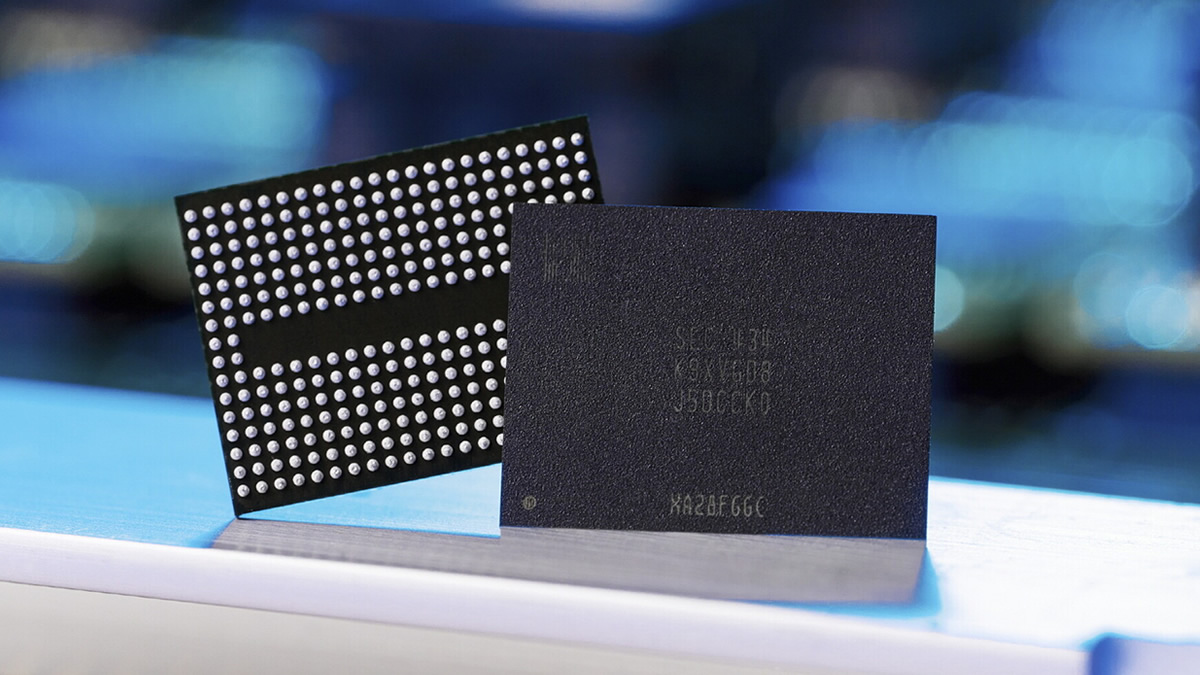
NAND Flash supply is expected to outpace demand in H2 2027, easing supply constraints
The past year has seen DRAM and NAND prices skyrocket, making practically all consumer electronics more expensive. Demand for AI infrastructure has created a supply/demand imbalance, causing chaos within the consumer PC market. Thankfully, according to Trendforce, the end of the NAND supply crisis is in sight, with H2 2027 seeing a stabilisation in NAND flash pricing.
Demand for NAND is expected to remain strong in 2027, but a steady growth in bit output by major providers will gradually restore market balance. In other words, supply growth will outpace demand growth. This will allow the world’s NAND supply to be less tight during the second half of next year.
In 2026, NAND makers are mostly relying on process node migration and improving yields to increase their NAND production. This is not enough to keep up with growing demand. In 2027, Korean, US, and Japanese NAND makers will benefit from in-progress production line expansions and facility upgrades to further increase supply. Chinese suppliers are expected to significantly boost production as new facilities and production hardware come online. China’s share of global NAND Flash bit output is expected to grow to around 19% in 2027.
In 2027, server demand for NAND is expected to grow from 44.2% of the market to 51.1%. Soon, the server market will account for over half of the world’s NAND use. Previously, the world’s NAND flash use was dominated by PCs and smartphones. Today, the server market is the world’s dominant purchaser of DRAM.
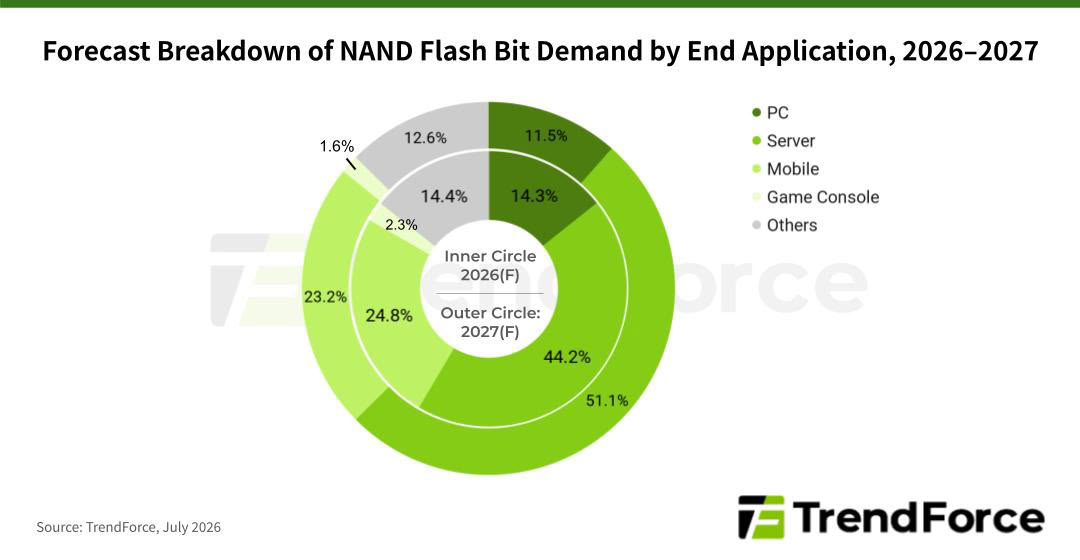
(NAND Flash Bit Demand by application – 2026 and 2027)
Don’t expect NAND pricing to return to normal in 2027
What’s worth remembering is that DRAM supply is expected to grow faster than demand in late 2027. That doesn’t mean that the price of NAND chips will crash to pre-AI norms in late 2027. While growing supply will place downward pressure on prices, NAND flash pricing won’t significantly lower until DRAM supply starts outstripping demand. To put it another way, consumers should expect NAND pricing to start lowering in H2 2027. A NAND pricing crash will only happen if there is a sudden drop in demand. This will only happen if AI datacenter spending collapses.
The good news is that the supply constraints in the NAND market are expected to gradually ease in 2027. However, the bad news is that it will take a long time for NAND prices to return to anything that consumers would consider “normal”.
You can join the discussion on Trendforce’s flash supply expectations on the OC3D Forums.