


EA has gone private, and the deal could kill the company

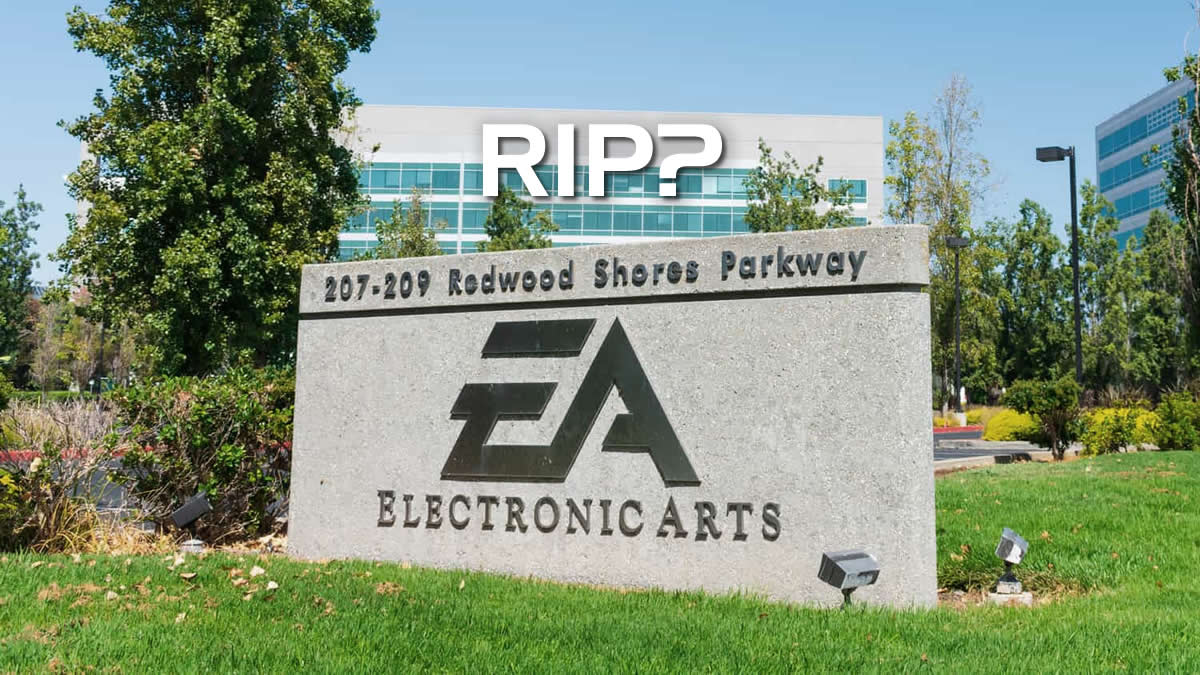
It’s official: EA is now a private company that’s billions in debt
Electronic Arts (EA), the American videogame publishing giant, has officially become a private company. A $55 billion deal has taken the company off the stock market and placed it under the ownership of “The Consortium”, a group that includes PIF (the Saudi Arabia Public Investment Fund), Silver Lake, and Affinity Partners.
EA’s new ownership is mired in controversy. There are concerns about how Saudi Arabia’s partial ownership will impact EA’s future games. Furthermore, Affinity Partners is led by Jared Kushner, the son-in-law of US President Donald Trump.
This deal is said to be the largest leveraged buyout in history, with $20 billion of EA’s buyout funds coming from debt. This debt comes from JPMorgan, and EA is taking it on. That’s right, EA is now $20 billion in debt.
So what did EA get out of this?
EA now has new owners and is no longer beholden to the stock market. While this is somewhat freeing for EA, it now has private owners to please. It also has $20 billion in debt to pay off. While EA’s shareholders got a good deal by selling their shares for $210 each, EA itself is now the bagholder for $20 billion in debt. Servicing that debt will be a challenge.
EA’s CEO, Andrew Wilson, says that the company is in a “position of strength” and that their new partners “share our vision and ambition”. He also says that the company will “invest boldly” and “accelerate innovation”.
We’re entering this next chapter from a position of strength with partners who share our vision and ambition. Together, we’ll invest boldly, accelerate innovation, and build the next generation of games and experiences for the hundreds of millions of players and fans who inspire us every day.
– EA CEO Andrew Wilson
EA may need to aggressively cut costs and monetise their games to pay their $20 billion debt
Leveraged buyouts have a terrible reputation. Private Equity firms buy companies with money they don’t have and force the targeted company to take on and pay off that massive debt. This debt can crush the companies that it is forced upon, as it can destroy otherwise profitable companies with interest payments. A well-known example of this is Toys “R” Us, which needed to cut thousands of jobs and eventually close due to its debt burden.
There are fears that EA’s buyout will result in mass layoffs. There are also fears that EA will more aggressively monetise its games, lowering their appeal to gamers. Earlier this year, EA created EA Advertising, signalling this direction of travel.
The question now is simple. Can EA pay off its debt? If not, EA will need to cut costs and find ways to boost its profitability. Can EA thrive under these conditions, or will this debt lead to EA’s decline?
You can join the discussion on EA getting saddled with $20 billion in debt on the OC3D Forums.