


AMD improves its “flagship GPU IP” by “up to 14% PPA” with OpenAI

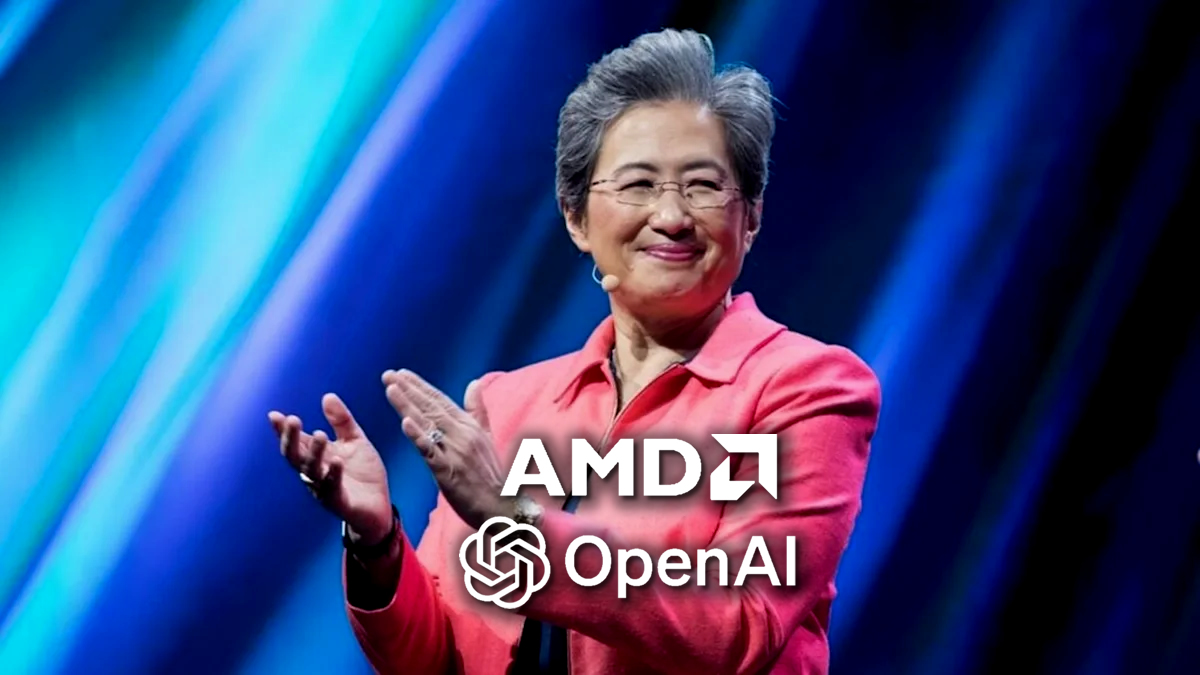
OpenAI helps AMD improve its future CPUs and GPUs using an undisclosed AI model
Alongside OpenAI, AMD has significantly improved the “PPA” (Power, Performance, and Area) of its “flagship GPU IP” by “up to 14%”. This condensed what was reported as a year’s worth of chip improvements into five months. Some of these improvements have reportedly been used in a design that AMD has sent for manufacturing. The other changes have been added to AMD’s production design files for future versions.
OpenAI claims that their undisclosed AI model “identified further improvements by rewriting the code that describes the chip’s circuits (SystemVerilog RTL).” If OpenAI’s claims are correct, AMD can now improve its silicon much faster than before. This should enable AMD to deliver more refined chip designs in the future, boosting performance and improving power/area efficiency.
AMD’s CEO, Lisa Su, says that she is “proud of these fantastic results”, saying that OpenAI and AMD are “pushing the frontiers of chip design together.
Proud of these fantastic results – @OpenAI + @AMD engineers pushing the frontiers of chip design together! https://t.co/tz63ECIx7Q
— Lisa Su (@LisaSu) November 18, 2026
Alongside improvements to AMD’s “flagship GPU IP”, AMD has also “verified single-digit performance gains in PPA across key blocks of its upcoming next-generation flagship CPU” using designs written by OpenAI’s model. Moving forward, OpenAI expects its technology to deliver further gains for AMD, accelerating its chip design capabilities while boosting performance and efficiency.
Our collaboration with AMD
We have partnered with AMD on PPA improvements and seen up to 14% improvement relative to heavily optimized baselines on the flagship GPU IP. Our model identified further improvements by rewriting the code that describes the chip’s circuits (SystemVerilog RTL). This represents roughly a year of progress achieved in less than 5 months–unprecedented results at the frontier of chip design. AMD has already included some of these changes in a recent design it sent for manufacturing, and added others to its production design files for use in future versions.
We’ve observed the model reason about RTL at the level of an expert microarchitect. The model can rewrite circuits that perform calculations, control operations, or move data. It used Synopsys tools to verify that each rewrite preserved the block’s behavior and to evaluate the trade-offs in power, performance, and area.
AMD also verified single-digit percentage gains in PPA across key blocks of its upcoming next-generation flagship CPU using designs written by our model. Looking ahead, we expect further PPA improvements on top of GPU and CPU relative to the most optimized baseline.
– OpenAI
Good news for AMD
If OpenAI’s claims are accurate, this is unambiguously good news for AMD. Shortening a year’s worth of work to five months is no small feat. This innovation should lead to improved AMD chip designs. That means more performance, better power efficiency, and more efficient use of silicon area. That means smaller, more performant chips.
The first fruits of this partnership will appear in a product already sent for manufacturing. That means we will likely see some of the benefits of this partnership in the relatively near term. That said, AMD is unlikely to disclose which exact product was the first to benefit from this partnership.
Join the discussion on AMD and OpenAI’s partnership on the OC3D Forums.