


Intel and AMD team up to form the x86 Ecosystem Advisory Group

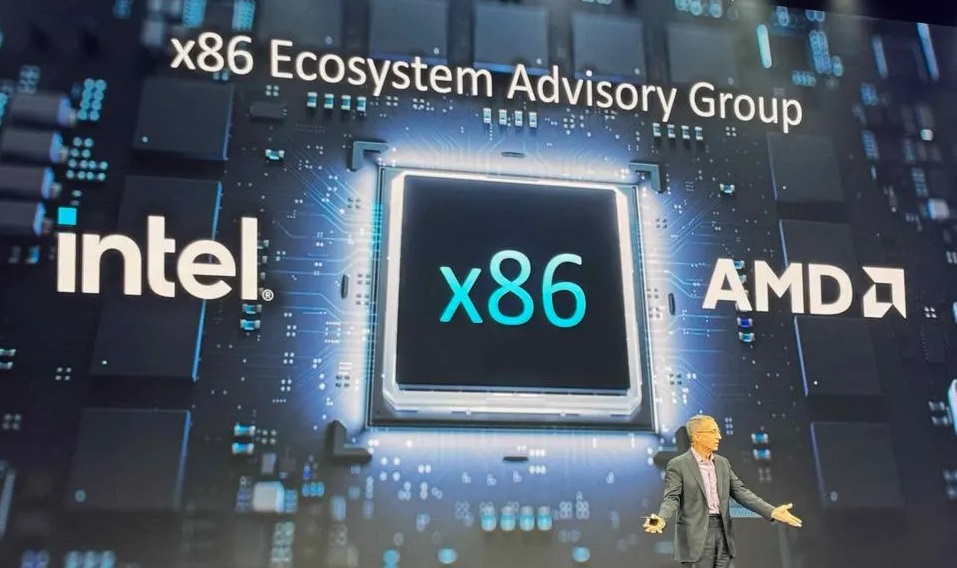
AMD and Intel are working together to make x86 better for everyone
Intel and AMD may be bitter rivals, but a common architecture unites them. The x86 Instruction Set Architecture (ISA) sits at the core of all of their CPUs, and today, it is the world’s most widely used computing architecture. To ensure a strong future for x86, AMD and Intel have formed the x86 Ecosystem Advisory Group, building on four decades of x86 success with plans to deliver superior performance, seamless interoperability, and simplified software development.
Alongside AMD and Intel, the x86 Ecosystem Advisory Group has companies like Broadcom, Dell, Google, HP, Lenovo, Meta, Microsoft, Oracle, and more as members. Luminaries like Tim Sweeney and Linux Torvalds are also members of this new group. These companies and luminaries will help to forge the future of the x86 ISA. The group aims to foster innovation through a unified set of instructions and architectural interfaces. This will ensure unity across future x86 processors and ensure that developers adopt and utilise new features.
Essentially, this effort will standardise the x86 ISA and allow it to benefit from the addition of new features. With this unified approach, developers can adopt new x86 features with the assurance that they will be available with future processors from both AMD and Intel. This should prevent the issues that features like AVX-512 faced early on. It should also allow AMD and Intel to simplify some aspects of x86. Perhaps this will allow them to remove some legacy features that developers no longer use.
Note that this is an “Advisory Group”. That means AMD and Intel can do their own thing and invest in custom features. It also means that they do not need to take actions that they do not want to. Ultimately, AMD and Intel will work together in areas that suit them and developers. After all, they are still rivals.

x86 is evolving, and collaboration is critical to its ongoing success
x86 giants like AMD and Intel are seeing stronger competition than ever. ARM-based CPUs are now being used by increasingly high-end PCs and servers, and it is clear that x86 needs to fight to maintain its dominant position.
Through this new advisory group, AMD and Intel can take a more unified approach to developing x86. This will prevent both companies from taking x86 in different directions and may prevent them from creating alternative solutions to some computational problems. Both companies will remain competitors, but that doesn’t mean they can’t work together.
Ultimately, this alliance is about creating more efficient and performant processors. It also ensures that new x86 features are adopted quickly and their effects are seen in software. All in all, this group will be a good thing for x86 and its users.
It will be years before we see the x86 Ecosystem Advisory Group have an impact on x86 ecosystem
Sadly, it takes years for ideas to be turned into silicon. As such, it will take a long time for the decisions of the x86 Exosystem Advisory Group to impact newly released CPUs. Regardless, this group’s formation appears to start a new era for x86. This new era will be defined by collaboration and the faster adoption of new CPU features. Will it keep x86 ahead of ARM long-term? Maybe. If nothing else, it will make ARM’s plans for CPU domination harder.
You can join the discussion on the newly formed x86 ecosystem advisory group on the OC3D Forums.