


AMD CEO leapfrogs Nvidia – Instinct MI450 uses 2nm silicon

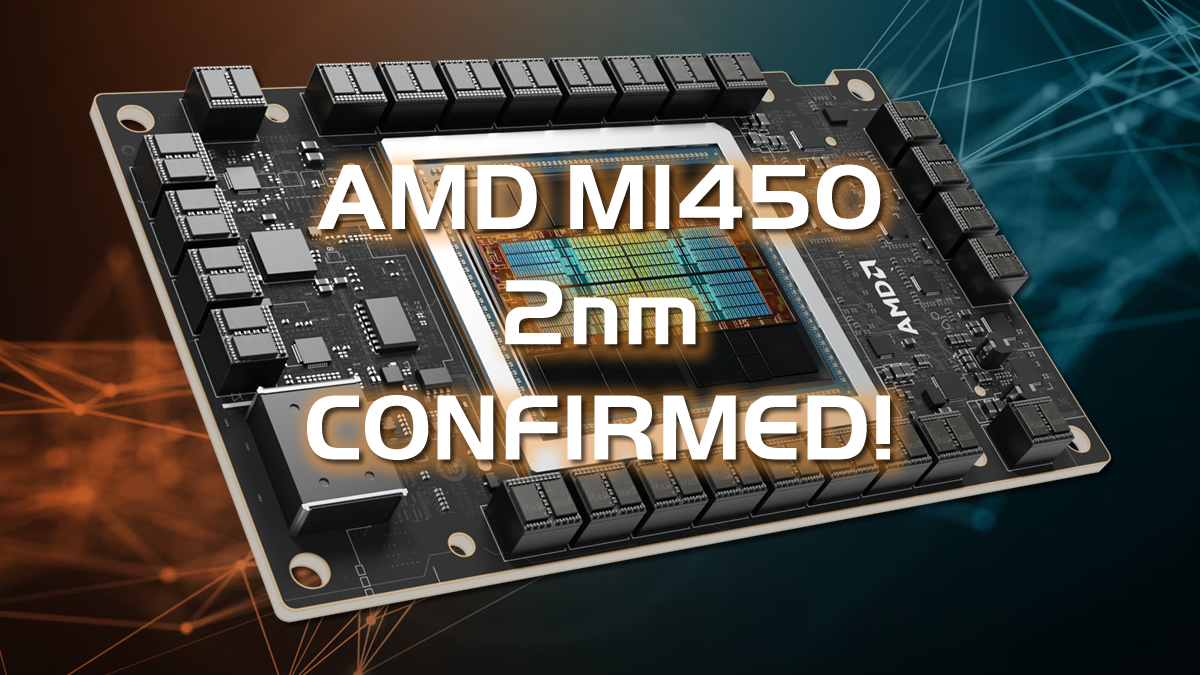
AMD confirms that its next-generation MI450 AI accelerator uses 2nm silicon
In an interview with Yahoo Finance, as spotted by Daniel Romero, AMD’s CEO, Lisa Su, has confirmed that its next-generation MI450 AI accelerator will utilise 2nm silicon. This new AI accelerator is scheduled for release in 2026, with OpenAI planning a 1GW deployment using these GPUs.
Why is using 2nm important? The simple answer is that using better silicon results in better products. Nvidia’s next-generation Vera-Rubin series AI accelerators will use 3nm silicon, granting AMD an advantage. This advantage will help AMD compete with Nvidia, giving it a greater ability to compete with Nvidia’s next-generation AI products.
🚨Lisa Su dropped a bombshell
Yet nobody has caught it$AMD's MI450 will use 2nm technology, while $NVDA's Rubin will use 3nm
A massive power and efficiency advantage
This is breaking news, and I don’t understand why nobody is reporting it pic.twitter.com/b12E4JA8wG
— Daniel Romero (@HyperTechInvest) October 7, 2025
With MI450, AMD wants to deliver more performance than Nvidia. With the MI450, AMD has pushed to provide more memory bandwidth and capacity than Nvidia, which could gain AMD a significant market share.
AMD aims to challenge the notion that Nvidia is the default option for AI computing. With MI450, AMD is doing everything it can to give its hardware an advantage. That includes their use of 2nm silicon and their aggressive memory specifications.
Like prior AMD Instinct designs, its MI45o will be a chiplet-based graphics card. That means that not all of AMD’s MI450 silicon will be 2nm. The leaker Kepler_L2 has suggested that AMD’s Instinct MI450 GPU will also use TSMC N3P (3nm) silicon for its Active Interposer Die (AID) and Media Interface Die (MID). Only AMD’s Accelerator Core Die (XCD) will utilise TSMC’s 2nm (N2) process.
You can join the discussion on AMD’s confirmation that its MI450 GPU is a 2nm product on the OC3D Forums.