


Apex Compute unveils DLSS-beating Apex Neural Rendering (ANR) technologies

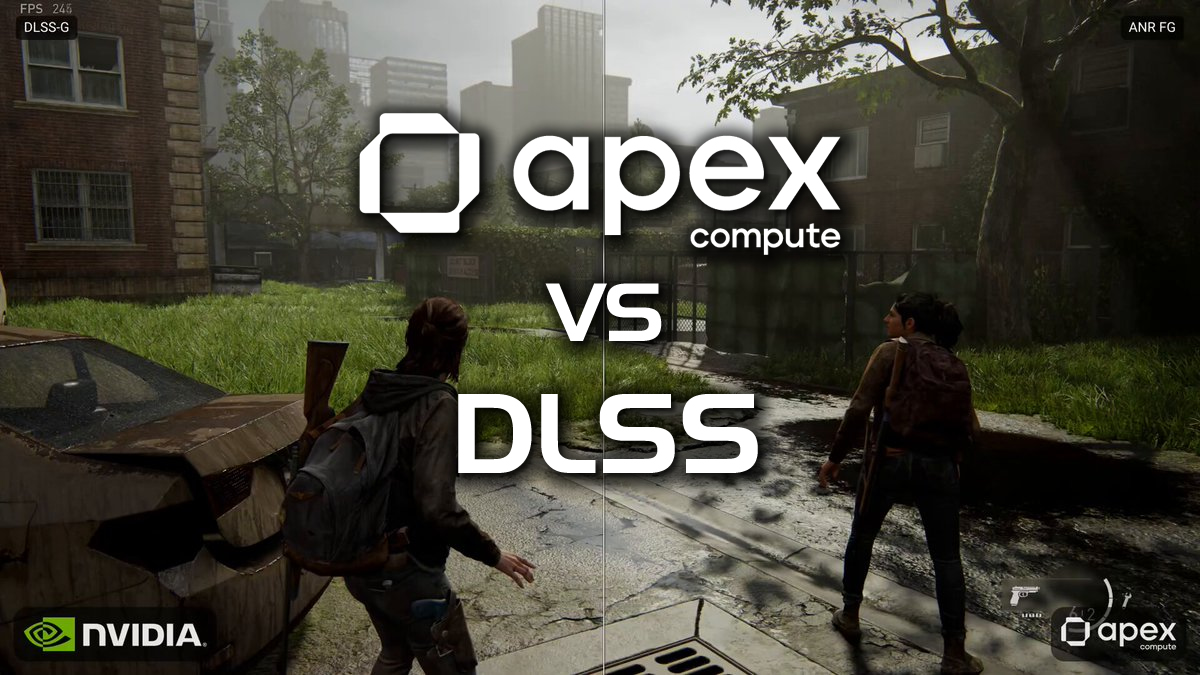
ANR aims to beat DLSS with higher image quality and boosted performance
Nvidia’s DLSS suite of Neural Rendering technologies is getting a new competitor that aims to outdo team GeForce with better image quality and improved performance. Apex Compute is promising big things with its Apex Neural Rendering (ANR) technologies, unveiling plans for Super Resolution, Ray Reconstruction, and Multi Frame Generation solutions.
Apex Compute’s Frame Generation technology is now available in beta. The company has showcased the technology across several games, including Hogwarts Legacy and The Last of Us Part II. The company claims up to 2.4x faster performance than DLSS with higher image quality. The beta is available now to download and use with solutions like Optiscaler.
Apex’s Neural Rendering technology has 2x, 3x, 4x, 5x, and 6x Frame Generation modes, claiming faster speeds than Nvidia DLSS and lower memory utilisation. It also supports non-Nvidia GPUs, including RX 5000 series (and newer) AMD GPUs, and Intel ARC A-series and B-series GPUs. It even supports Valve’s Steam Deck. Apex Compute even has a “native Metal” version that works on Apple Silicon.
Using image quality tables, Apex claims that its ANR tech is ahead of Nvidia DLSS in CGVQM-5 mean patch, ColorVidoeVDP, and PSNR quality tests.
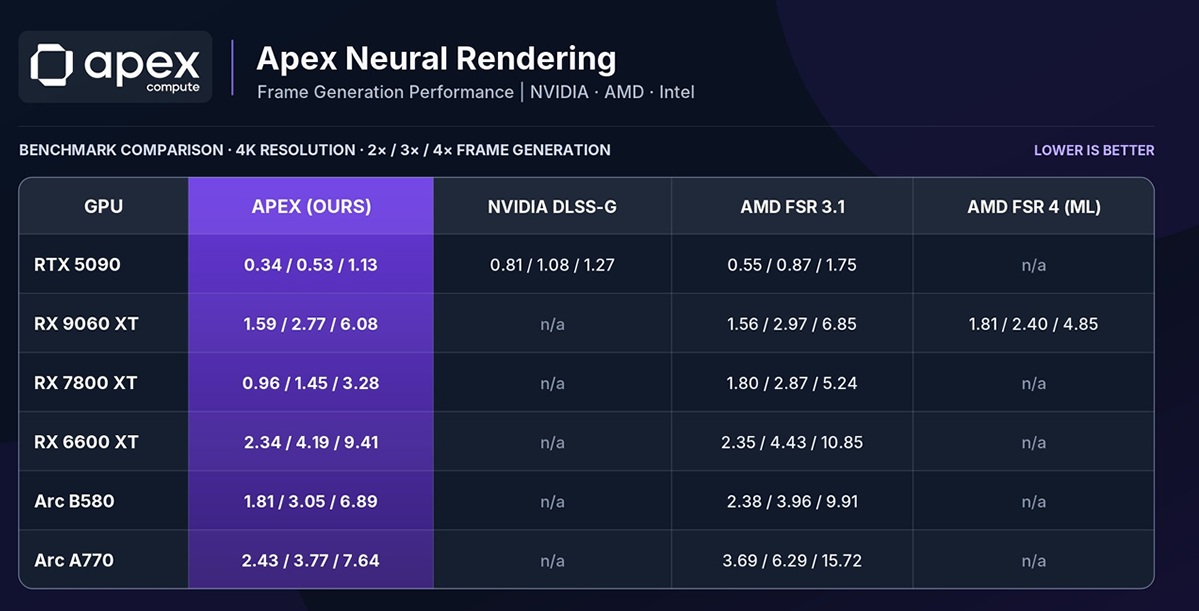
(Apex Neural Rendering Benchmarks)
On its GitHub page, Apex Compute details how to enable ANR Frame Generation through Optiscaler on Windows 10/11 PCs and Linux/SteamOS devices. Betas for the group’s Super Resolution and Ray Reconstruction technologies are expected “soon”.
Join the discussion on Apex Computing’s DLSS competitor on the OC3D Forums.