


TSMC pushes forward with A14 fab buildout, targeting 2028 ramp

TSMC has started construction on a 1.4nm fab
According to the Taipei Times, TSMC aims to start producing A14 (1.4nm) chips in 2028, and construction of Fab 25, TSMC’s primary A14 fab, is set to begin next quarter. This new site is situated in the Central Taiwan Science Park, near Taichung, and is expected to feature four production buildings.
TSMC claims that they are “working at full stream” to create new factories at home (in Taiwan). This works against claims that TSMC were planning to opt for a slower approach and create more chipmaking factories in the US. Consumers can expect to see products based on TSMC’s N2 node next year, and ahead of A14, TSMC plans to create a node called A16.
There is speculation that TSMC is accelerating its development timetable to “ensure market exclusivity.” By accelerating their timetable, TSMC wants to put more pressure on Intel and deny them customers from their 14A (1.4nm) node. Doing this could force Intel out of the foundry market, making TSMC an effective monopoly.
TSMC A14 Performance
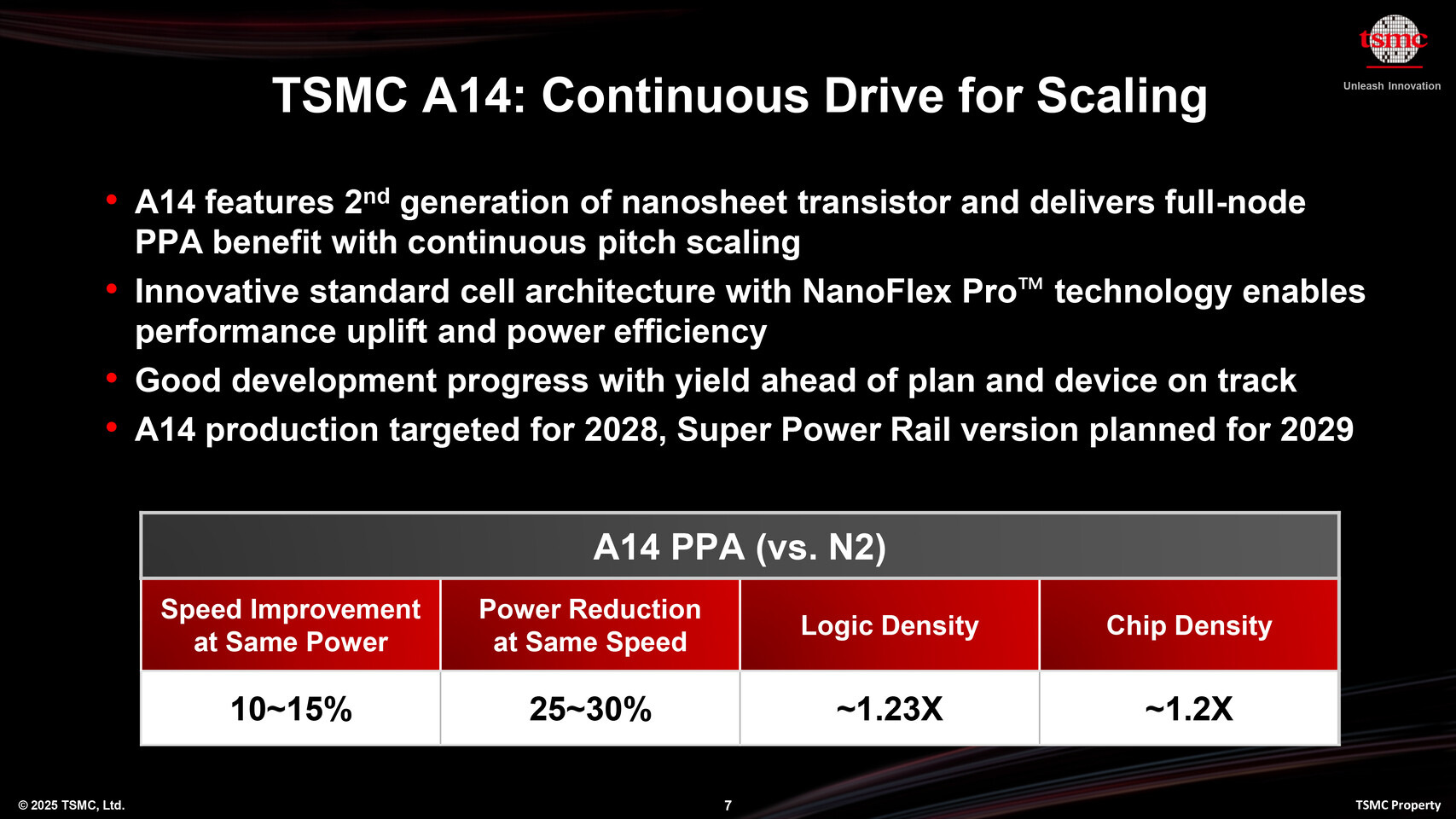
TSMC’s A14 node is expected to deliver a 23% increase in logic density. Overall, TSMC expects a 20% increase in chip density. This is compared to TSMC’s N2 (2nm) node. Performance-wise, TSMC expects 10-15% more performance than N2 at the same power. Alternatively, this node should be able to deliver the same performance as N2, but with 25-30% less power.
With its 1.4A node, TSMC plans to continue to make denser, more performant silicon. If everything goes as planned, this will keep TSMC ahead of its competitors. This will ensure its continued dominance of the silicon foundry market. If TSMC is hit with delays, it could provide an opportunity for its competitors to gain ground.
Ideally, TSMC wants to pull ahead of its planned construction schedule. This will allow TSMC to deliver its A14 node early and diminish interest in Intel’s 14A node. If successful, TSMC will deny Intel the opportunity it needs to gain traction with its foundry business. That’s good news for TSMC, but bad news for anyone who wants to see real competition within the foundry market.
You can join the discussion on TSMC pushing forward its A14 development plans on the OC3D Forums.