


Radeon boosts image quality with AMD Fluid Motion Frames 2.1

AMD further improves its Fluid Motion Frames technology with AFMF 2.1
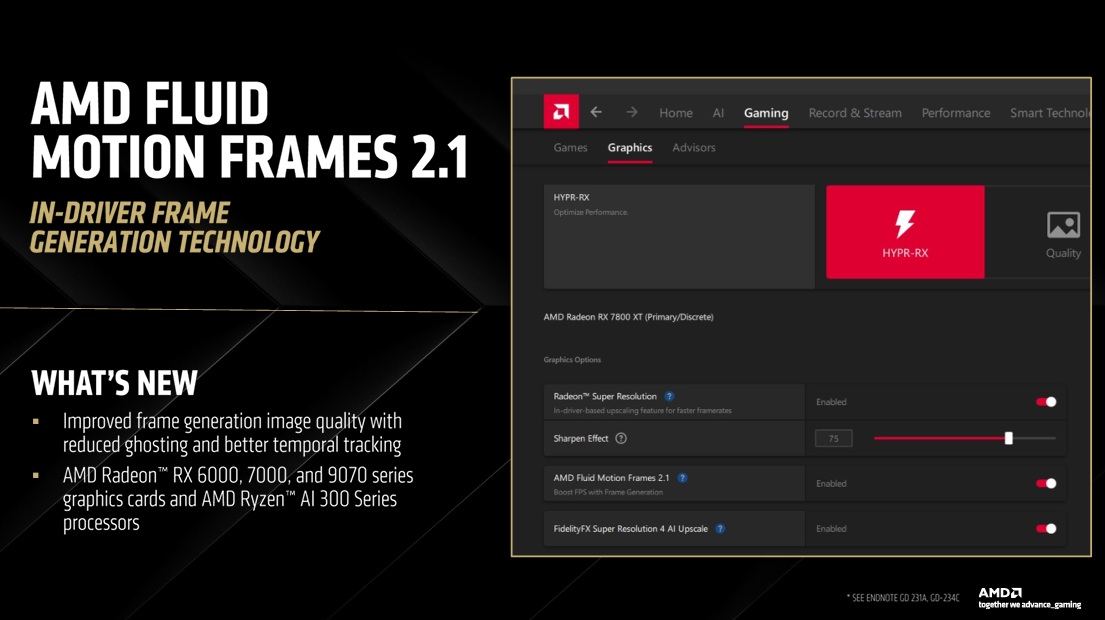
Alongside their Radeon RX 9070 series graphics cards, AMD has revealed its Fluid Motion Frames 2.1 (AFMF 2.1) technology. This is a revised version of AMD’s Fluid Motion Frames 2 tech, which boosts the image quality of AMD’s driver-level frame generation feature.
With AFMF 2.1, AMD claims they have reduced ghosting and improved temporal tracking. This allows AMD to deliver more accurate generated frames. This gives users a better gaming experience when AFMF is enabled.
Unlike AMD’s newly revealed Radeon Image Sharpening 2 technology, AFMF 2.1 supports more than just AMD’s RX 9070 series GPUs. AFMF 2.1 supports AMD’s RDNA 2 and newer graphics cards. In other words, AMD’s Radeon RX 6000 series and newer.
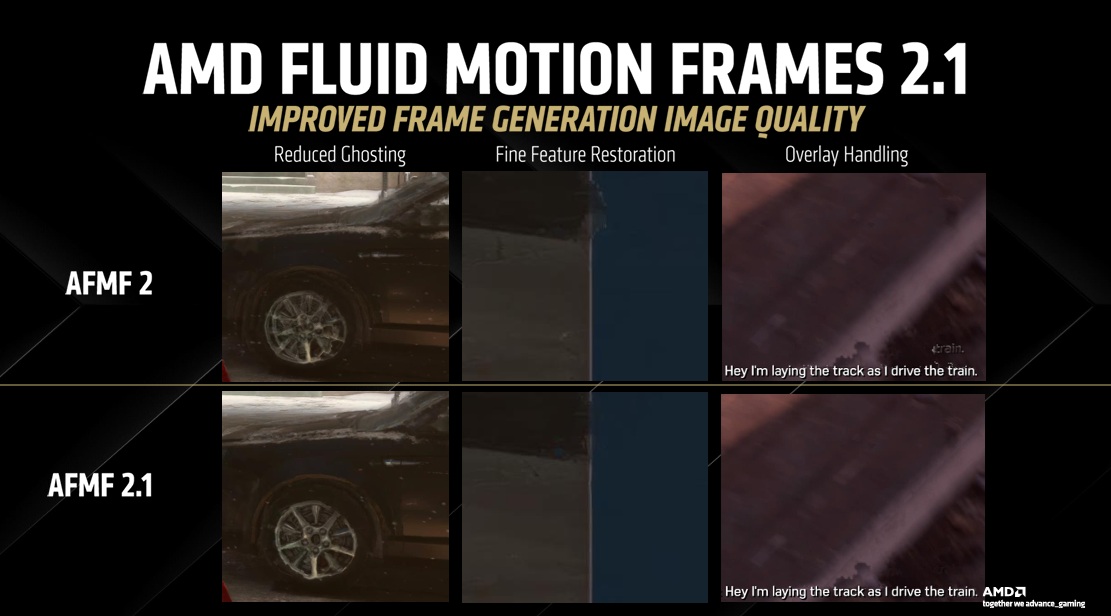
Below, we can see the impact of AMD’s improved Fluid Motion Frames technology. Note that ghosting is reduced. Furthermore, improved overlay handling reduces instances of overlay-related artifacts.
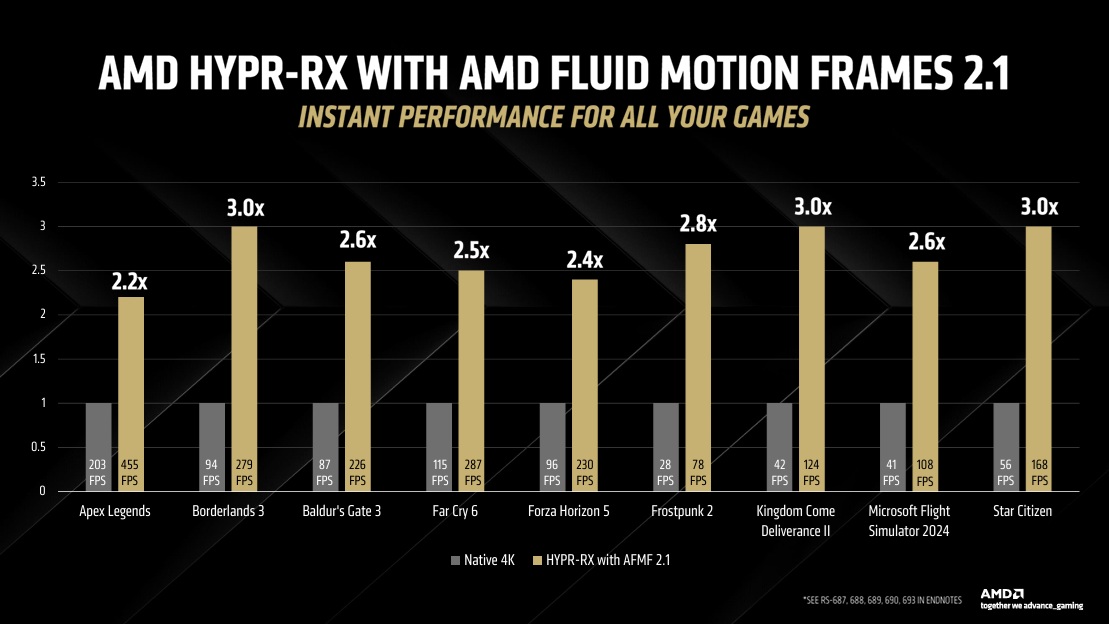
The impact of HYPR-RX and AMD Fluid Motion Frames 2.1
Below, AMD has highlighted the impact of HYPR-RX and AFMF 2.1. These benchmarks mostly compare games running at native 4K to games running at 4K with FSR 2’s Quality mode enabled and AFMF 2.1 active. As you can see below, this can result in greater than 2x increases in framerates.
For games that lack integrated frame generation support, AMD’s Fluid Motion Frames technology allows gamers to enjoy increased gaming fluidity. With AFMF 2.1, AMD has improved the image quality of its driver-level Frame Generation technique. Better still, these improvements can be enjoyed by anyone with a modern AMD graphics card. This feature will be available to Radeon users with next month’s AMD Software 25.3.1 driver.
You can join the discussion on AMD’s AFMF technology on the OC3D Forums.