


NAND makers reportedly struggle to improve QLC yields

NAND makers reportedly struggle to improve QLC yields
DigiTimes has reported that manufacturers are struggling to get their manufacturing yields to over 50%, which means that around half of the QLC NAND chips that are produced are non-functional or otherwise faulty. Increasing silicon yields is one of the ways that manufacturers can improve profitability, increasing their effective production rate (as more chip work), which increases their return on investment (getting more working chips from a single wafer means more profit).
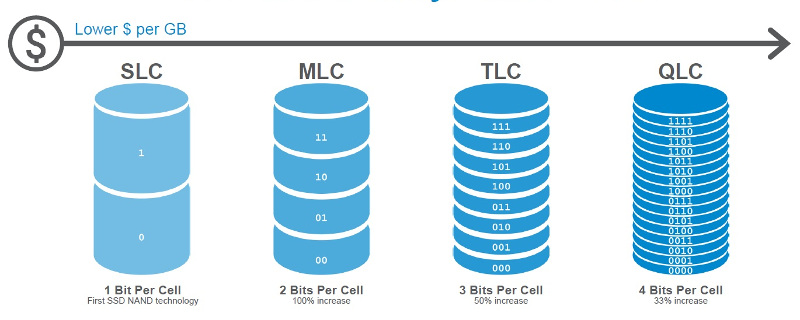
Lower than expected manufacturing yields has led to an undersupply of QLC NAND, which has prevented most manufacturers from releasing QLC-powered SSDs. Beyond that, low manufacturing yields also make it possible that TLC NAND is more profitable to produce, giving QLC NAND no competitive value.
If DigiTimes’ information is correct, it means that it will take a while before QLC NAND becomes a commonplace within the storage market, as yields will no doubt improve over time.
Over the past few months, NAND pricing has decreased significantly, lowering the cost of consumer SSDs. Most of today’s consumer SSDs make use of TLC NAND, with increasing NAND supply forcing prices down, something which is great news for consumers. The introduction of QLC NAND can potentially lower SSD prices further, assuming that yields will eventually improve enough to make the NAND type more profitable than TLC, at least when it comes to usable storage per wafer.
You can join the discussion on QLC’s reportedly low yield rates on the OC3D Forums.