


NZXT H2 Flow Mini ITX PC case Review

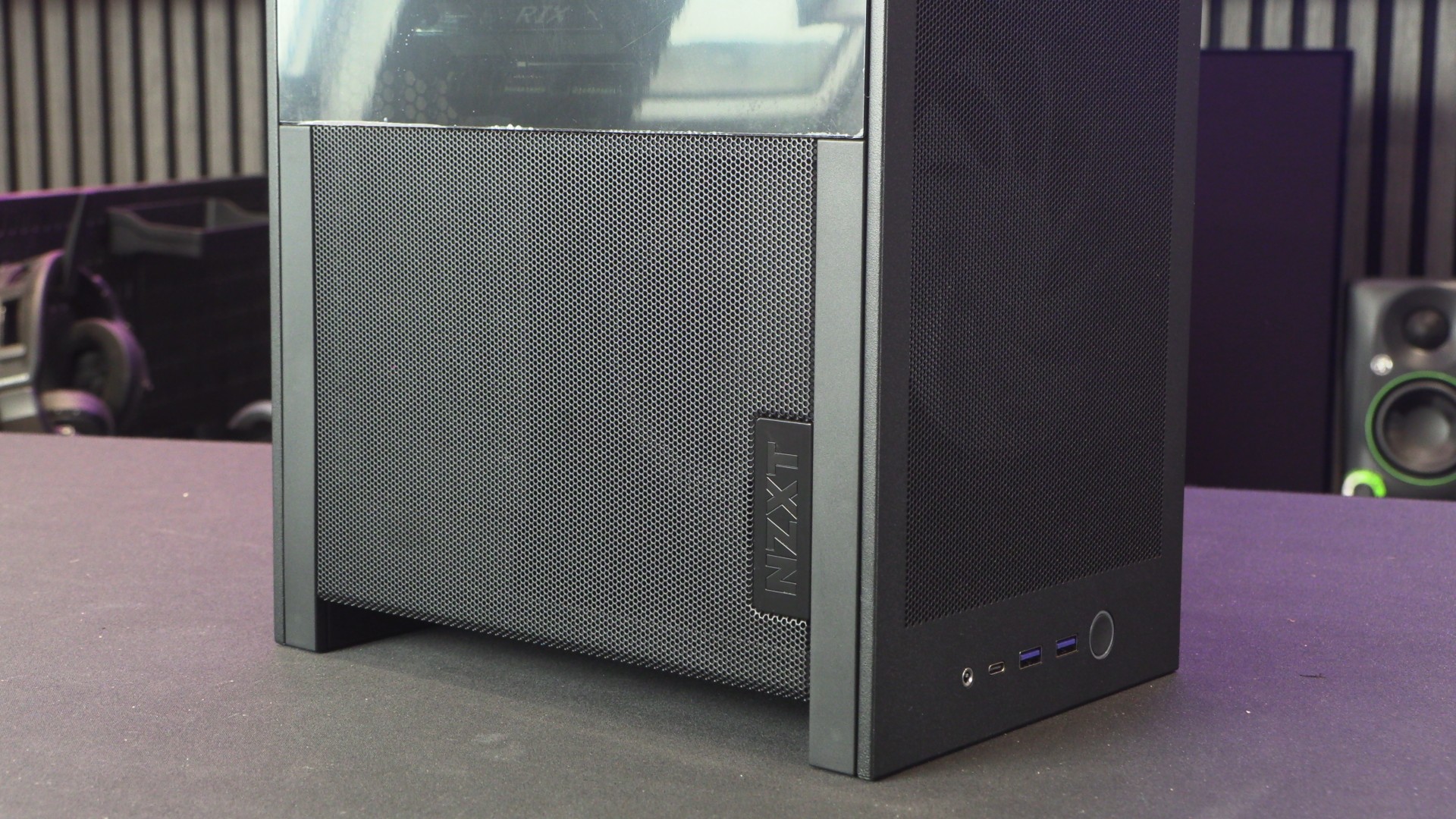
NZXT’s new H2 Flow is 10mm short of perfect
Today, we are reviewing NZXT’s H2 Flow PC case, a new Mini ITX PC case designed to deliver high-performance capabilities in an ultra-compact form factor. Compared with NZXT’s older H1 PC case, NZXT has added support for larger cooling options and larger graphics cards. That’s great news, given their higher power demands of modern hardware.
As always, the mini-ITX form factor is filled with trade-offs, and below we will discuss where this new case excels and where it could be improved.
NZXT also has a new PSU
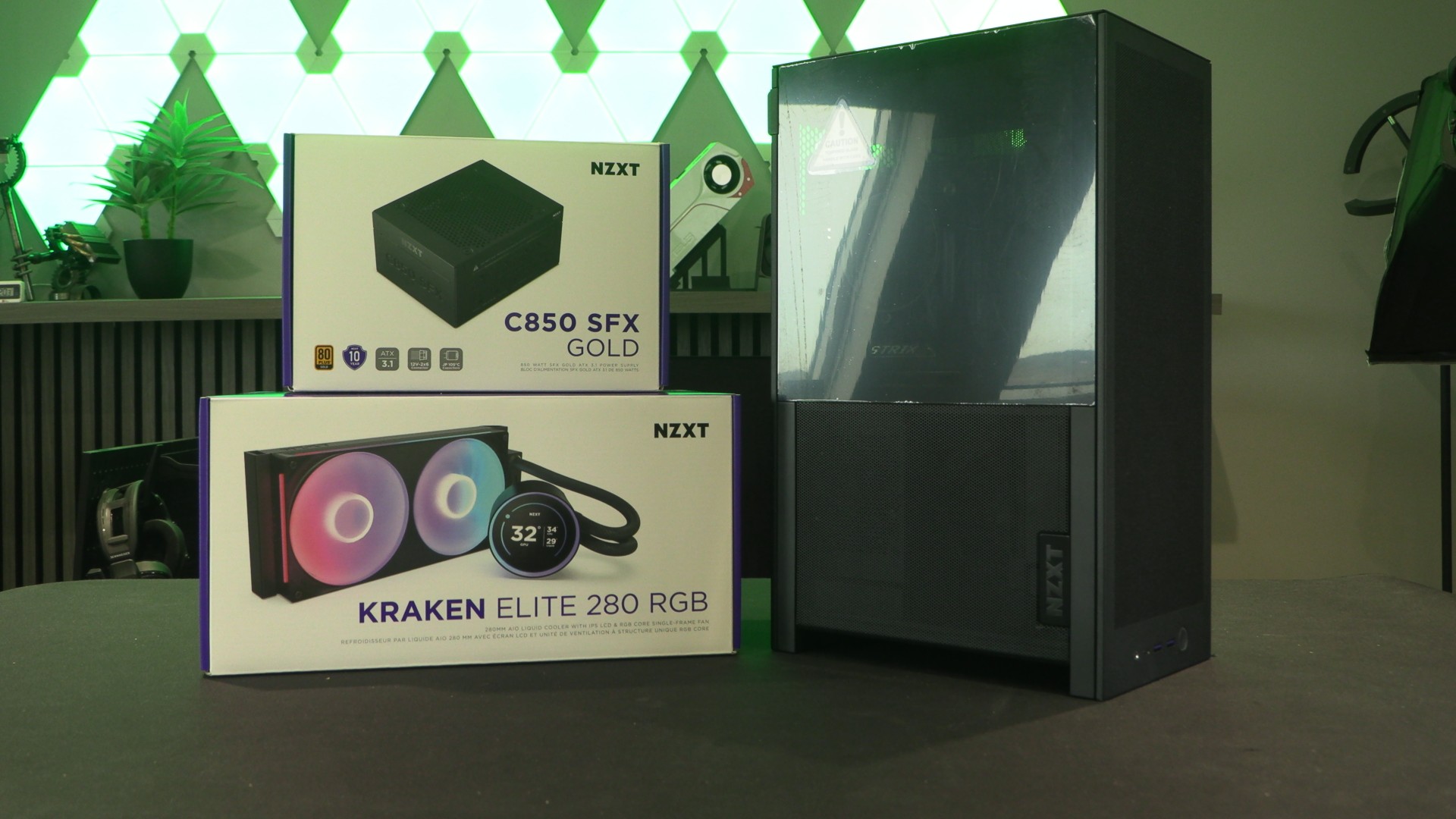
Alongside their new H2 Flow PC case, NZXT sent us their C850 SFX Gold PSU to use. This new PSU is an 80+ Gold-rated unit with one 12V-2×6 power connector and standard SFX sizing. NZXT did not ask us to review this PSU, so we will show it here as part of our NZXT H2 Flow build.
Note that this PSU has two 12V-2×6 power outputs and one 12V-2×6 cable. One of these 12V-2×6 cables can be used to power two 8-pin (6+2-pin) PCIe power cables. An unusual design decision. With this PSU’s extra 8-pin (6+2-pin) PCIe power port, this PSU can support GPUs with three 8-pin PCIe power plugs.
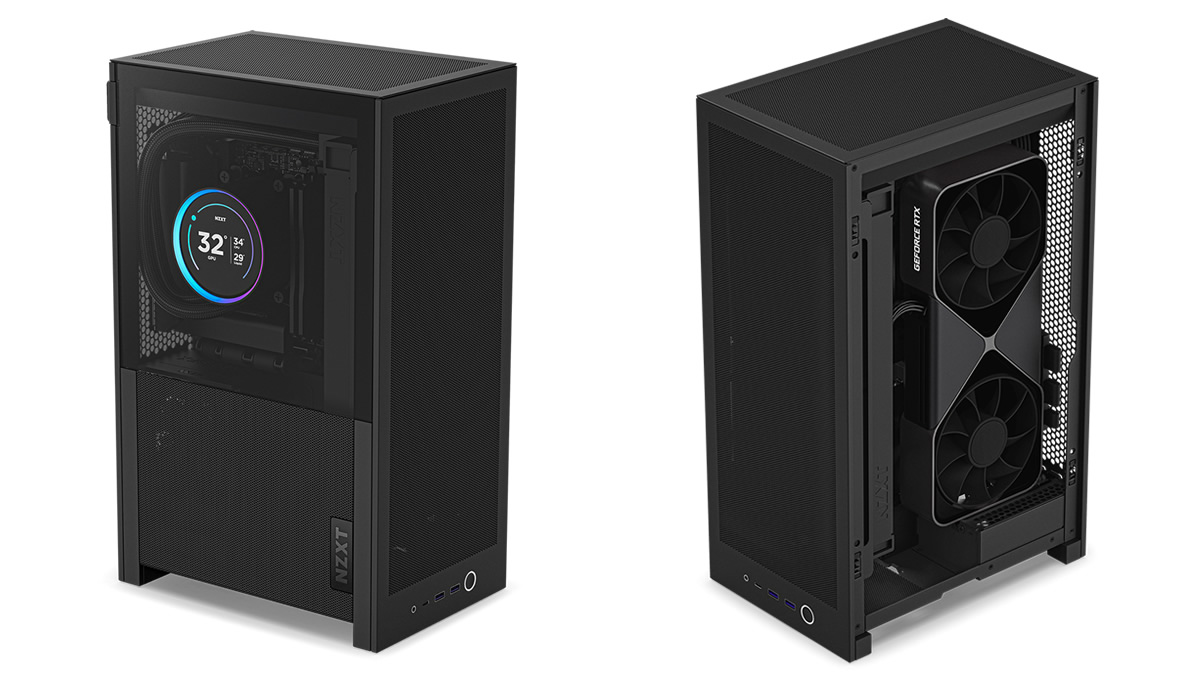
Compact design, maximum airflow
The H2 Flow case has a volume of 20.7 litres. This means the case occupies less than half the volume of NZXT’s 46.7 L H5 Flow. On your desk, this case measures 181mm wide and 263mm deep, giving it a 476 cm² footprint. This is a compact PC case despite its support for high-end hardware.
NZXT H2 Flow Pricing
NZXT’s new H2 Flow is available starting today, with the following regional prices. In the US, the case will cost $149.99; in Europe, €149.99; and in the UK, £129.99.
At launch, this case will only be available in black. We do not know if this case will be available in other colours at a later date.
Cooling Support (Clearances
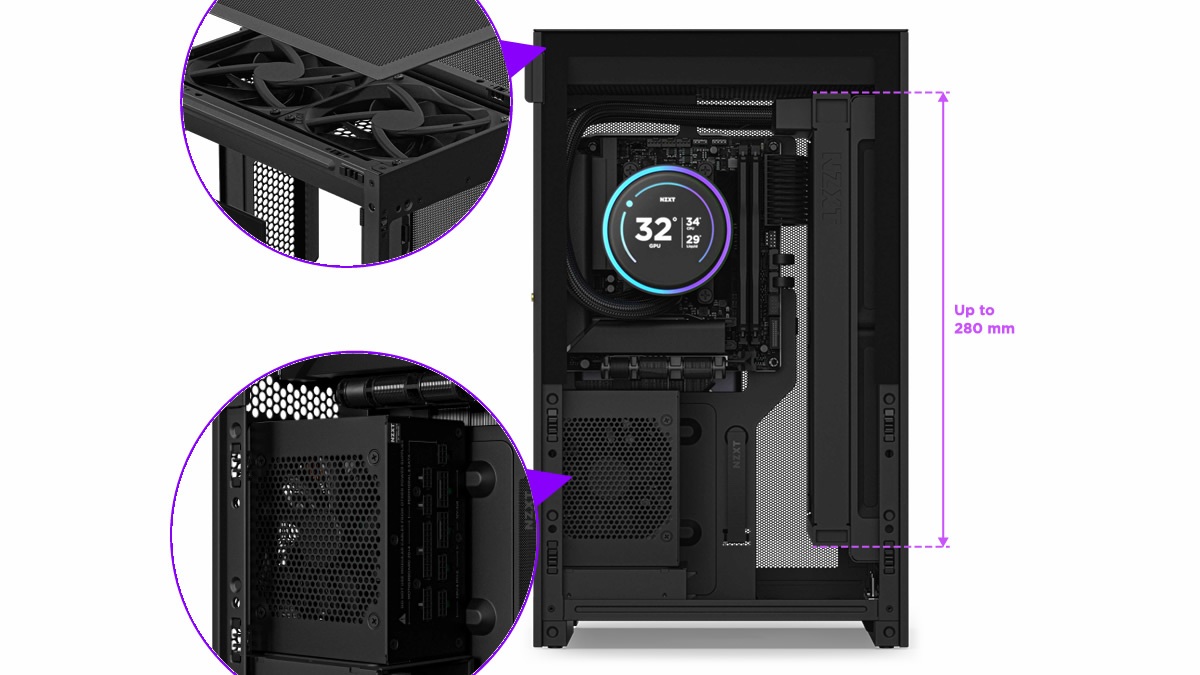
The front of the H2 Flow supports liquid-cooling radiators up to 280mm in size and a combined radiator/fan thickness of up to 60mm. PSU-wise, this case supports both SFX and SFX-L PSUs, with lengths of up to 130mm. This case does not support ATX-sized PSUs.
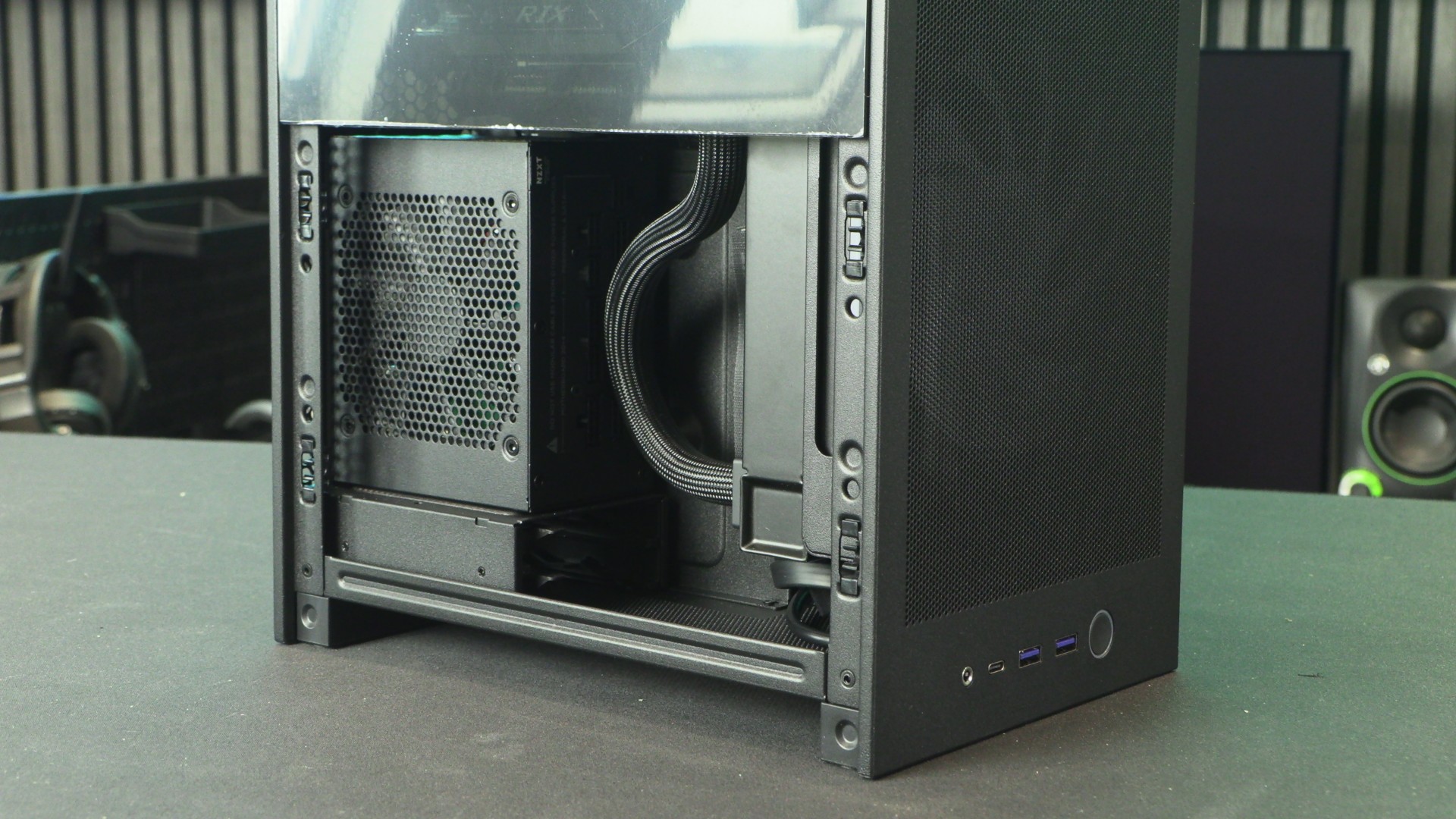
If you opt for an air-based CPU cooler, this case supports coolers up to 75mm thick. GPU-wise, this case supports GPUs that are up to 331mm long, 65mm thick, and 150mm wide.
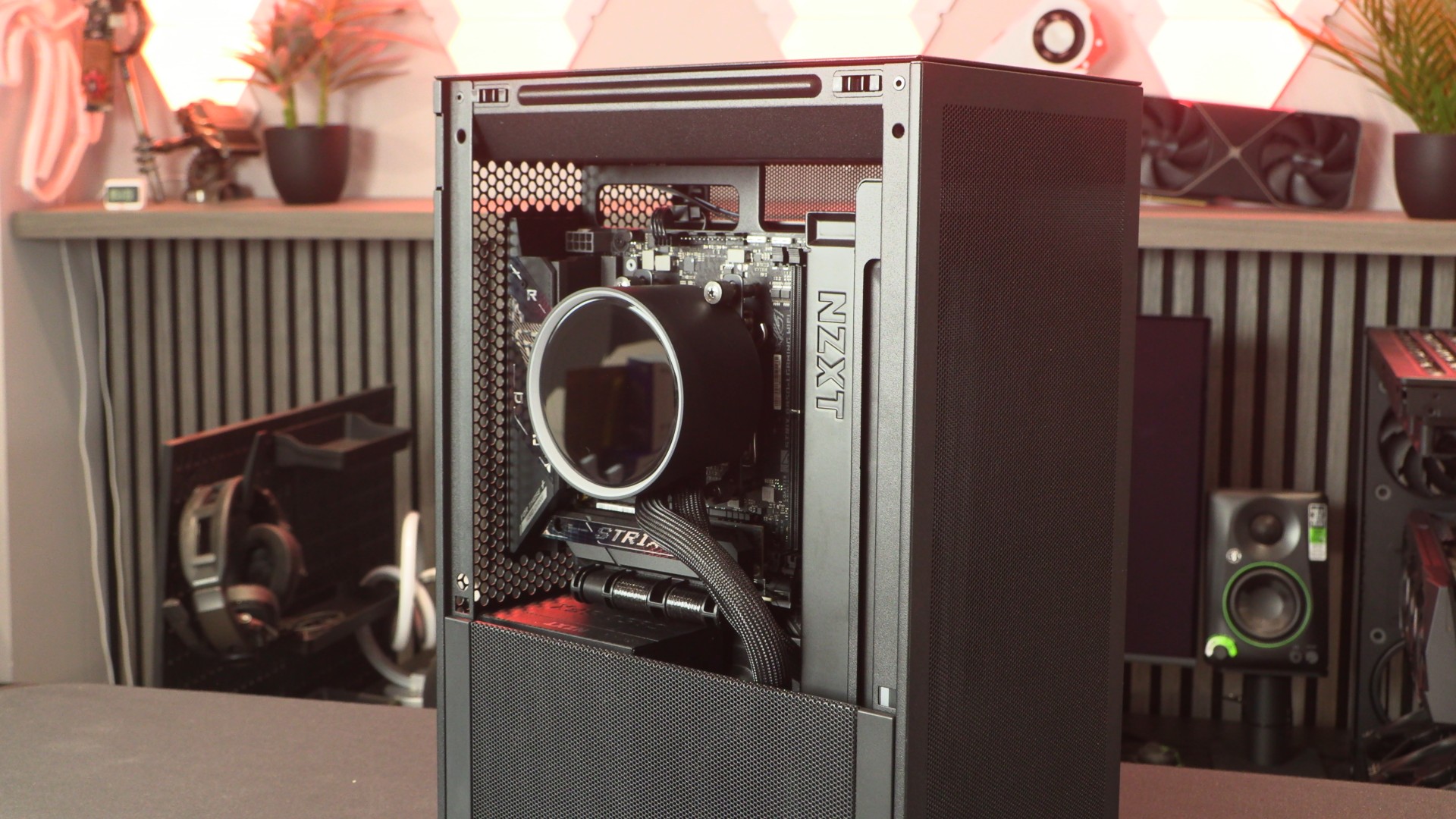
The top of the H2 Flow has two pre-installed F120Q CV fans, powered by 3-pin DC connectors. These act as the H2 Flow’s primary exhausts.
GPU Support – 10mm short of perfect
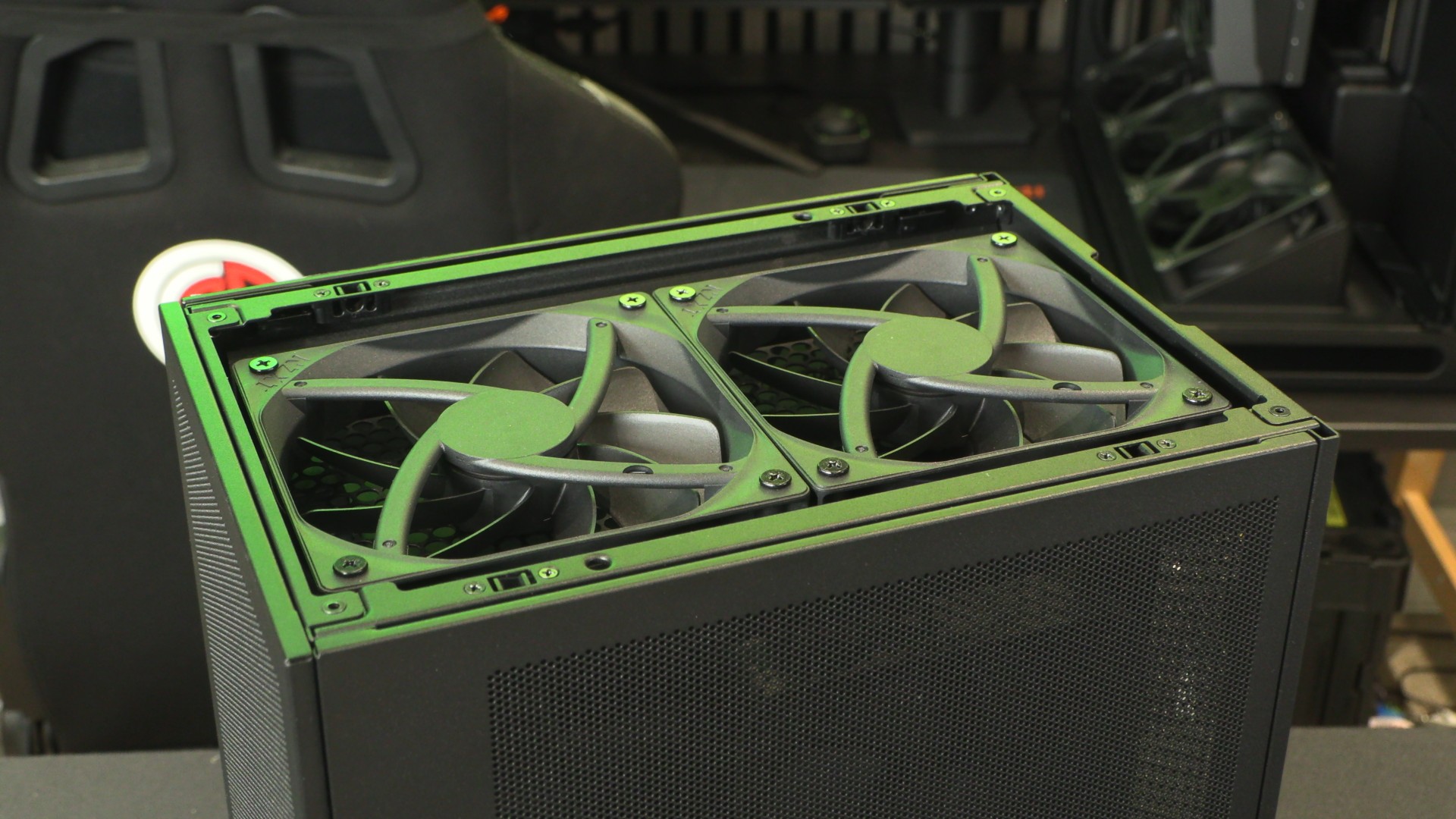
Let’s start off by confirming that the PCIe riser case included with this PC case is PCIe 5.0 compatible. This enables it to support the latest graphics cards from all vendors at their full bandwidth. If you have a PCIe 5.0-capable motherboard and GPU, this riser card will offer users full PCIe 5.0 bandwidth.
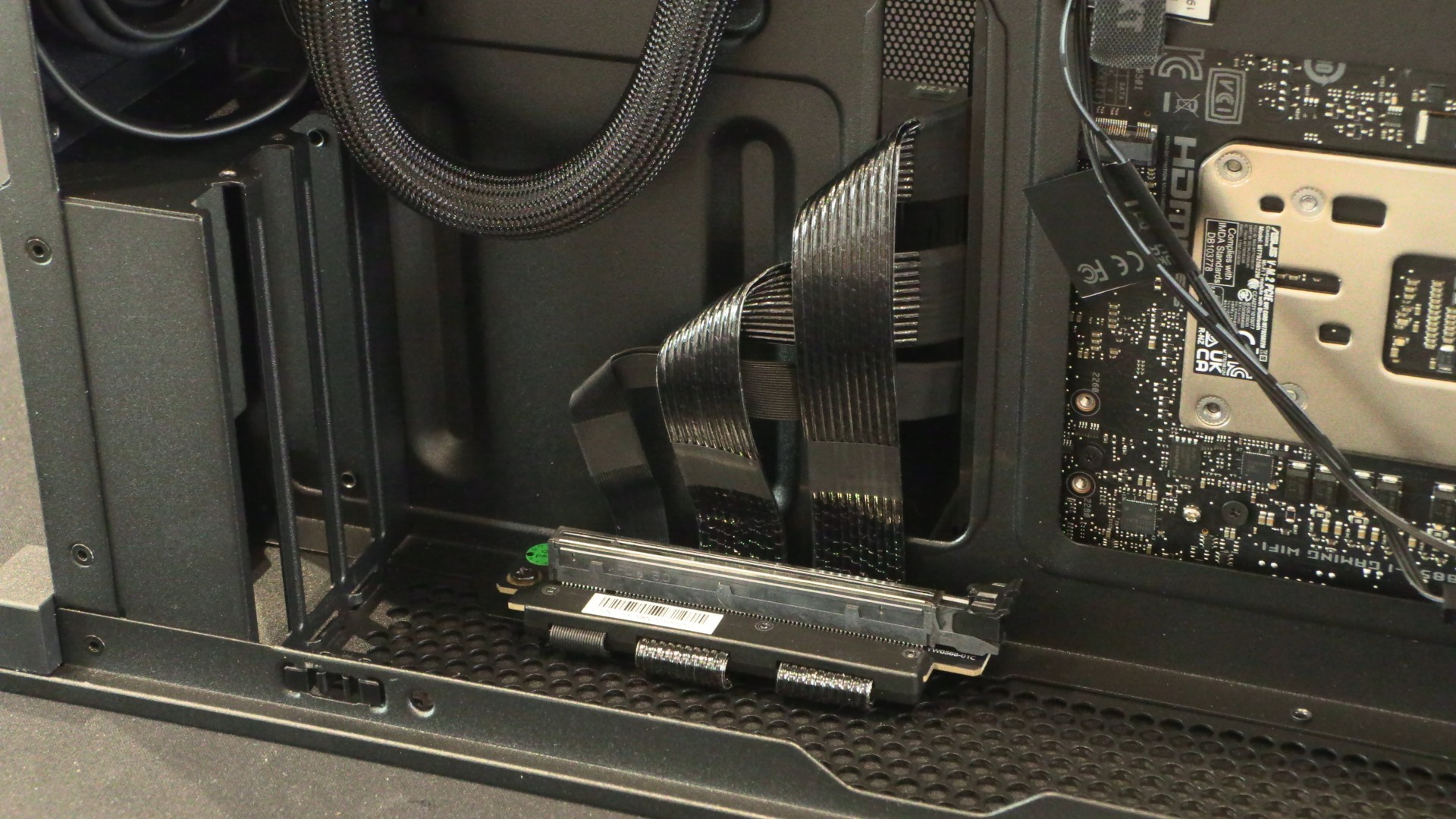
When following standard PC-building conventions, in vertical radiator mounting scenarios, you will want the radiator’s hose inlets at the bottom. If we didn’t do this for a build, we would get a lot of complaints on social media, especially YouTube. That said, if you do this with the H2 Flow, you will encounter an issue. Your hose won’t cleanly route around your graphics card. To say the least, it will be a tight fit.
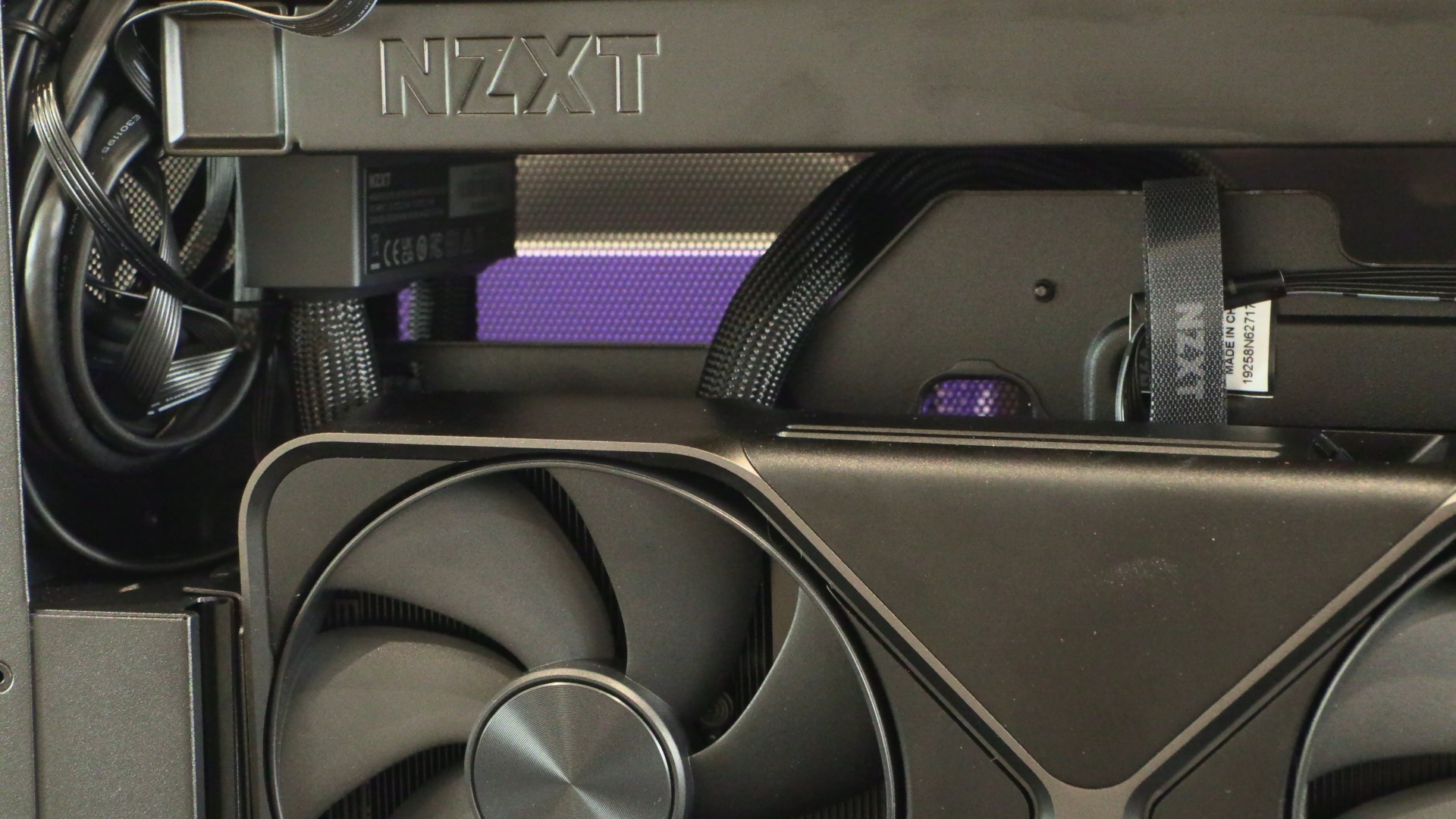
Either in front of or behind your graphics card, this isn’t a nice way to route your tubing.
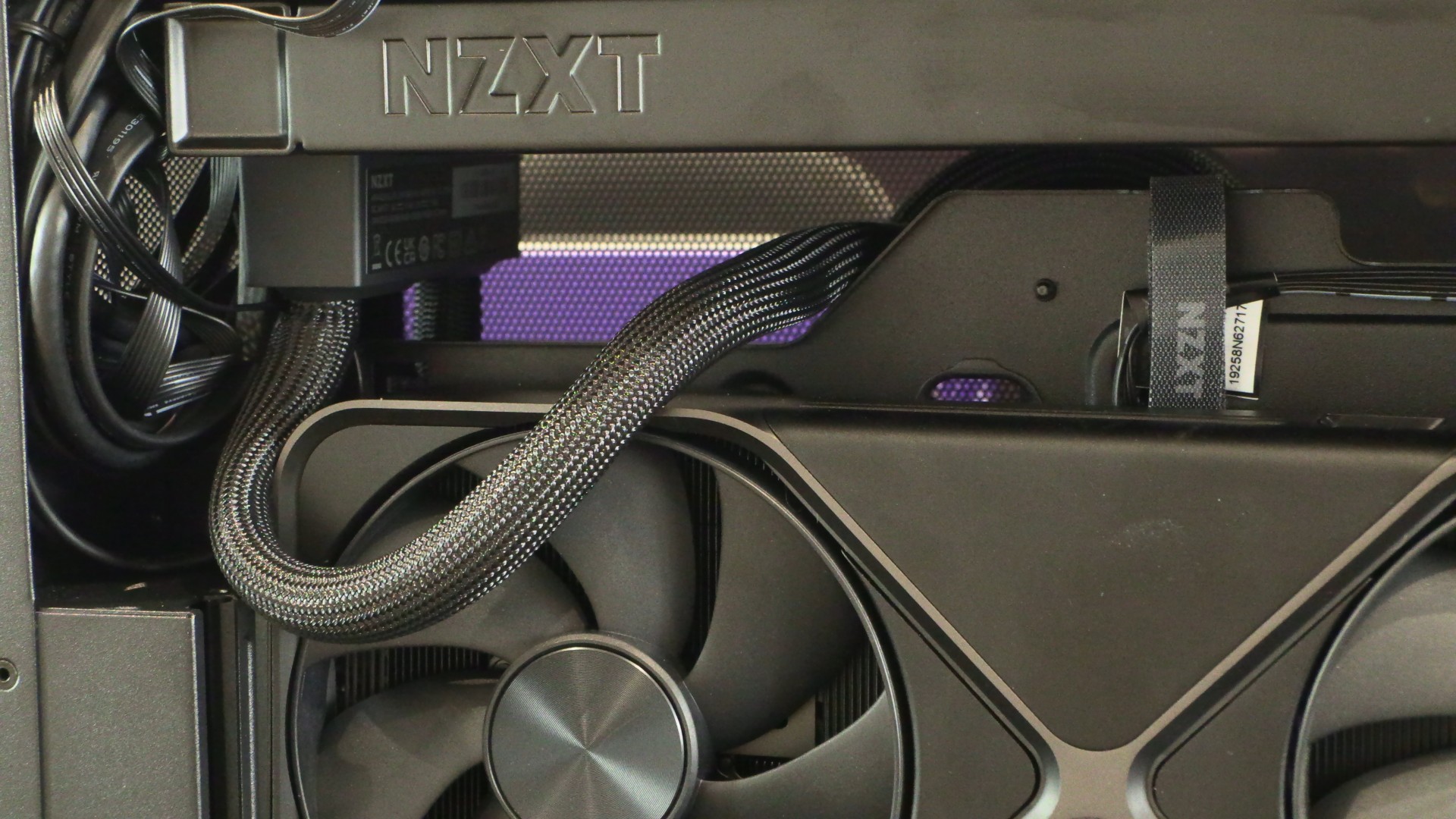
Clearly, NZXT intends for its users to mount their liquid coolers in a “tubes at the top” configuration. This will undoubtedly make some PC builders feel icky. I can already hear people yell, “But what about the air bubbles?!”
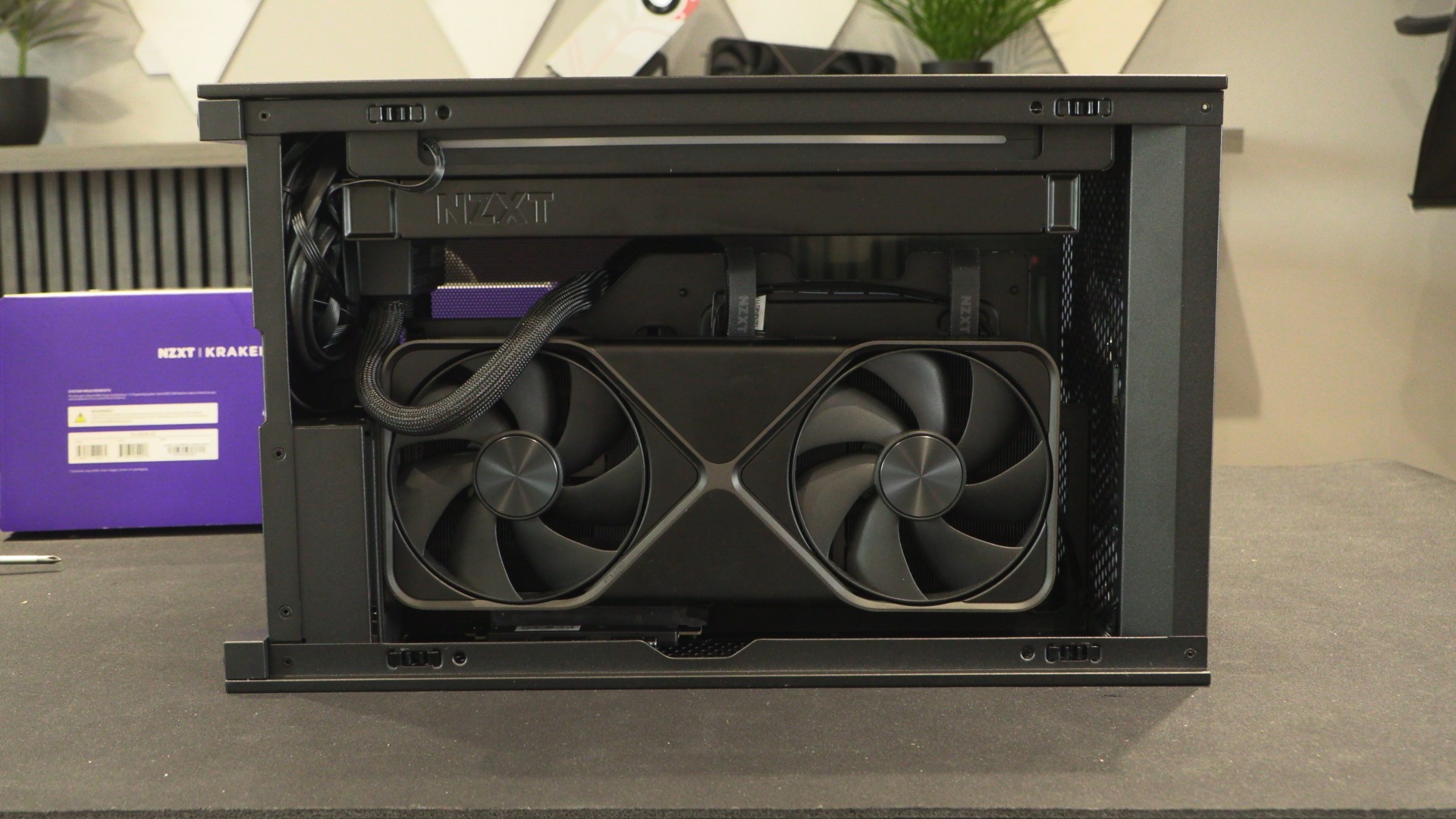
The Liquid Cooler Problem…
We know there will be many reviewers and users of the NZXT H2 who will complain that the liquid cooler tubing routing is suboptimal in this case. If you have your liquid coolers’ inlets at the bottom, which is highly recommended online, you will have issues routing your tubing around your graphics card.
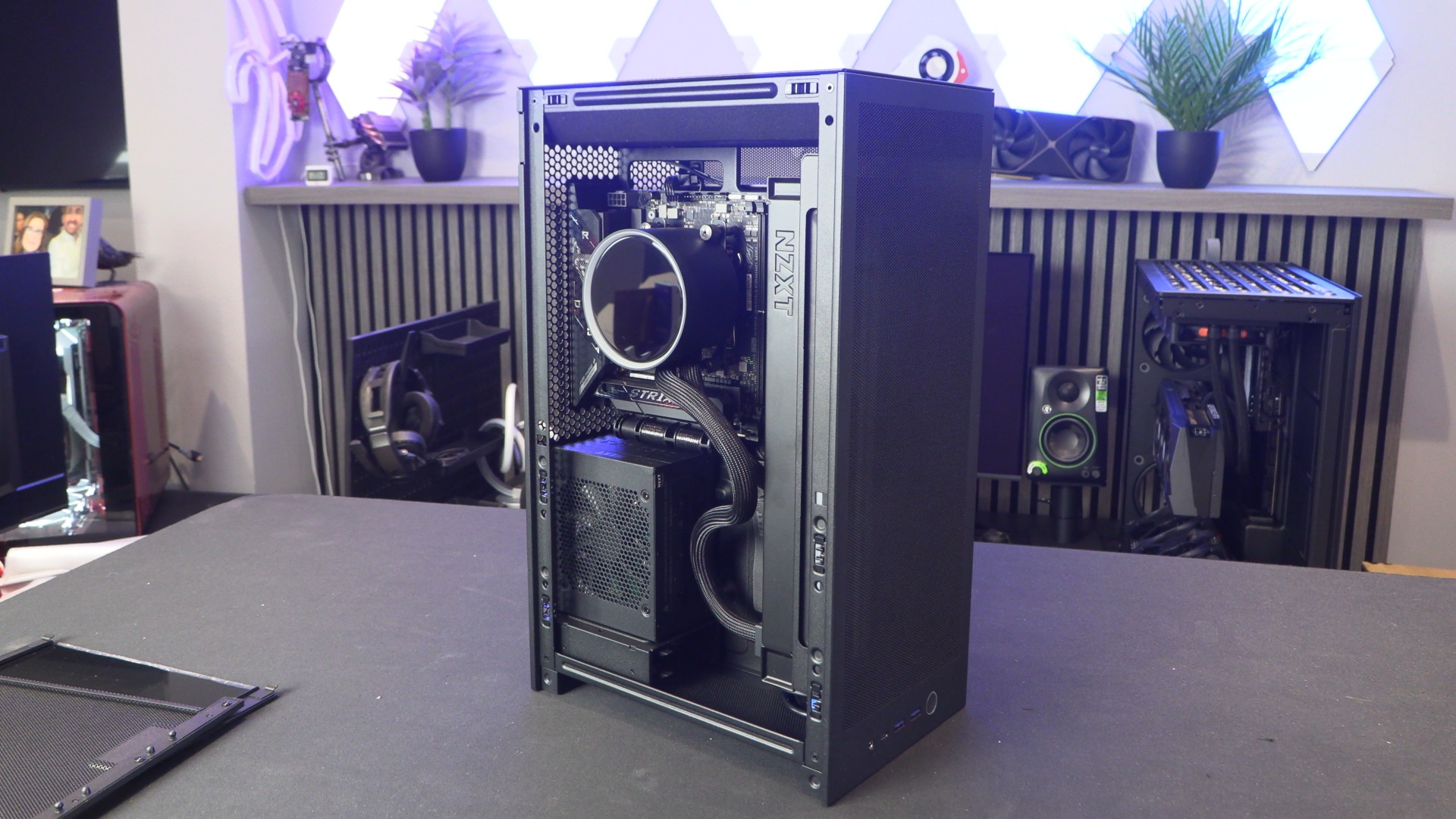
At the top, there is ample space to route tubing for a 280mm liquid-cooling solution around a graphics card. Clearly, this is NZXT’s intended configuration.
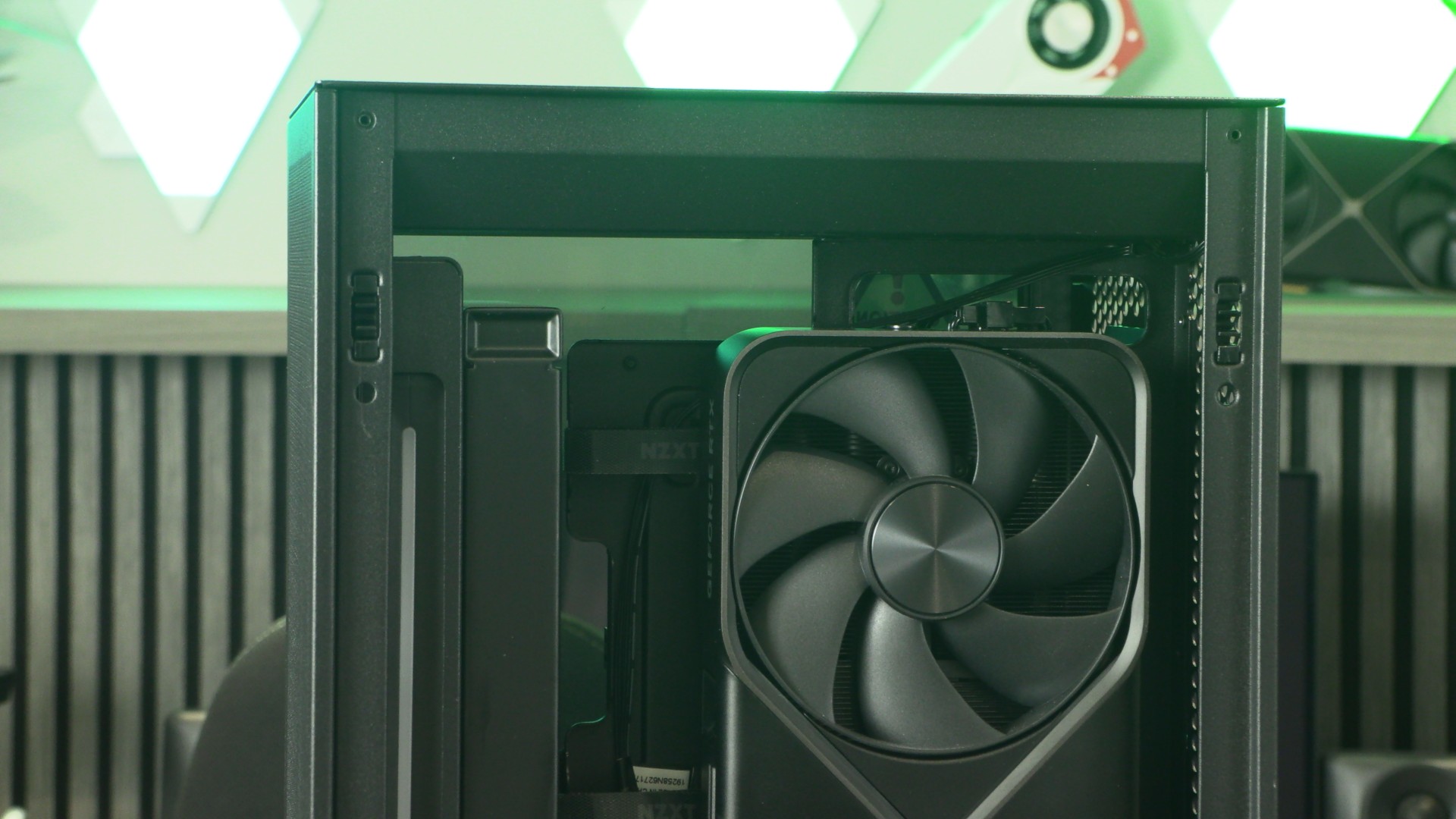
An extra 10mm would make this case perfect
In my view, the two biggest problems with the NZXT H2 would have been solved by making it 10mm wider. Two problems? The extra space would have eliminated the liquid cooling hose-routing issues we mentioned above. An additional 10mm of clearance behind your graphics card would provide ample space for tubing routing. So what about the other problem? Well, it comes down to how modern GPUs are designed.
Most modern GPUs have a “flow-through” cooling design. Fans can pull air in on one side of the graphics card and push it out on the other. For the H2 Flow, there isn’t much space behind a graphics card for this flow-through airflow. Having an extra 10mm of space would give GPUs more room to breathe, improving their cooling potential. As it stands, much of this flow-through airflow is directed at the rear of your motherboard, which isn’t ideal. Extra space could help prevent heat buildup and help heat flow out of the case more optimally.
Alternatively, the option to move this case’s PCIe riser card one slot forward would have been helpful. This would have achieved the same thing as making the case wider, though it would limit how thick your GPU could be if you chose to move your PCIe riser connector.
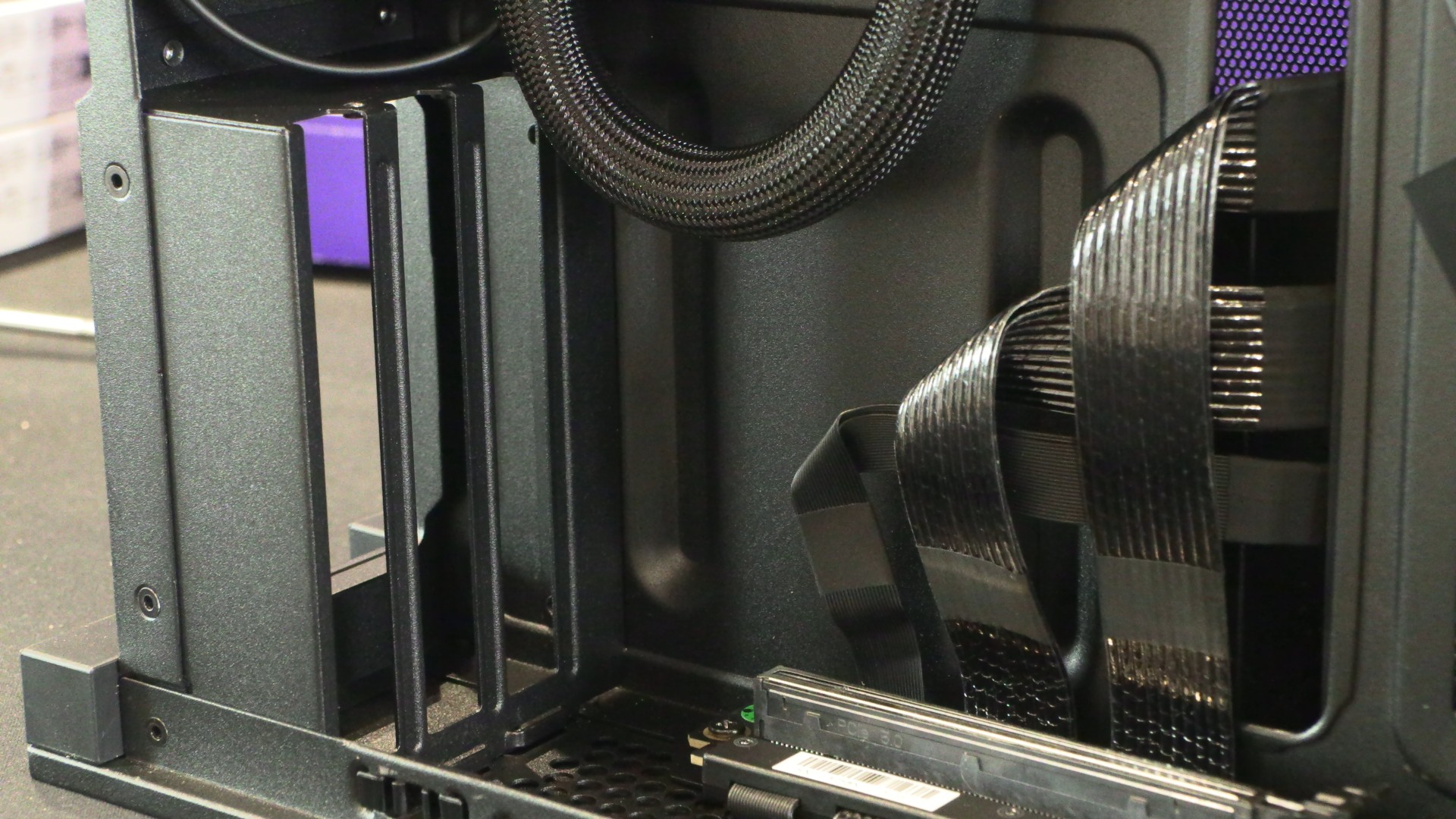
Cable Management and I/O options
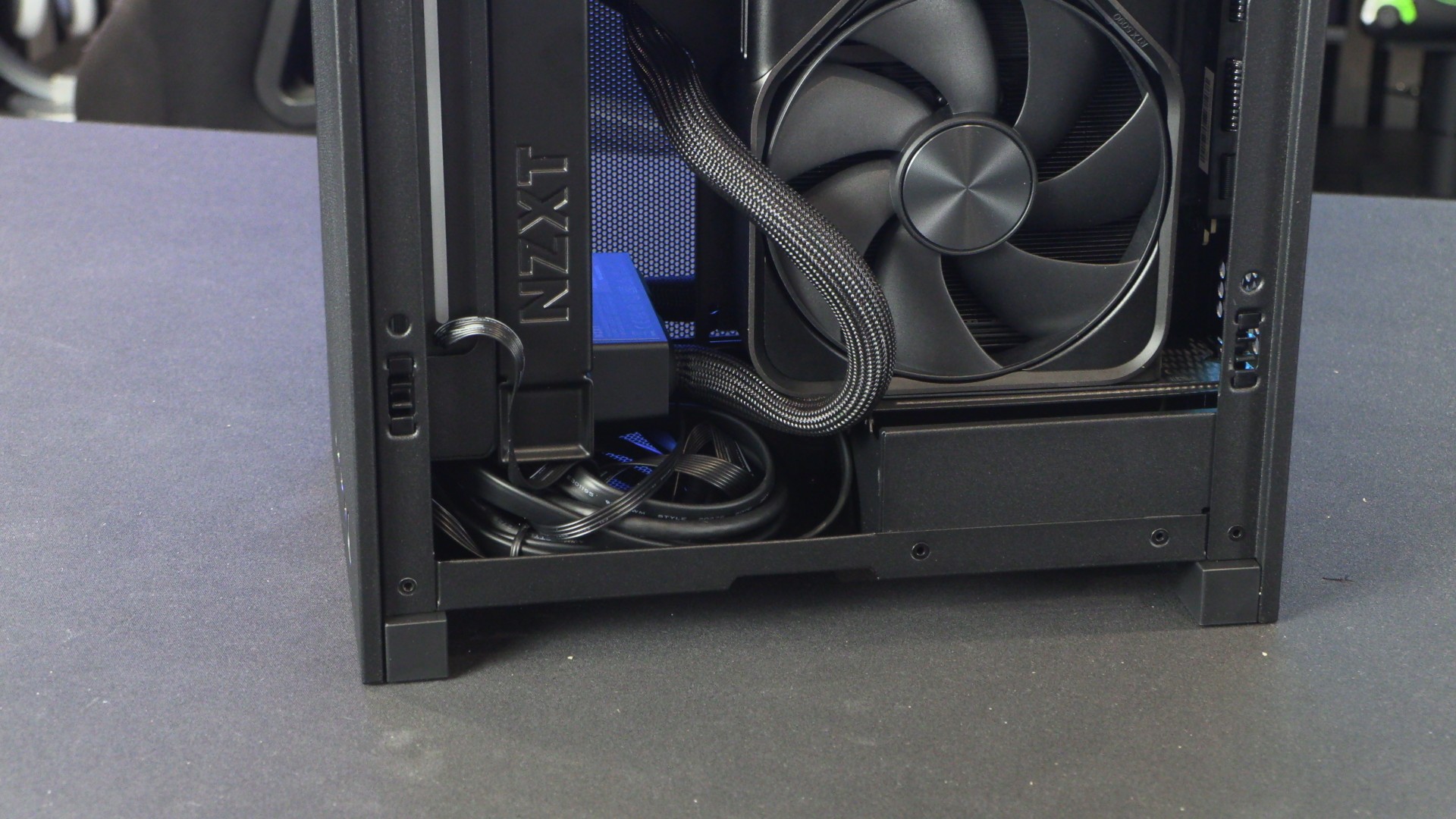
The H2 Flow has plenty of space for cable management and many velcro tie-downs to secure your PC’s most important cables. There is also ample space at the base of the case to help hide extra cable length. A nice feature.
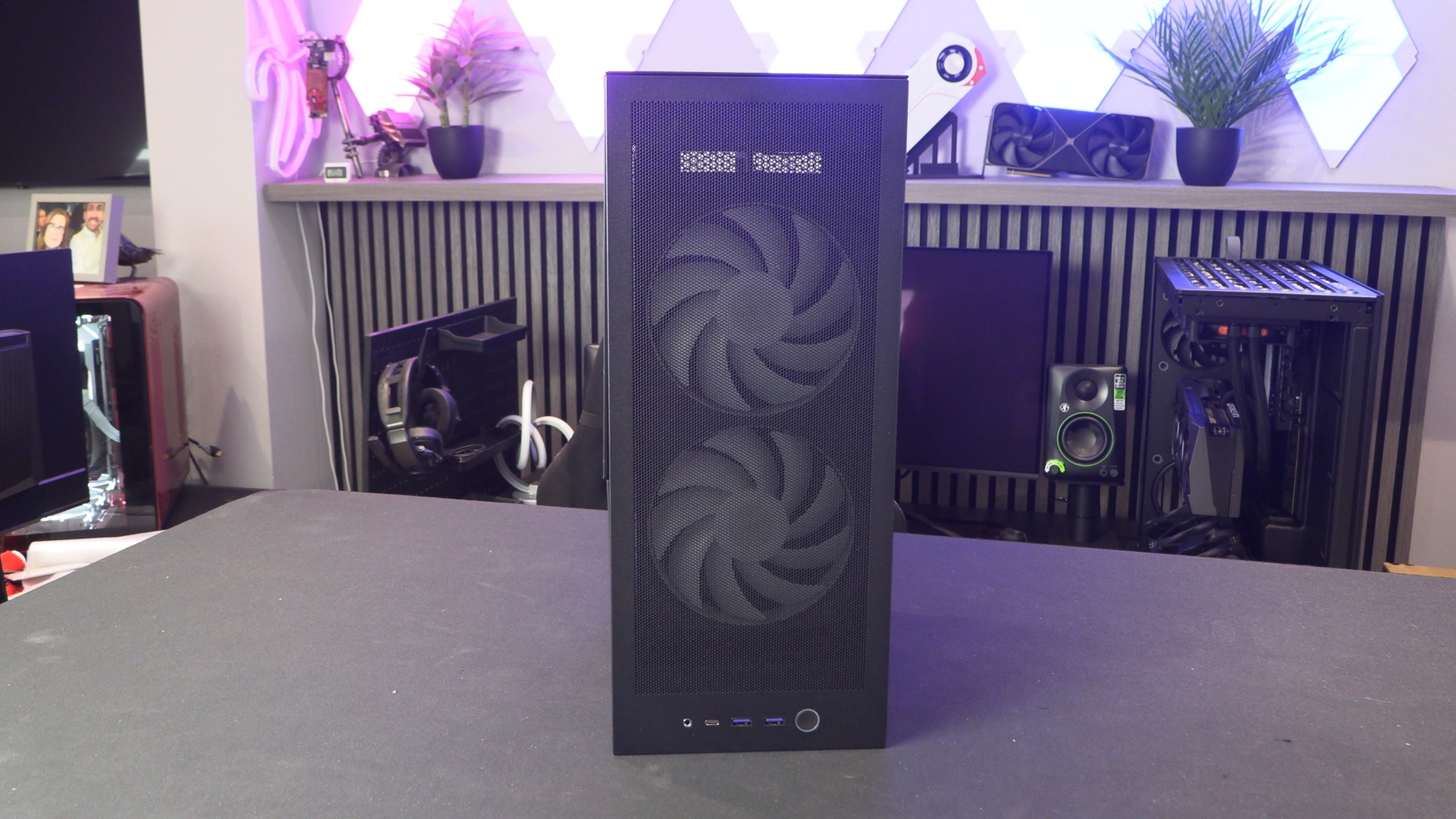
At the front of the H2 Flow, there are two USB 3.2 Type-A ports and one USB 3.2 Gen 2×2 Type-C port. There is also an audio in/out jack for audio headsets.
Closing thoughts
Overall, NZXT’s H2 Flow is a solid Mini ITX PC case. It supports large CPU liquid-cooled systems and offers strong GPU support. That said, with just 10mm of extra width, this case would have been grasping at perfection. More space for modern GPUs to breathe and easier tubing routing for those who insist on having their inlets at the bottom.
Don’t get us wrong: this case offers major improvements over NZXT’s older H1 Mini ITX chassis. This new case can support much higher-end hardware configurations. With smaller GPU models like Nvidia’s SFF-Ready RTX 5090 Founders Edition, this case can indeed support an RTX 5090 graphics card. The NZXT H2 Flow will undoubtedly become the home of many compact gaming powerhouses. That said, just a little more space could have made this case almost perfect in our eyes.
If you want to push the limits of the Mini ITX form factor, the H2 Flow will help you do that. This case is large enough for powerful GPUs, and its 280mm liquid-cooling support also supports powerful CPUs. That said, the Mini ITX form factor is always constrained by its size. You can always fit more hardware inside a bigger case. That said, aside from the few issues we mentioned, the H2 Flow is a solid mini ITX chassis, especially for gamers.
You can join the discussion on NZXT’s H2 Flow Mini ITX PC case on the OC3D Forums.