





That “HB-DIMM” memory patent from AMD isn’t new, it’s already available

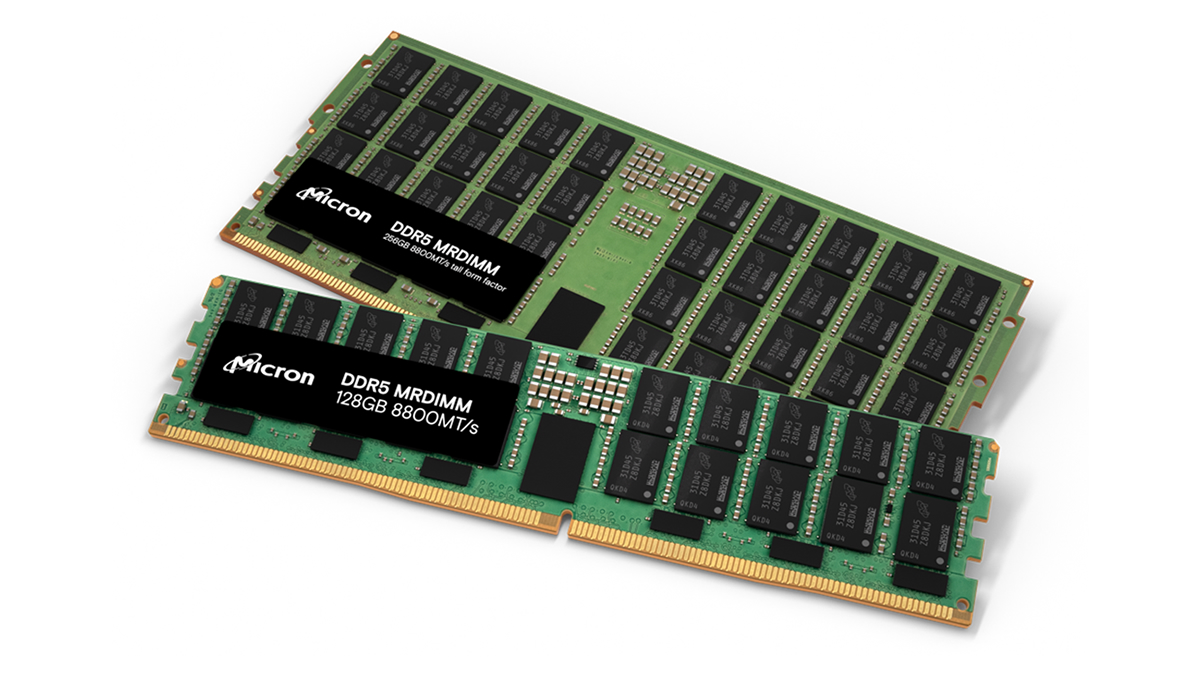
AMD’s “new and improved RAM architecture” has already arrived, but under a different name
I’ll be honest, when I heard reports of a “new and improved RAM architecture from AMD“, I got a little excited. Memory is a major performance bottleneck for many applications, and the new “HB-DIMM” patent from AMD promised to alleviate that issue. Sadly, this memory technology isn’t new. However, the good news is that it is already available, at least in a sense.
AMD’s HB-DIMM technology aims to boost the performance of DDR5 memory by effectively doubling-up a standard DDR5 memory module. Each new memory module performs multiplexed accesses through “two or more independently addressable pseudo-channels”. This allows these new memory modules to “transmit data from the memory chips over a host bus at a data rate twice that of the memory chips”.
This technology aims to address the relatively slow advancement of the DDR memory standard. As CPU core counts have exploded, memory bandwidth increases have been limited. With this new tech, AMD aims to deliver boosted performance.
while these enhancements have improved the speed of DDR memory used for computer systems’ main memory, further improvements are desirable. In particular, because the memory bandwidth required for applications such as high-performance graphics processors and servers, which have multiple cores and a corresponding increase in bandwidth-per-core requirement, are outpacing the roadmap of bandwidth improvements for DDR DRAM chips. Improved DIMM architectures are needed to meet such requirements with current DDR chip technologies such as DDR5.
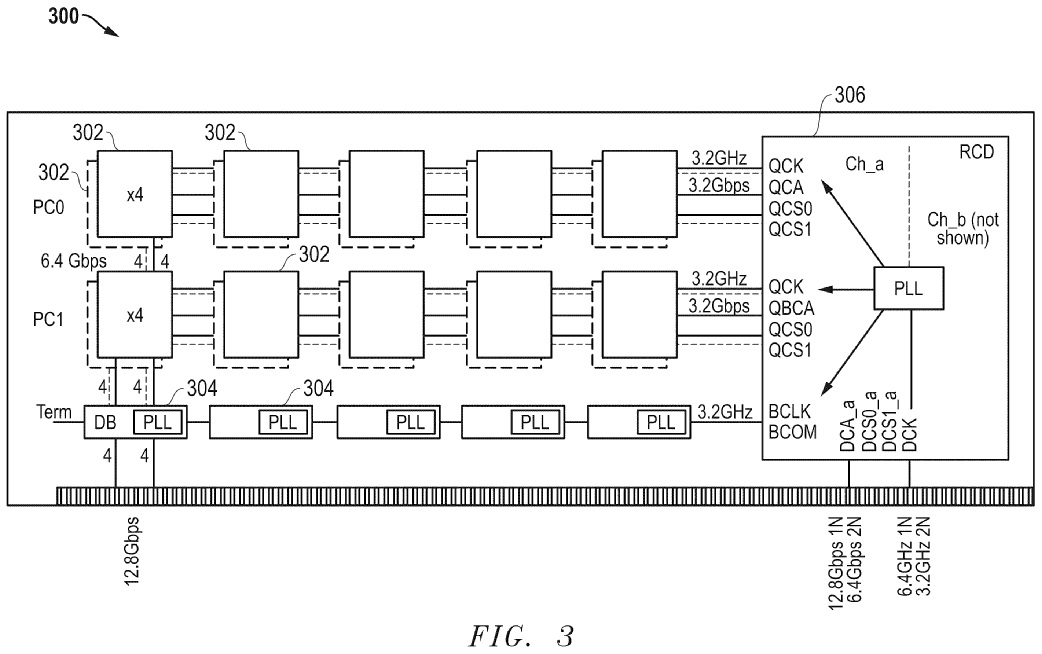
(AMD HB-DIMM memory – from AMD patent US20250279125)
JEDEC’s MRDIMM standard is a form of AMD HB-DIMM technology
AMD’s HB-DIMM US20250279125 patent is new, but it is based on older AMD patents from several years ago. This updated patent is added work from AMD to further refine and secure its IP. In reality, HB-DIMM technology is unlikely to reach the market, as JEDEC already has a memory standard that achieves the same thing. This memory tech is MRDIMM (Multiplexed Rank Dual Inline Memory Modules).
MRDIMM is the JEDEC standard that delivers on the ideas of several companies. AMD has its HB-DIMM IP, and Intel has its MCR-DIMM IP. Both achieve similar feats, and it makes no sense to let these memory technologies fragment the DRAM market. This is where JEDEC steps in, creating an industry standard that the entire semiconductor market can get behind. This avoids a VHS VS Betamax-style memory format war, which is a win for everyone.
We frequently see these efforts from JEDEC. JEDEC’s GDDR6 and GDDR7 standards avoid a situation where memory manufacturers like Samsung, Micron, and SK Hynix create entirely different GDDR memory technologies for each generation. Unified standards make it easier for the overall hardware market to adopt new standards. With this in mind, MRDIMM can be considered the industry standard version of AMD’s HB-DIMM tech.

The future is already here – MRDIMM memory modules are already available
MRDIMM memory modules are now available and are currently supported by Intel’s “Granite Rapids” series Xeon CPUs. Phoronix has recently tested the impact of MRDIMMs on system performance, confirming that they deliver increased memory bandwidth and lower latencies than standard DDR5 memory modules. We expect MRDIMM memory to be supported by future AMD EPYC CPUs.
Currently, it is unclear if MRDIMM technology will ever be used in consumer-grade PCs. Regardless, it is a technology that exists and is currently available within the server/enterprise market.
AMD’s HB-DIMM patent doesn’t detail future tech. In a sense, it has already arrived in the form of MRDIMM memory. You can be certain that these modules will be supported by AMD’s next-generation Zen 6 EPYC CPUs, providing the bandwidth that users need to boost future systems.
You can join the discussion on AMD’s “HB-DIMM” memory technology on the OC3D Forums.