


Intel Nova Lake LGA-1954 socket shown – Dual-Lever design confirmed

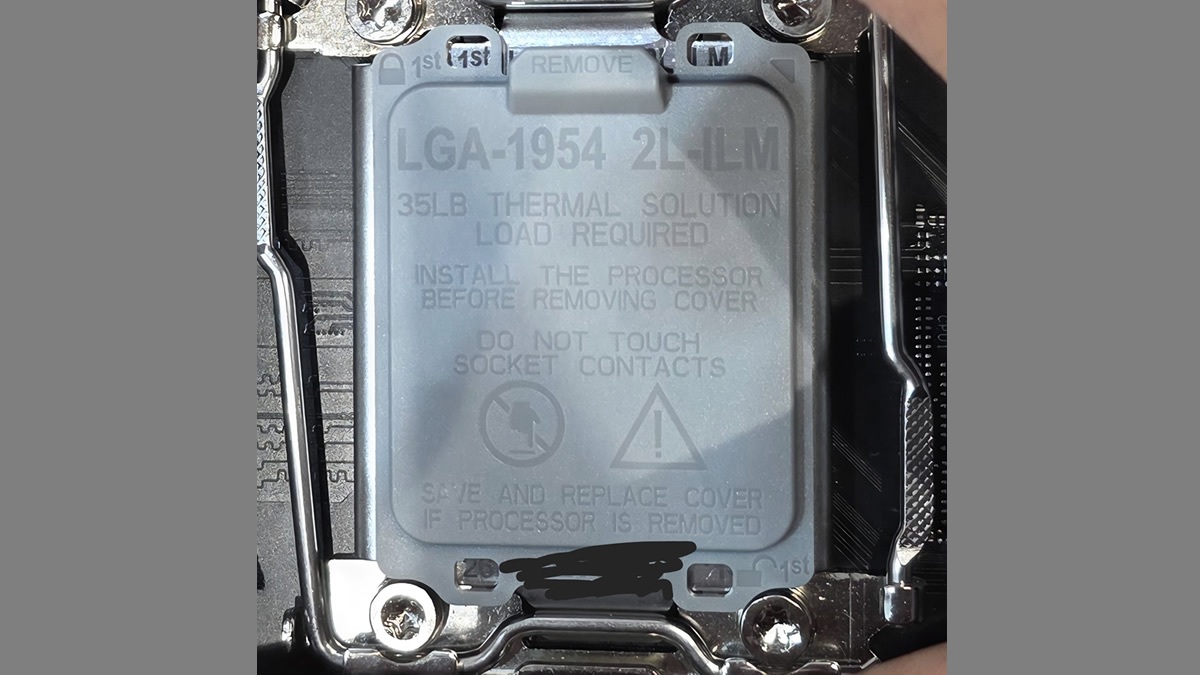
Intel’s next-gen LGA-1954 socket shown off in Taipei
LGA-1954, Intel’s next-generation CPU socket for Nova Lake, has been pictured in Taiwan. The image was taken somewhere in Taipei around the events of Computex 2026 and shared by Laurent’s Choice, a technology YouTuber, on X.
The image confirms Intel’s rumoured 2L-ILM design. This design uses two levers in Intel’s CPU retention mechanism, which more evenly distribute the load across a processor. Intel has reportedly opted for this design to counter “bendgate” and ensure that the IHS (integrated heat spreader) of Intel’s next-generation Nova Lake CPUs is flat. This should reduce CPU thermal levels by improving CPU-to-cooler contact.
With recent Intel product generations, PC enthusiasts have countered “bendgate” by using custom CPU retention mechanisms. Rumour has it that this new “2L-ILM” design is optional on LGA-1954 motherboards, as not all CPUs need this mechanism to deliver good thermal performance.
LGA 1954 at an unknown location somewhere in Taipei#techleaks #technews #computex #dontgetintrouble pic.twitter.com/yEqI2leagW
— LC Tech Leaks (and News) (@laurentschoice) June 3, 2026
Intel’s LGA-1954 CPU socket is expected to support several CPU generations. This includes Nova Lake, Razor Lake, and Hammer Lake. If this is true, LGA-1954 will counter AMD AM5 by promising platform longevity. Previously, Intel CPU sockets supported at most two CPU architectures. This is a fundamental change to Intel’s standard way of doing business.
If the rumours about Nova Lake are true, Intel’s LGA-1954 will straddle the line between consumer computing and the HEDT (high-end desktop) CPU market. Rumours claim that the platform may support CPUs with up to 52 cores. Furthermore, Intel reportedly has plans to support Nova Lake CPUs with large “bLLC” caches. In a sense, this makes Nova Lake a successor to Intel’s X99 and X299 platforms.
You can join the discussion on Intel’s new LGA-1954 socket and 2L-ILM mechanism on the OC3D Forums.