AMD to bring back GPU chiplets with RDNA 5

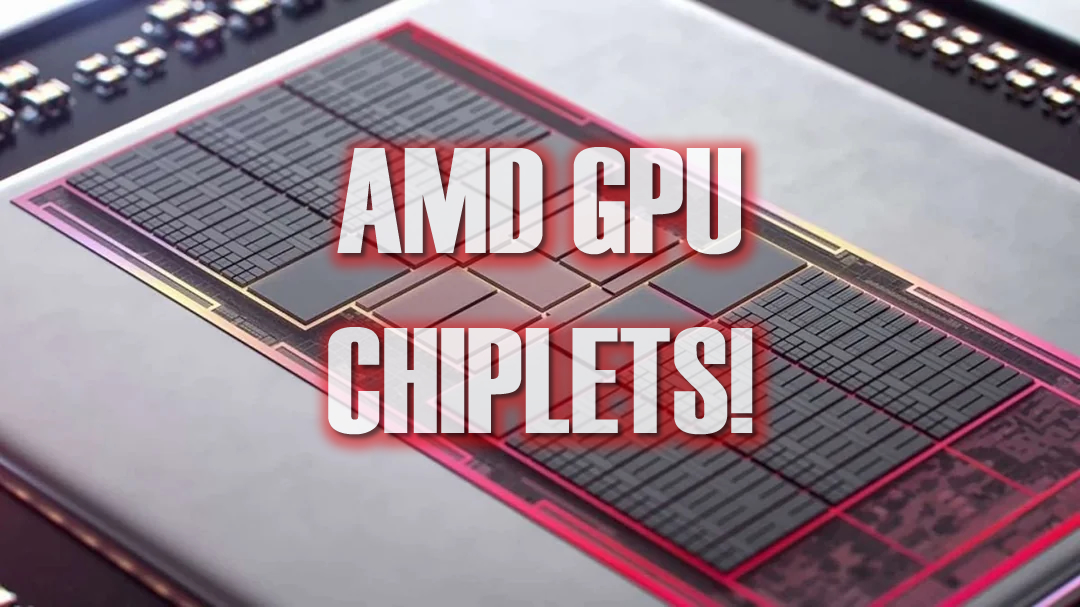
Radeon’s RDNA 5 chiplet approach could be a game-changer for AMD
AMD appears to be adopting a new chiplet-based approach with its Radeon RDNA 5 GPU products. AMD can now reportedly use the same GPU chiplets to create discrete GPUs, console SOCs, and PC APUs (CPUs with strong integrated graphics).
AMD’s “GMD” (graphics memory die) chiplets reportedly feature Shader Engines (SE), Compute Units (CU), Caches and Memory Controllers (MC). For discrete GPUs, these chips can be connected to PC chiplets that feature video/media engines, PCIe connectivity, and other features. Depending on AMD’s needs, they can connect the same GPU/GMD chiplet to different chiplets to create discrete GPUs, console chips, Ryzen CPUs, or other chips. Note that this means that future consoles could feature the same GPU silicon as future AMD discrete GPUs.
This modular approach could be game-changing for AMD. For starters, it enables AMD to utilise the same GPU chiplet across multiple products. By using the same chiplet for multiple products, AMD can significantly reduce its design and manufacturing costs.
3DCenter has speculated that this approach could be used to create GPUs with multiple GPU chiplets in the future. However, Kepler_L2, a prominent leaker, has stated that AMD doesn’t plan to do this with RDNA 5.
I don't think there's plans to combine multiple GMDs this generation at least
— Kepler (@Kepler_L2) September 4, 2025
This modular approach gives AMD a level of flexibility that its competitors lack. If AMD can use the same GMD for discrete GPUs and APUs, that could significantly simplify AMD’s product stack. Instead of creating great discrete GPUs and great integrated graphics solutions, AMD just needs to make one great GPU that can serve both markets. Similarly, AMD only needs to create a single great CPU chiplet design that can work with both dedicated CPUs and APUs.
You can join the discussion on AMD’s rumoured GPU chiplet designs on the OC3D Forums.