


PCIe 8.0 version 0.3 has been released

PCI-SIG members now have access to version 0.3 of the PCI Express 8.0 standard
PCIe 8.0 version 0.3 has been released to PCI-SIG members. This milestone comes little more than a month after PCIe 8.0’s unveiling, placing the standard on track for its pre-2028 release timeframe.
Version 0.3 is PCIe 8.0’s first review draft. This provides members with the opportunity to review the standard’s specifications and contribute to its development. This standard will deliver double the bandwidth provided by PCIe 7.0, and eight times the bandwidth of PCIe 5.0. Remember, PCIe 5.0 is the standard currently used on mainstream PC motherboards.

PCI-SIG is committed to meeting the future needs of its users, and that is why it is already working on its next-generation PCIe standard. PCIe 6.0 will be available with new enterprise CPU platforms in 2026. With PCIe 8.0, PCI-SIG is ensuring that the PCI Express standard is ready for the future.
PCI-SIG technical workgroups will be developing the PCIe 8.0 specification with the following feature objectives:
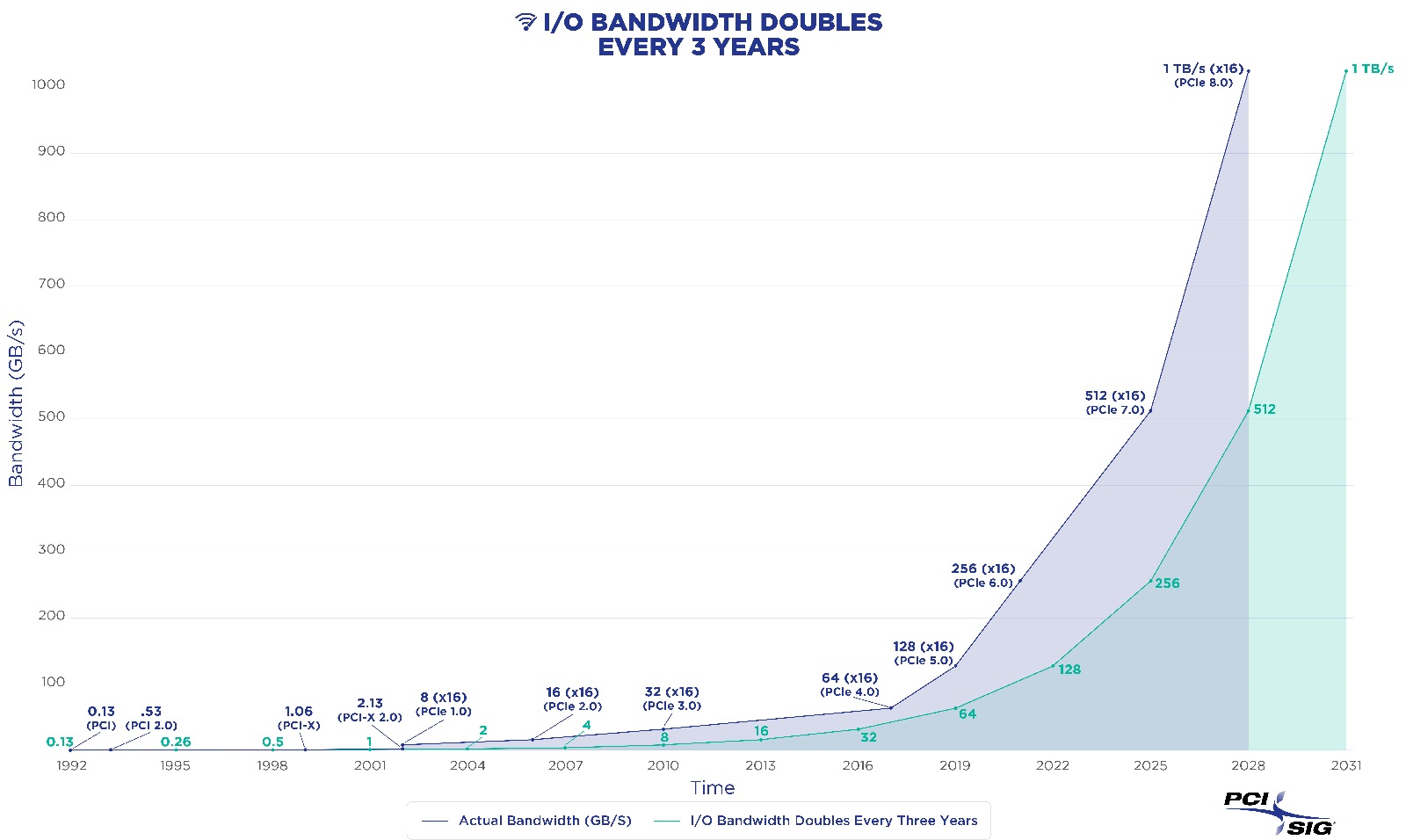
- Delivering 256.0 GT/s raw bit rate and up to 1 TB/s bi-directionally via x16 configuration
- Reviewing new connector technology
- Confirming latency and FEC targets will be achieved
- Ensuring reliability targets are met
- Maintaining backwards compatibility with previous generations of PCIe technology
- Developing protocol enhancements to improve bandwidth
- Continuing to emphasize techniques to reduce power
Why do we need PCIe 8.0?
Most PC users consider PCIe 4.0 and 5.0 to be more than fast enough for their needs. However, the needs of the enterprise market are always changing. The growth of AI and other applications has proven that there is demand for higher bandwidth connections. Furthermore, PCI-SIG doesn’t want innovation to be limited by the performance of its PCI Express standard.
Soon, PCIe 6.0 will be available in datacenters, and there is interest in moving to PCIe 7.0. The industry’s bandwidth requirements are growing, and PCI Express needs to grow alongside those demands. While many consumers do not feel the need to upgrade to a faster PCIe standard, that time will come.
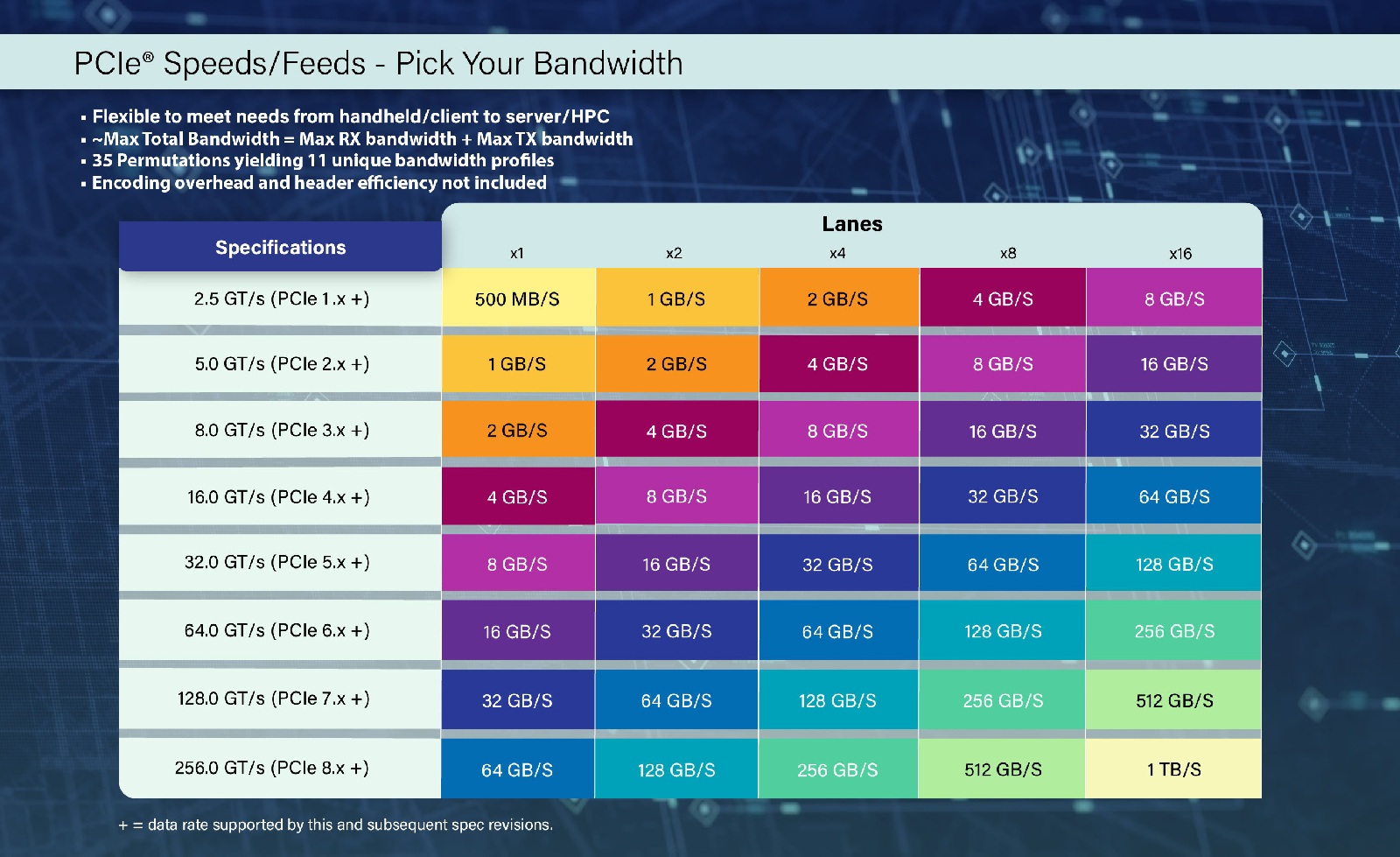
While increased raw bandwidth is always the aim of any new PCIe standard, power efficiency is also critical. Today’s bandwidth could be delivered using fewer PCIe lanes or achieved with less required power draw. As always, PCI-SIG’s desire is to make PCI Express better and to fulfil the needs of the PC market before such high levels of bandwidth are necessary.
PCIe 8.0 is coming, and the standard should be ready before 2028. By this time, we expect the consumer PC market to transition to PCIe 6.0, with the enterprise market being poised to shift to PCIe 7.0.
You can join the discussion on PCIe 8.0 on the OC3D Forums.