


Intel unveils XeSS 3 Multi Frame Generation

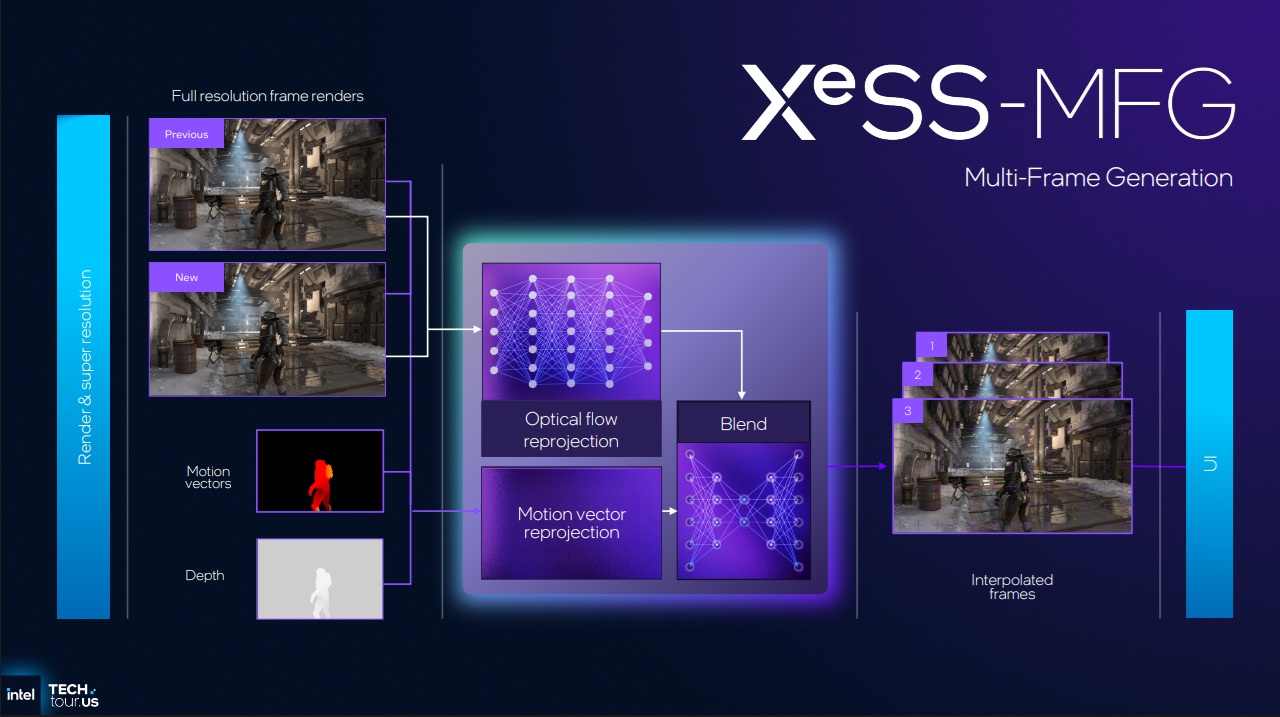
Intel pushes its XeSS tech ahead of AMD FSR with XeSS Multi-Frame Generation
Intel has given its XeSS technology a major upgrade, surpassing AMD FSR and aligning it with Nvidia DLSS through the addition of XeSS Multi-Frame Generation. Now, XeSS can be used to create three generated frames for every traditionally rendered frame, delivering a huge framerate boost.
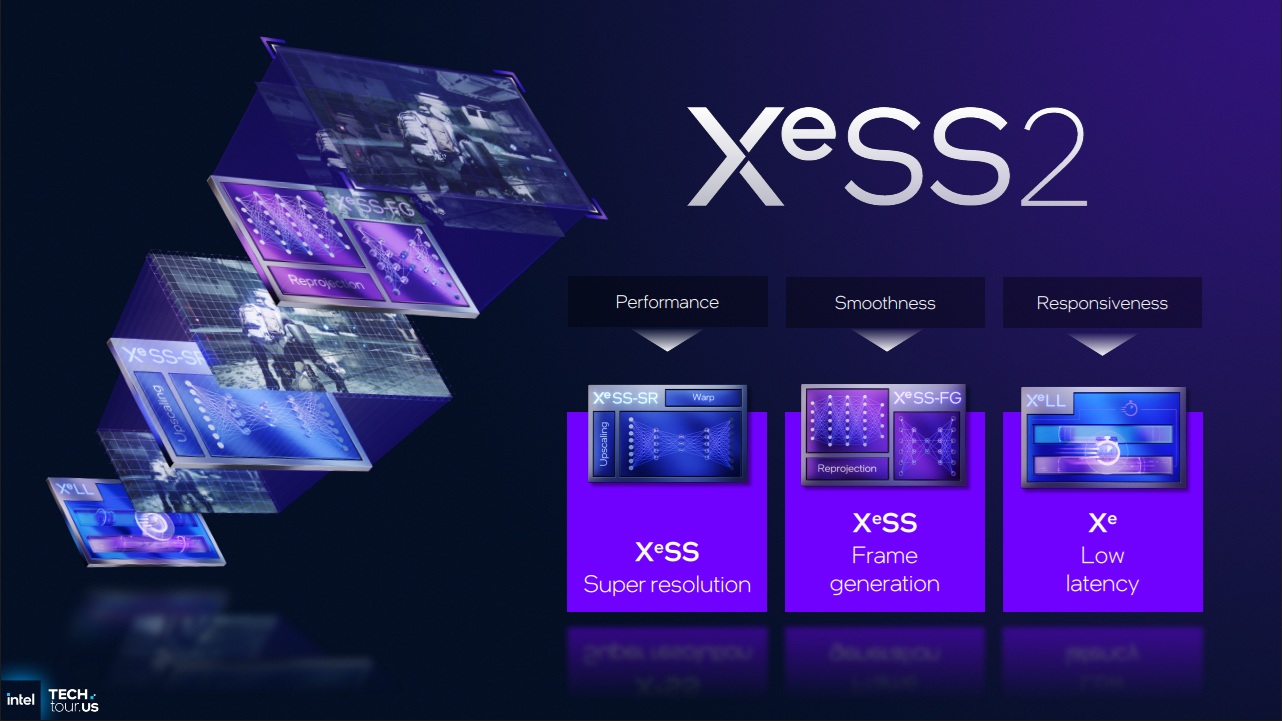
With this change, Intel has upgraded one of the three pillars of its XeSS 2 technology. Now, XeSS has 2x, 3x, and 4x frame generation options. Better still, this feature is supported on all Intel GPUs that already support frame generation. XeSS 3 is coming!
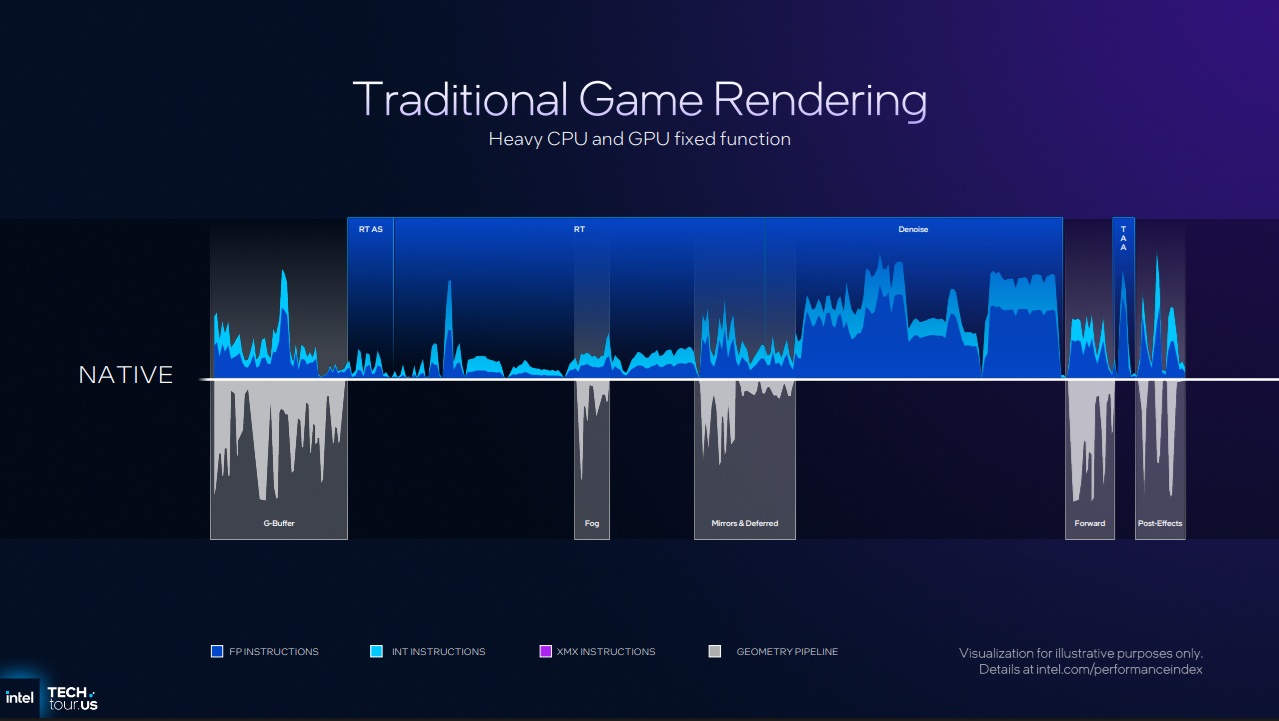
Traditional Game Rendering
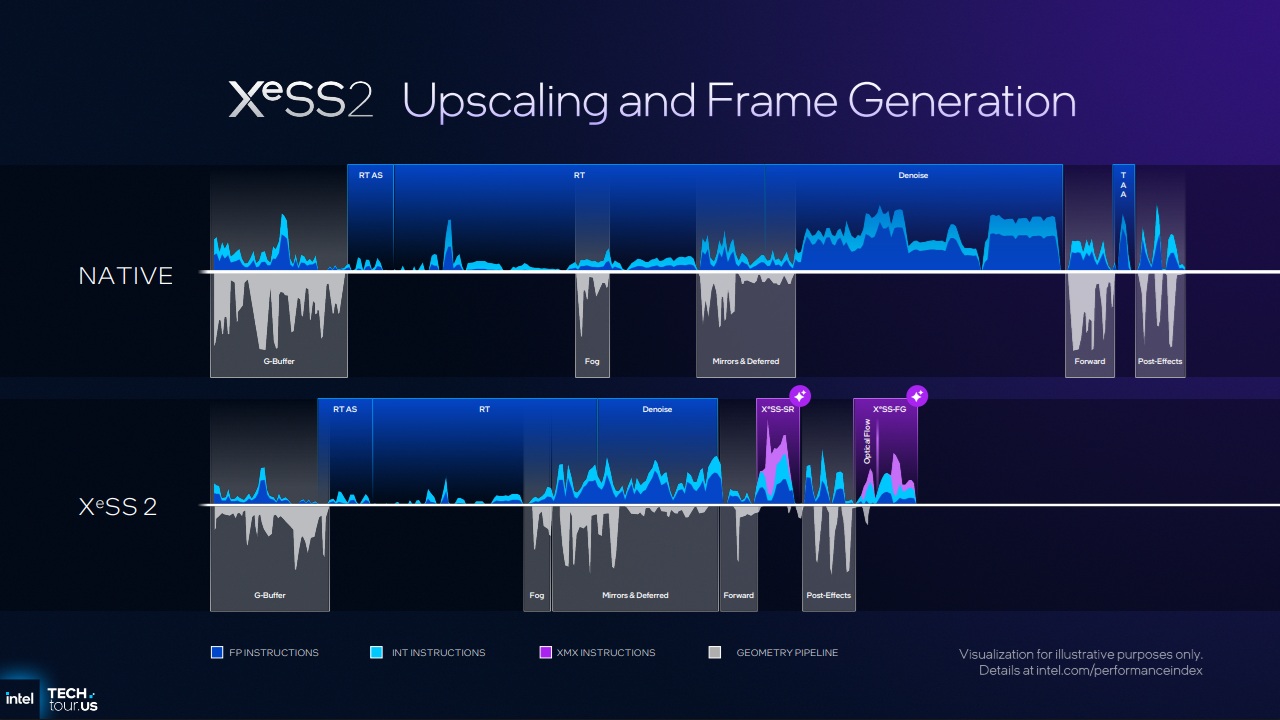
To understand XeSS, we first need to examine traditionally rendered frames. These frames are rendered at your monitor’s “native” resolution, making use of FP instructions, INT instructions, and the GPU’s geometry pipeline. At high resolutions, these frames can take a long time to render, as higher pixel counts require more GPU umph.
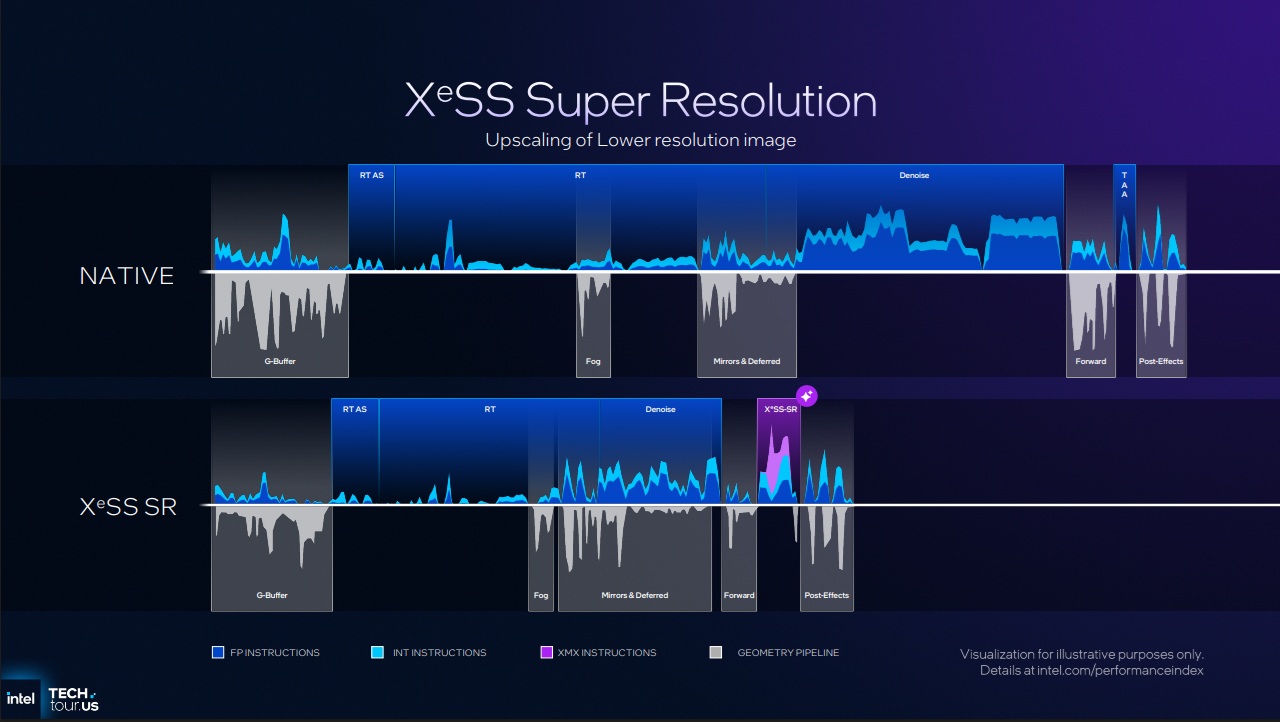
XeSS Super Resolution and Frame Generation
With XeSS Super Resolution, games can be rendered at lower resolutions and upscaled to the user’s desired resolution. This dramatically reduces the time taken for many rendering workloads to be completed. While it takes time to upscale frames with XeSS Super Resolution, that time is much shorter than the time saved by using upscaling. Note that the XeSS-SR segment replaces TAA.
If you look at the image below, we can see how much shorter the XeSS SR line is.
With frame generation, a new “XeSS-FG” segment appears on the frametime chart. During this added time, an extra frame is generated between a game’s newest frame and its prior frame. This new frame is inserted between each “real” frame, making the game appear much smoother.
While Frame Generation takes time, the benefits of an extra frame more than counter the downsides of its generation time. Comparing it with the “native” frame, we can see that XeSS Super Resolution and Frame Generation can create two frames in less time than a single frame can be created using traditional methods.
Taking things to the next level with XeSS Multi-Frame Generation
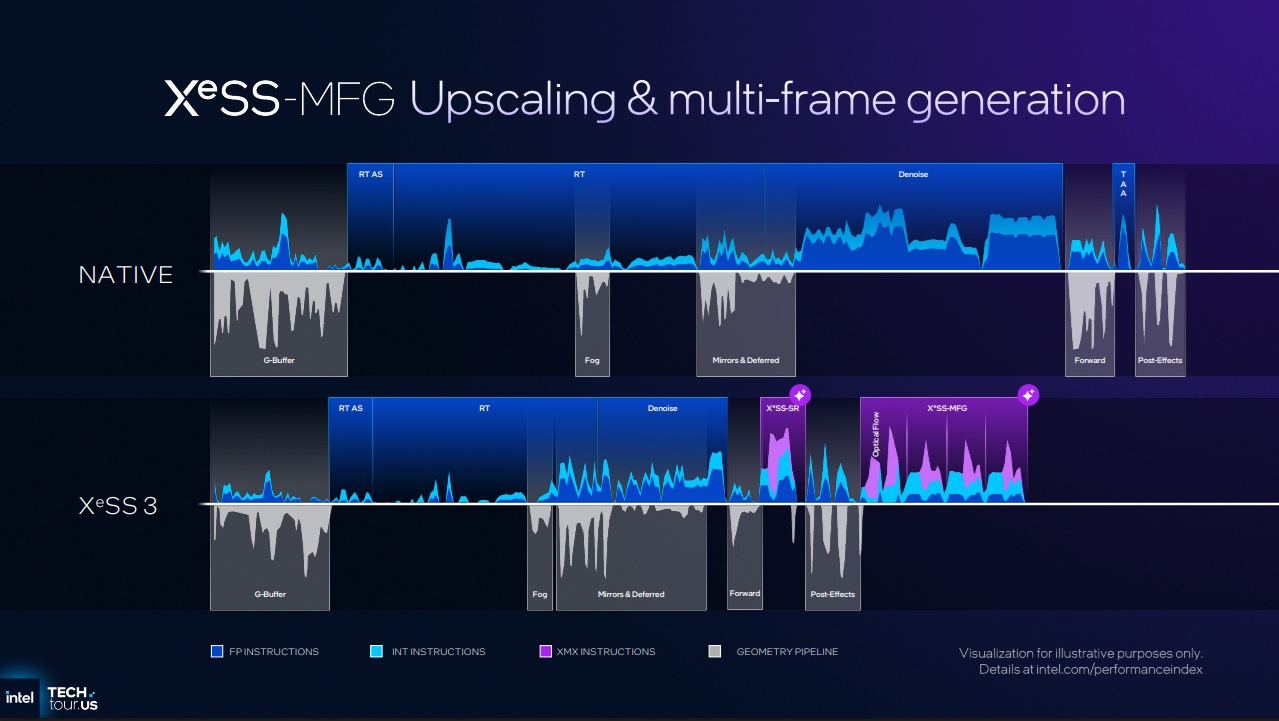
XeSS Multi-Frame Generation (XeSS-MFG) takes the standard Frame Generation aspect of the chart above and (in basic terms) generates up to three frames instead of one.
If we compare this to Intel’s “native” frame without XeSS, we can see that with XeSS MFG, gamers can achieve four frames in less time than it takes to render one traditional frame. That’s the power of XeSS 3.
XeSS Frame Generation Overrides coming to Intel Graphics Software
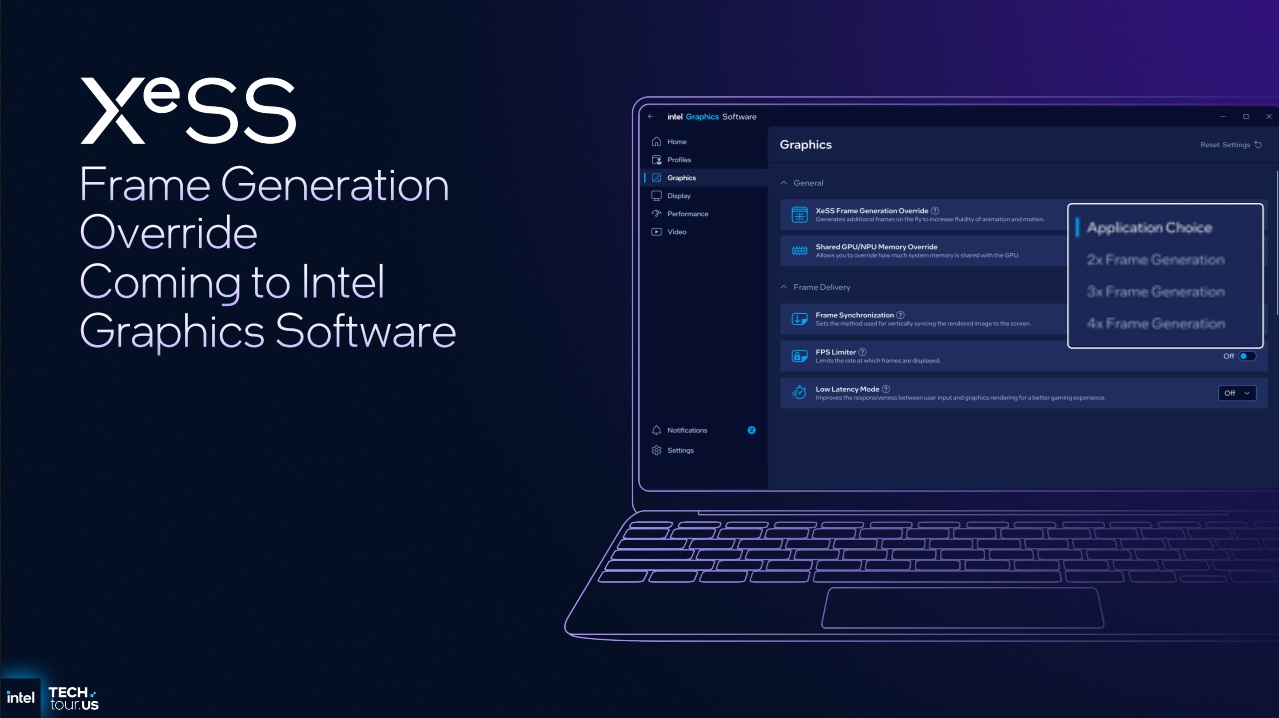
Intel is adding a Frame Generation Override to its Intel Gaming Software app. With this app, Intel users can override the frame generation of XeSS 2 games to enable XeSS 3x and 4x frame generation. This means that there will be a lot of games that support XeSS 3 at launch, albeit by using an override.
If Intel’s making one thing clear here, it’s that XeSS isn’t falling behind. XeSS 3 is coming, and it places XeSS ahead of FSR with multi-frame generation and at level pegging with DLSS. Intel’s GPU development plans aren’t slowing down.
You can join the discussion on Intel’s XeSS Multi Frame Generation on the OC3D Forums.