


Corsair’s planned Force MP600 PRO SSD boasts 7GBps speeds

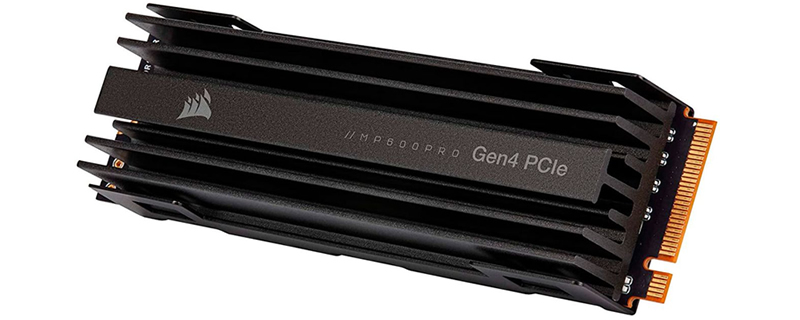
Corsair’s planned Force MP600 PRO SSD boasts 7GBps speeds
While we have not confirmed that Corsair will be using Phison’s PS5018-E18 SSD controller, the company’s rated sequential read/write speeds of up to 7,000MBps/6,850MBps gives Corsair’s drive similar performance levels to other Phison E18-based SSDs.
These speeds give Corsair’s latest MP600 drives a significant performance boost over their predecessors, with Corsair’s original MP600 (non-PRO) offering sequential read speeds of up to 4,950MB/s. In terms of sequential read/write speeds, Corsair’s new MP600 PRO will offer users a 41.4% and 61.2% performance boost over their older MP600 drives respectively, which is an incredible generational improvement.
At this time, Corsair has not revealed this new SSD officially, which means that the drive’s official pricing has not been announced. That said, this SSD should be priced competitively with other high-end PCIe 4.0 SSDs. We expect to hear more from Corsair about these new SSDs soon.

You can join the discussion on Corsair’s Force MP600 PRO SSDs on the OC3D Forums.