


NAND spot prices drop 20% in two weeks, and further declines are expected

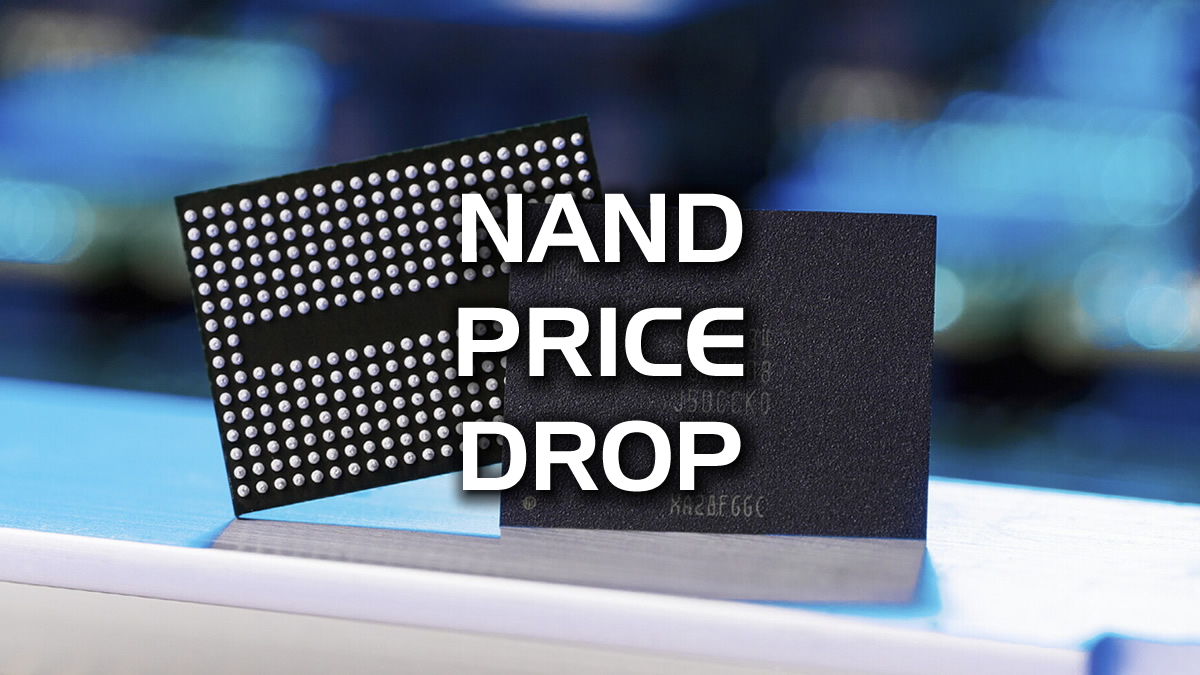
NAND prices appear to be falling, and that is good for consumers
The consumer market has been hit hard by the global AI infrastructure buildout, with SSD and RAM prices skyrocketing in 2026. Now, NAND prices appear to be falling, with spot prices down 20% in two weeks. Some products are seeing larger decreases than others, with 512Gb NAND wafer prices down 32% and 1Tb prices down 19% QoQ.
These price reductions appear to be due to decreasing consumer demand. Rising DRAM prices are making smartphones, laptops, and other devices much more expensive. This has forced many consumers to delay upgrades, reducing sales. For enterprise NAND, pricing continues to rise as demand for enterprise SSDs remains high.
TrendForce points to similar weakness, noting that GPU shortages have dampened enterprise SSD demand in China. With PC and smartphone demand expected to soften further in 2027, Chinese traders are rushing to trim inventories, driving NAND spot prices down 20% in just two weeks, according to TrendForce.
– Trendforce
The NAND market has more competitors than the DRAM market, and China’s YMTC is gaining significant market share within the consumer market. Their expansion plans could put significant pressure on rivals and help reduce NAND pricing in the consumer segment. While global rivals shift their focus to higher-margin datacenter products, YMTC is focusing on growing bit share within the consumer NAND market, and it’s having an impact.
In Q1 2027, smartphone and PC NAND contract prices are expected to drop by 5-10%. Enterprise-grade NAND is expected to maintain steady pricing, or edge slightly higher.
With consumer demand weakening and spot prices sliding, attention is turning to whether the downturn will spill into contract pricing. According to Seoul Economic Daily, citing Bank of America, smartphone and PC NAND contract prices could fall 5%–10% QoQ in 1Q27, while enterprise-grade products may hold steady or edge higher.
While the spot-market decline has yet to trigger broad contract price cuts, buyers could gain greater bargaining power in early-2027 negotiations, the report suggests.
– Trendforce
So far, the recent decline in NAND spot prices has not led to lower consumer SSD prices. It takes time for lower NAND prices to filter through to final/retail products. While enterprise SSD demand remains high and consumer NAND prices are declining, SSD prices should fall sooner or later. In 2027, the NAND market is expected to enter oversupply, which should drive lower NAND prices.
Join the discussion on declining NAND spot prices on the OC3D Forums.