

ASUS PRIME AP202 ARGB PC Case Review

Thermal Testing
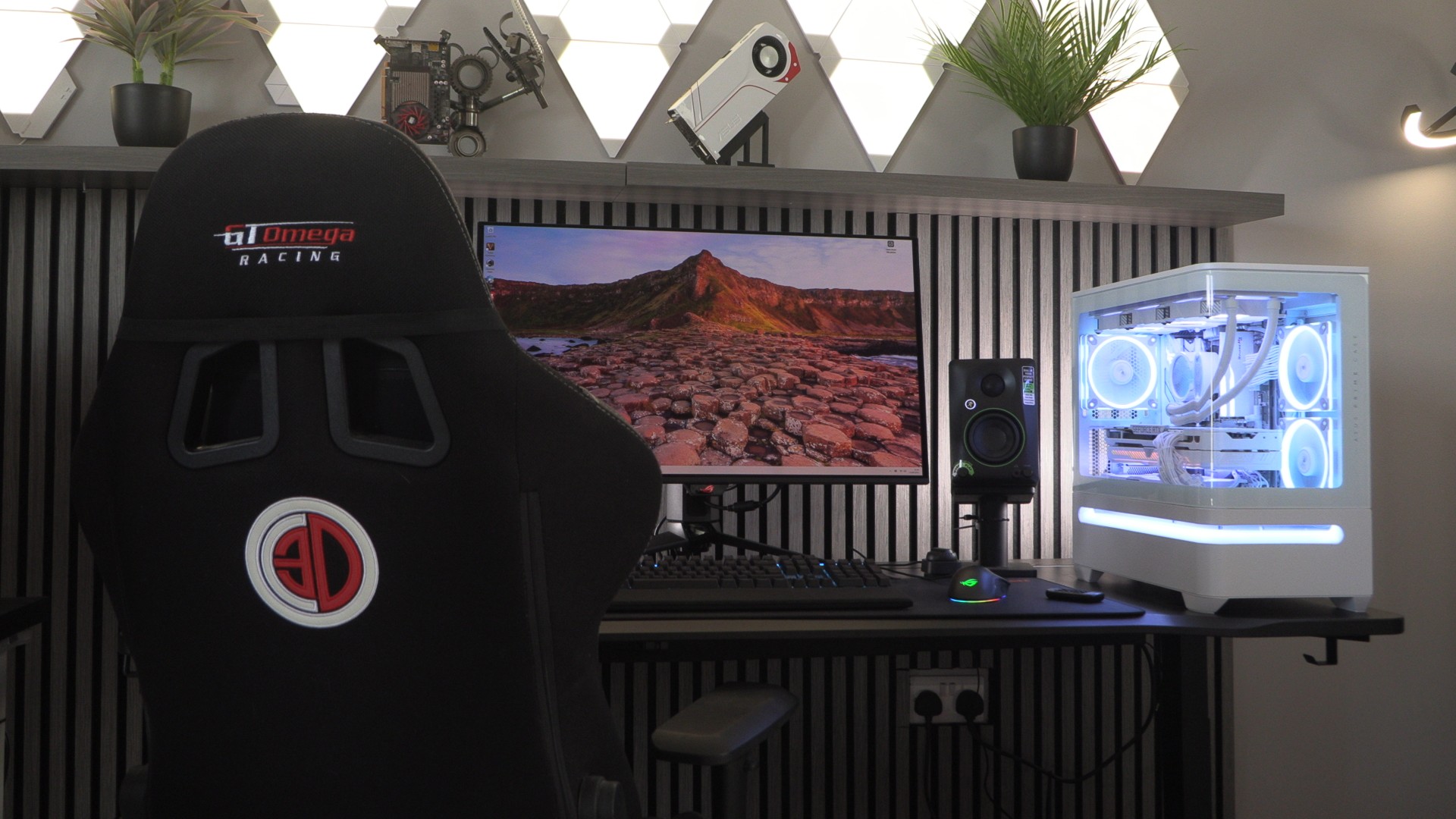
Not our standard set of thermal tests
As mentioned before, the ASUS PRIME AP202 ARGB is a Micro ATX (MATX) PC case. That’s a problem when our standard suite of case testing parts is ATX in size. This means that we cannot compare this PC case to others we have tested. We can’t fit ATX hardware inside a MATX case. Switching out motherboards is also a no-go, as that would create changes to how our CPU is powered due to our use of custom motherboard settings (fixed CPU voltage and clock speed). Using a different motherboard with different characteristics would make for a flimsy comparison.
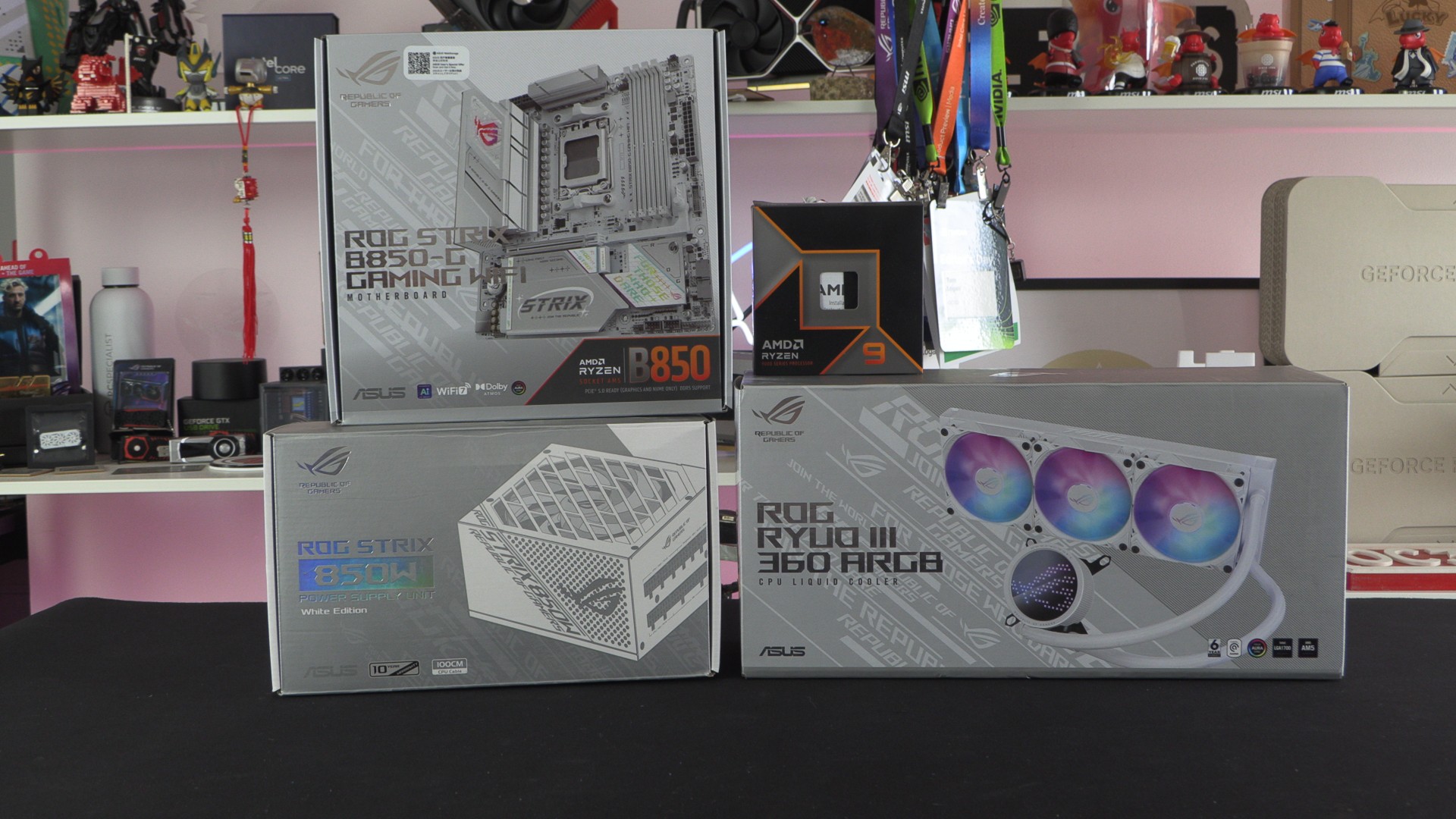
For this review, we built a full PC using the white ASUS hardware we had on hand. Some of it is older in nature. Why all ASUS parts? Would you buy an ASUS case and not fill it with ASUS hardware?
For our testing, we used a Ryzen 9 9900X GPU, a White ROG Strix RTX 3080 graphics card, an 850W ROG Strix White power Supply, an ROG Strix B850-G Gaming White motherboard, and a white ASUS ROG RYUO III 360 CPU cooler. We also installed two fans at the base of this case for additional airflow.
Thermal Performance
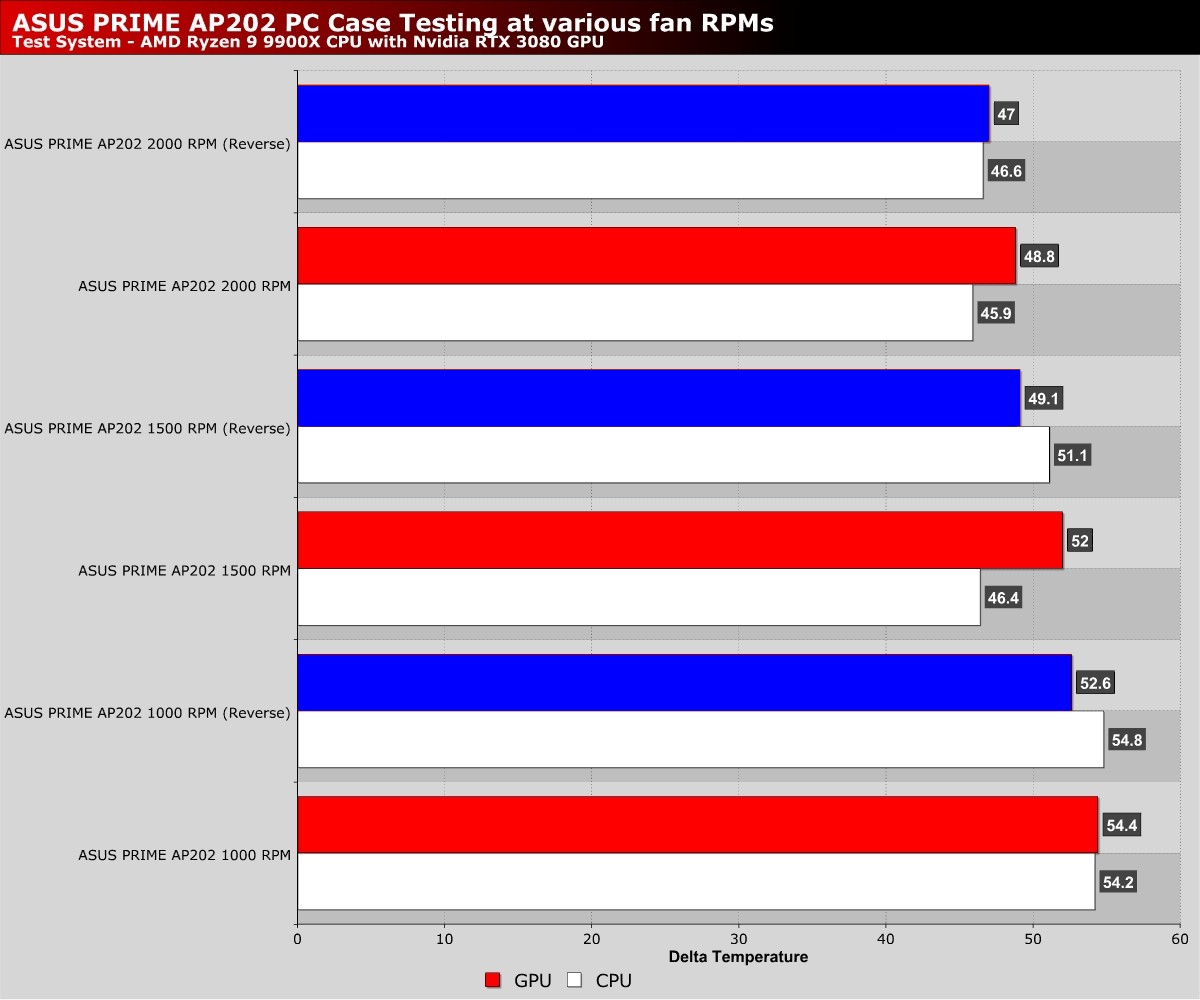
We tested ASUS’ PRIME AP202 case with its case fans set to 1000 RPM, 1500 RPM, and 2000 RPM. We also tested this case with its side-mounted case fans when used in its standard (exhaust) configuration and a reverse (air intake) configuration.
Using this case’s side fans as an intake allows more air to enter the case and provides more airflow for our graphics card. This lowers GPU temps but raises CPU temps. When these fans are used as an exhaust, they can remove GPU heat from the case, potentially preventing it from entering the CPU cooler, resulting in lower CPU thermals.
With modern GPUs being much more power-hungry than CPUs, it makes sense to favour GPU airflow. That said, the difference in thermals is relatively minor. Regardless, this case can deliver more than enough airflow to cool a Ryzen 9 9900X CPU and an RTX 3080 with ease.
Note that the graph below showcases Delta temperatures with a controlled ambient temperature of 20 degrees Celsius.