


Nvidia finally shares RTX 2080 performance data

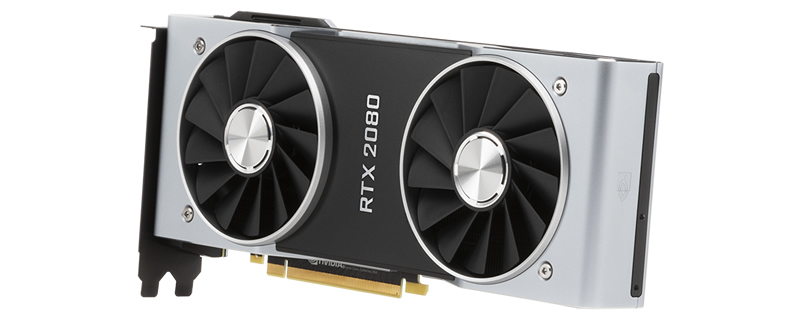
Nvidia finally shares RTX 2080 performance data.
The company’s slide below states that the RTX 2080 offers a 2x performance improvement over the GTX 1080, though this statement takes into account the performance benefits provided by DLSS (Deep Learning Super Sampling), an upscaling technique which uses the AI processing power of Turing to deliver more detailed images. At this time it is unknown if DLSS has any noticeable downsides over a native 4K pixel count, though Nvidia states that it offers image quality that is similar to 4K with TAA enabled.
In reality, without the aid of DLSS, Nvidia’s examples showcase a 30-50% performance increase over Pascal at 4K resolutions, giving the RTX 2080 performance numbers that are in the same ball-park as the GTX 1080 Ti, at least in theory. Nvidia provided no performance data that compared the GTX 1080 Ti to the RTX 2080. It is also worth noting that Nvidia has not released any minimum framerate data.

Nvidia promises 4K 60Hz performance, providing several examples for steady 4K 60 FPS gameplay, though sadly Nvidia didn’t give any details regarding the graphical settings or game levels used in their internal benchmark runs. Nvidia also offered no performance data for other graphics cards for comparison purposes.

While this data leaves a lot to be desired, the information is useful, especially when looking at the performance benefits of DLSS. The technology enables roughly 30-40% more performance than a native 4K presentation, though at this time it is unknown how the feature impacts graphics quality.
In many ways, DLSS could be compared to checkerboarding and other resolution upscaling techniques on consoles, all of which present some form of graphical artefacts or shimmering. It remains to be seen how close to a native presentation DLSS is in practice.
You can join the discussion on Nvidia’s RTX 2080 performance figures on the OC3D Forums.