


Micron reveals their first 1TB MicroSD card

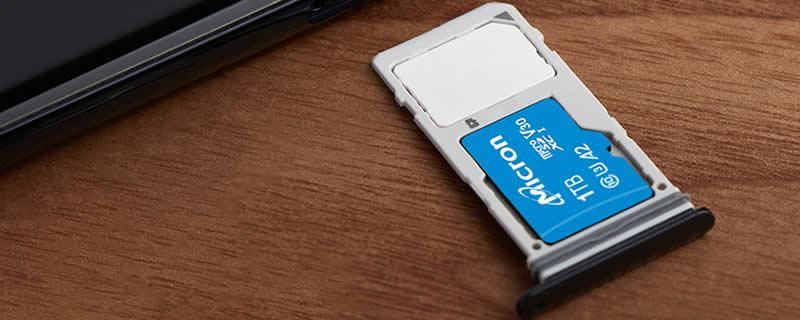
Micron reveals their first 1TB MicroSD card
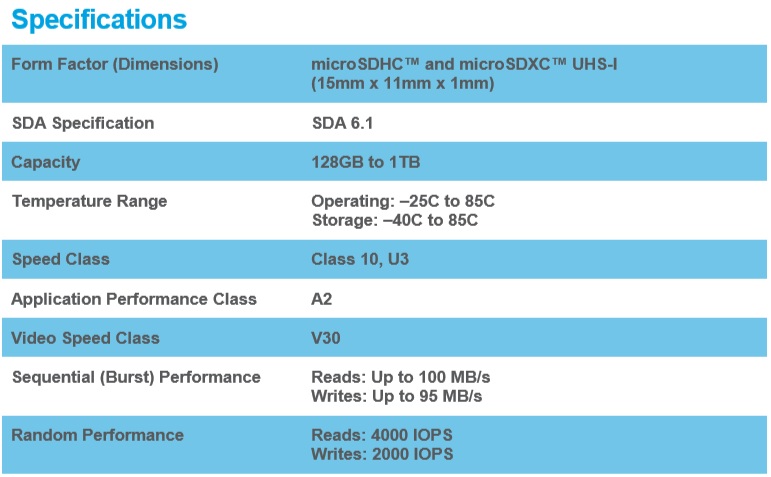
As a UHS-I drive, Micron’s new c200 series will offer up to 100MB/s reads and 95MB/s writes while offering capacities of 128GB to 1TB, delivering a level of scalability which will make the series suitable for most MicroSD card users.
This SD card is available thanks to Micron’s use of QLC (Quad Level Cell) NAND, which offers a 33% increase in storage capacity per cell over TLC (Triple Level Cell) NAND, with Micron utilising a dynamic SLC cache to enable peak performance over sustained periods. The Micron c200 series also offers certified A2 app performance levels, which promises fast loading times when compared to cheaper, uncertified SD cards.
Below are the full specifications of Micron’s QLC-powered c200 series of MicroSD cards.
Micron plans to release their c200 series of MicroSD cards in Q2 2019. The company has also confirmed that samples of their 1TB cards are already available.
At this time Micron has not revealed the pricing of their 1TB c200 MicroSD card.
You can join the discussion on Micon’s first 1TB QLC-powered MicroSD card on the OC3D Forums.