


Intel unveils 288-core 18A “Clearwater Forest” Xeon CPU at Hot Chips

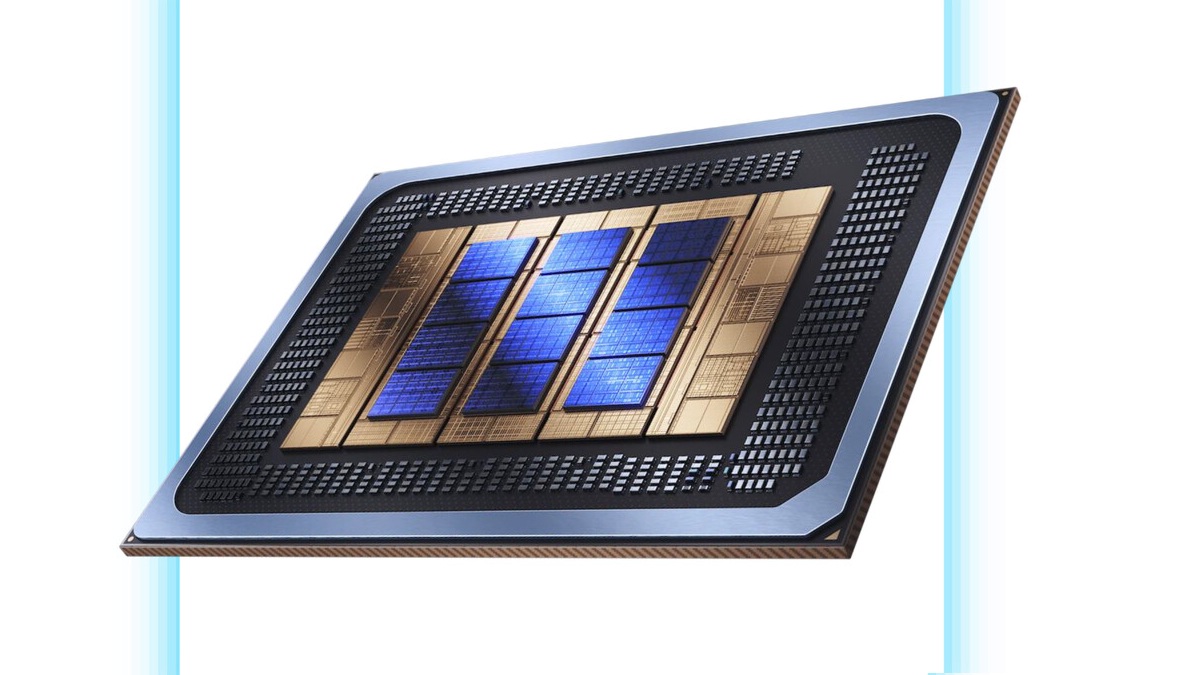
Intel’s 288-core Clearwater Forest Xeon is built using Intel 18A node and delivers major IPC gains
At Hot Chips 2025, Intel has unveiled its next-generation E-core-only Xeon processor family, “Clearwater Forest”. With Clearwater Forest, Intel is combining new E-core designs with its 18A lithography node to deliver substantial IPC gains and strong performance in high-density scale-out workloads.
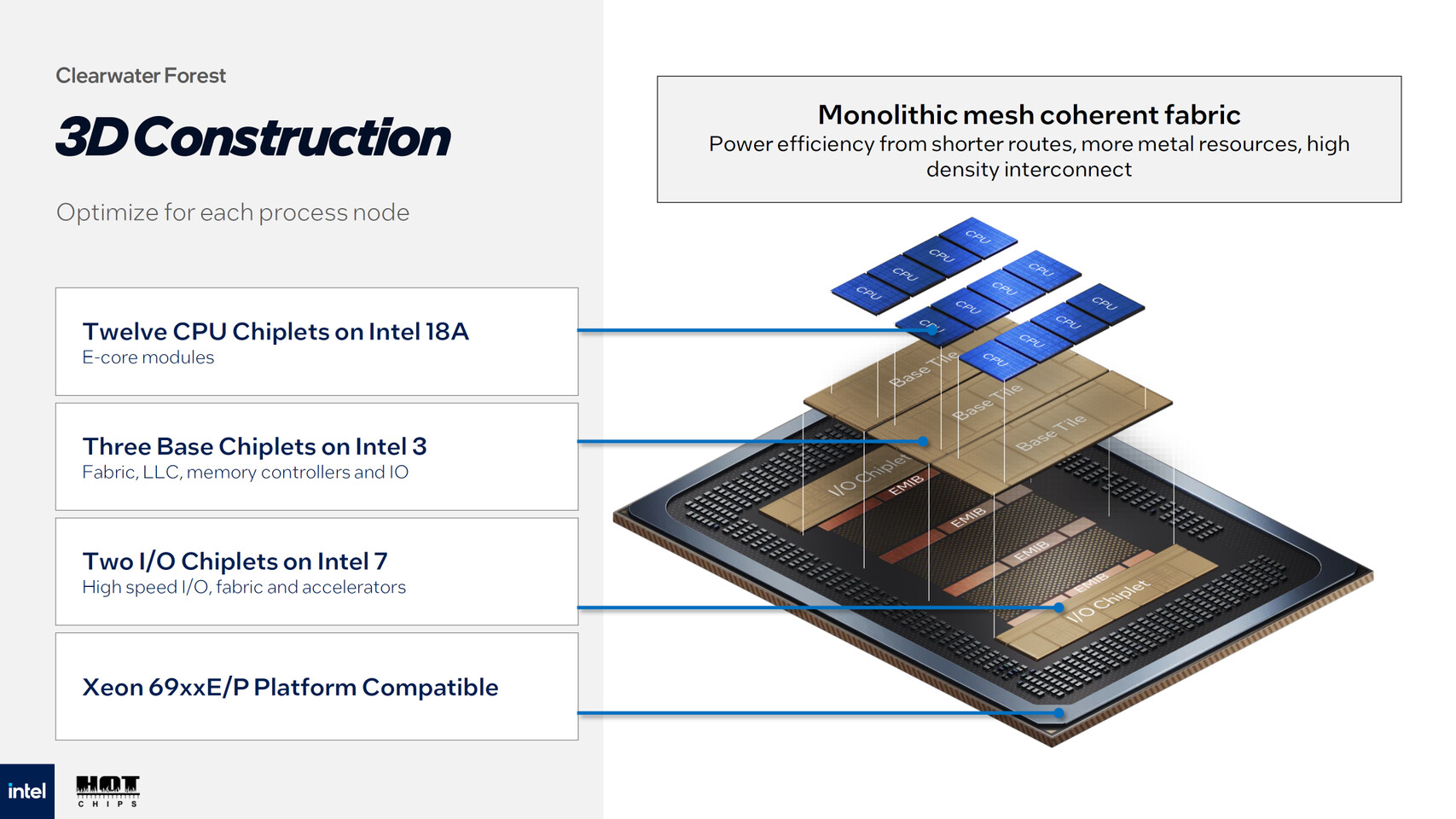
Clearwater Forest is a new 3D chip design for Intel, utilising Foveros Direct 3D Construction tech to create a large interconnected processor using multiple dies. This makes this new processor much cheaper to produce than an equivalent, monolithic processor.
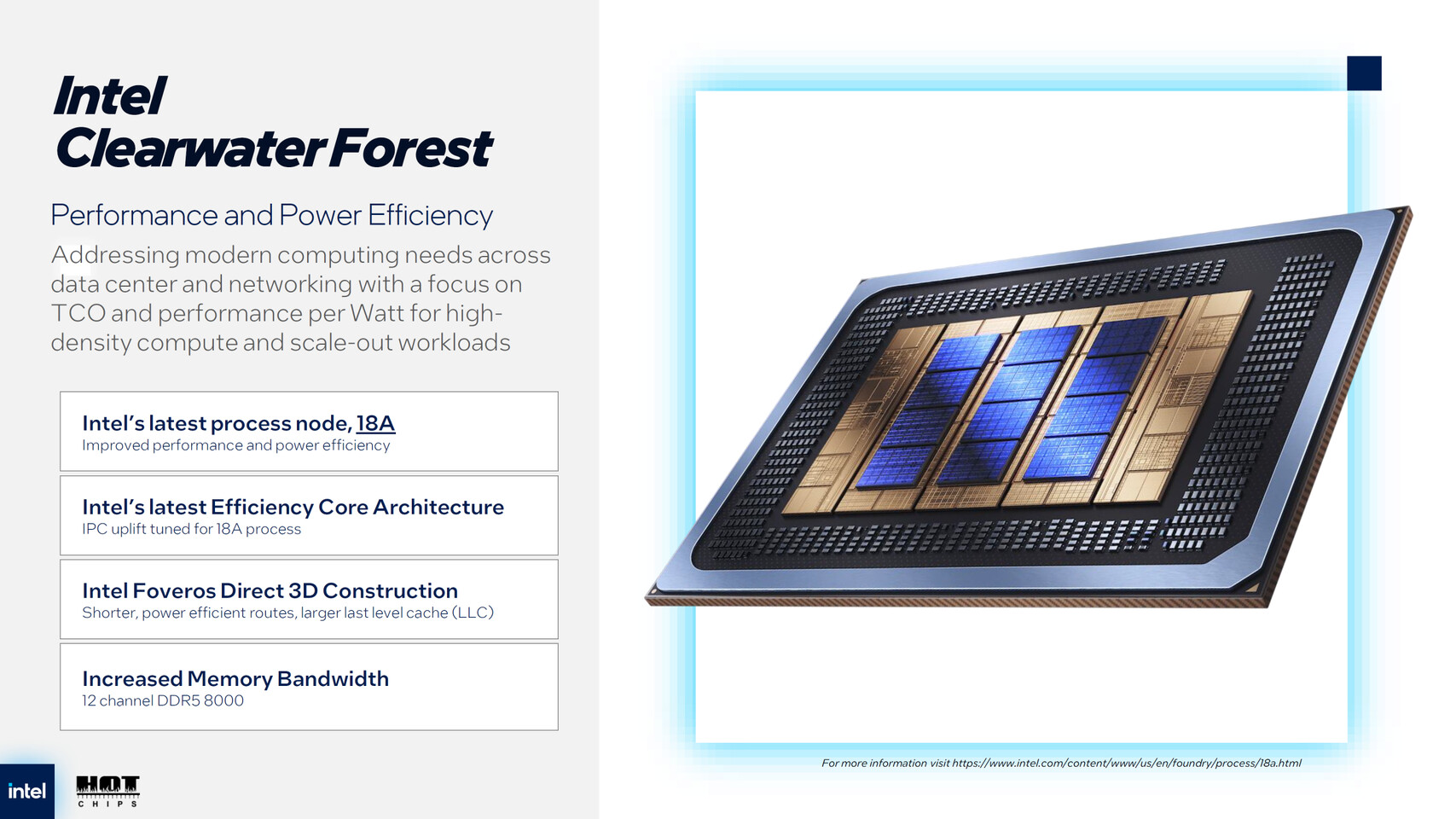
Clearwater Forest is a BIG CPU, and it uses Intel 18A
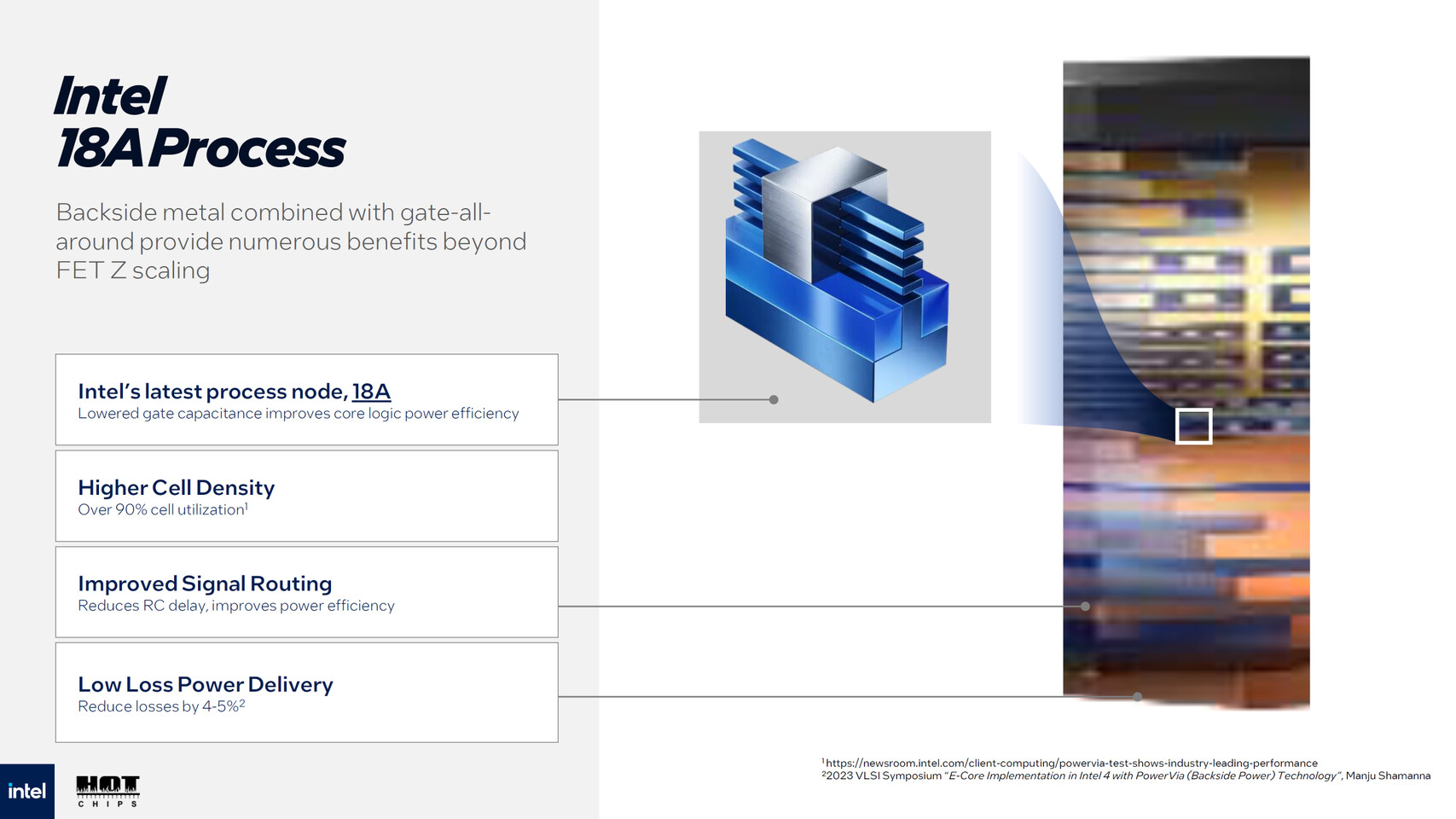
Intel’s Clearwater Forest chip used the company’s 18A lithography process. 18A has been used to create Intel’s “Darkmont” E-core clusters. With Intel’s new lithography node, Intel has increased its silicon density and silicon performance. Intel has also used this node to reduce power loss, increasing power efficiency further.
Tonnes of cores, tonnes of bandwidth
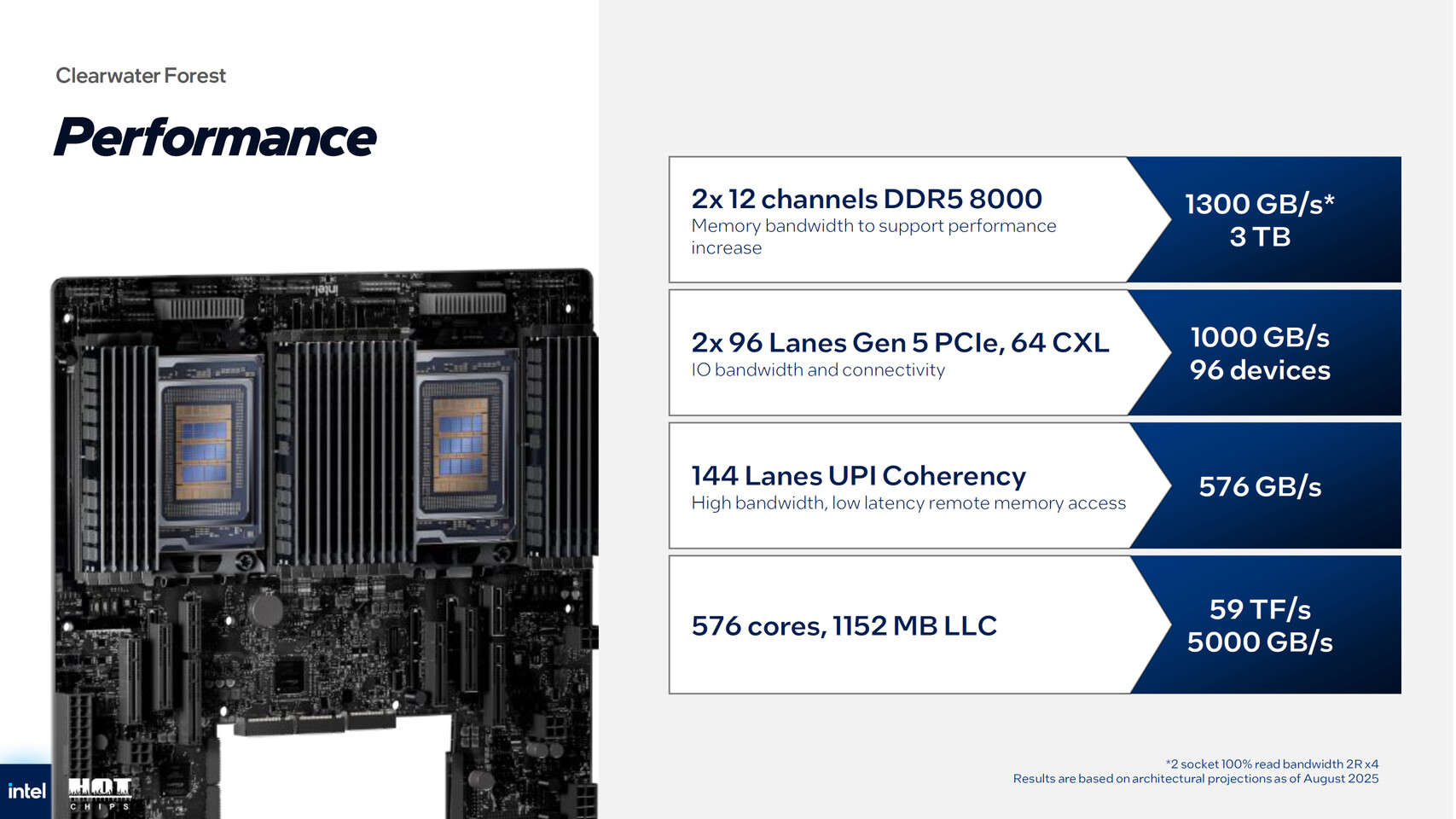
Each Clearwater Forest CPU has a 12-channel DDR5 memory controller and 288 CPU cores. These CPUs support two-socket configuration, offering users up to 24 memory channels and 576 CPU cores. DDR5-8000 memory is support is available, and each CPU has 96 lanes of PCIe 5.0 connectivity. This is a beefy CPU.
Clearwater Forest E-Core IPC gains
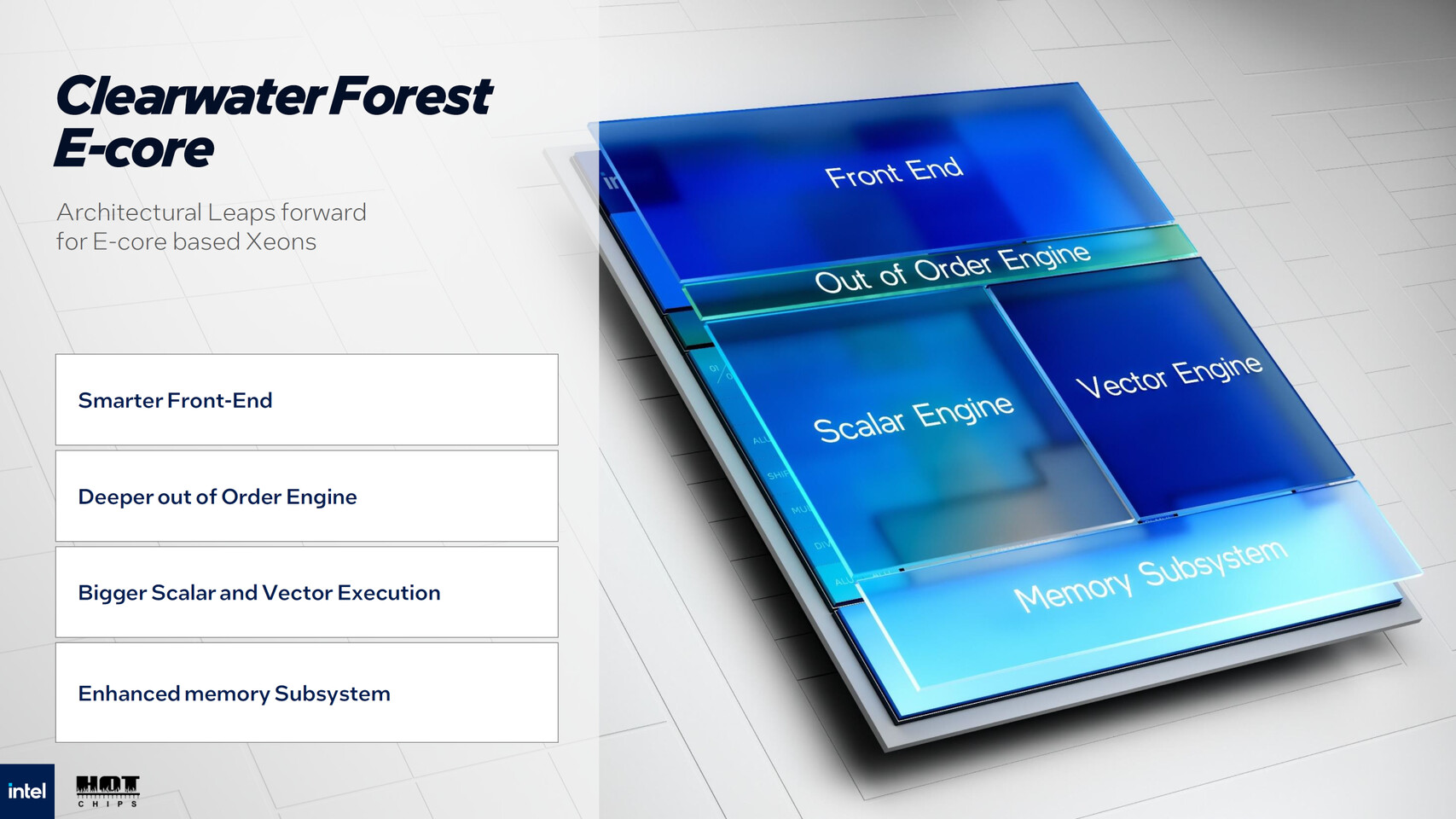
When it comes to SpecIntRate’17 performance, Intel’s new Darkmont E-core design delivers a 17% IPC increase over Intel’s older Crestmont E-cores. Each E-core cluster uses multiple 4-core E-core modules, which feature a unified L2 cache. Each module has 2x more L2 bandwidth than Intel’s prior E-core designs.
Clearwater Forest’s E-Core chiplets feature 24 total E-cores. With 12 E-Core chiplets, Intel’s Clearwater Forest CPUs can offer users up to 288 total cores.
Intel goes all-in on chiplets
Intel’s Clearwater Forest CPUs use “3D Construction” with Intel 7, Intel 3, and Intel 18A chiplets. CPU cores use Intel’s new 18A lithography node. Intel’s base tile uses Intel 3, an older Intel node. Each IO chiplet uses Intel 7, the process that Intel used to build its 13th and 14th-generation Raptor Lake series CPUs.
Using 18A on Clearwater Forest is a big step for Intel
Clearwater Forest is Intel’s biggest product to use its 18A lithography node. If nothing else, this is a clear sign that Intel’s 18A lithography node is good enough for such an advanced product. However, it remains to be seen how this CPU will perform compared with rival AMD products. Furthermore, it remains to be seen how much these CPUs will cost.
You can join the discussion on Intel’s Clearwater Forest 288-core Xeon CPU on the OC3D Forums.