


Intel GPU prototype leaks – Is this BMG-G10 X3?

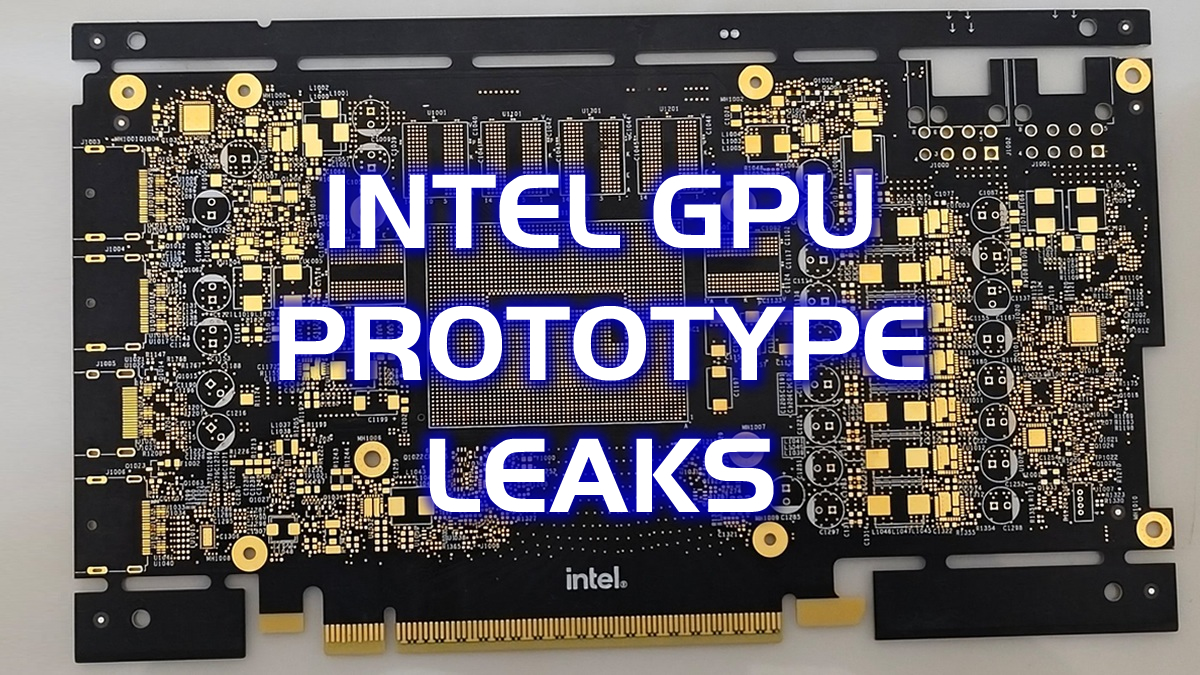
PCB leaks for Intel’s cancelled BMG-G10 X3 graphics card
Intel’s Battlemage GPUs have had an undeniable impact on the lower end of the GPU market. With their B570 and B580 GPUs, Intel has delivered strong performance and ample VRAM to sub-£250 GPU purchasers. When it comes to VRAM, Intel are uncontested in this space. AMD and Nvidia provide gamers with 8GB GPUs. Intel’s B570 and B580 offer gamers 10GB and 12GB of VRAM, respectively. Now, a PCB for a higher-end ARC Battlemage GPU has leaked through @GOKForFree on Twitter/X. This GPU appears to be for Intel’s rumoured BMG-G10 X3 GPU.
What is BMG-G10 X3?
Intel’s Battlemage GPU architecture is a complex subject. There are many reports of cancelled GPUs, implying that Intel’s original plans for Battlemage differed from what was eventually released. Two GPUs, BMG-G10 X3 and BMG G10 X4 were reportedly in the works, acting as higher-end counterparts to Intel’s G21 chip. Intel’s G21 Battlemage silicon is the chip behind Intel’s ARC B570 and B580 graphics cards.
The leaked PCB below does not match Intel’s G21 Battlemage silicon, implying that it is something different. Intel’s BMG G10 X3 GPU reportedly features a 192-bit memory bus, 28 Xe Cores, 8MB of L2 Cache and a large 512MB “Adamentine Cache”. Note that Intel’s Battlemage B580 features 20 Xe Cores. If released, this GPU would have features 40% more Xe cores, making it a much higher-end product.
Sadly, Intel’s rumoured BMG G10 X3 and X4 chips were not released. Instead, Intel worked on a different high-end ARC GPU called BMG-G31. This GPU is still in development, though it may be released soon. This GPU has recently shown up in various drivers and even in AIDA64’s update notes. note that Intel’s BMG_G31 GPU reportedly features 32 Xe cores, which is 60% more than Intel’s B580 GPU.
Intel unknown graphics card PCB
(From my friend)It might support PCIE5.0?
I don't know what its chip could be. pic.twitter.com/Y8P44yd91U— GOK (@GOKForFree) May 23, 2025
If Intel created its BMG G10 X4 chip, it would have created a GPU with a large “Adamantine Cache” and 40 Xe2 cores. That’s 100% more cores than their B580. It’s likely that Intel’s “Adamantine Cache” would have worked similarly to AMD’s “Infinity Cache” tech. It would have increased available bandwidth for Intel’s GPU by holding data in this cache. This cache would have been faster than its attached memory and would have significantly reduced the strain on Intel’s memory system.
Intel killed off every single Adamantine cache product.
BMG X3
BMG X4 (bigger die with 40 Xe cores)
ARL Halo— Bionic_Squash (@SquashBionic) October 31, 2025
Why were these Battlemage GPU variants cancelled?
Currently, it’s unclear why Intel changed its plans for Battlemage. It’s likely that Intel’s larger Battlemage chips relied on complex packaging techniques and were ultimately too expensive to mass-produce. This explains why Intel’s BMG-21 and BMG-31 chips appear to be monolithic pieces of silicon. Alternatively, these chips may not have performed as expected, implying problems with their alleged multi-chip design. Regardless of the reason, these GPUs appear to be cancelled.
You can join the discussion on Intel’s cancelled Battlemage GPU designs on the OC3D Forums.