


Intel murdered AMD with its ARC B390 mobile graphics

Intel made a mockery of AMD’s integrated graphics at CES 2026 – ARC B390 has arrived
Can someone call the police? I think there’s been a murder at CES 2026. AMD’s mobile graphics is bleeding out on stage following a brutal beatdown by Intel ARC. The Panther came, and the Panther conquered. ARC B390 arrived, and it promises to be in a class of its own.
Intel has a lot to prove in 2026, and it looks like the mobile gaming market is where the company has secured its first win. With a major GPU upgrade, Intel may soon dominate a field that was once an AMD niche. With their latest ARC GPU architecture, Intel has secured a significant victory against its rival.
ARC B390 Advancements
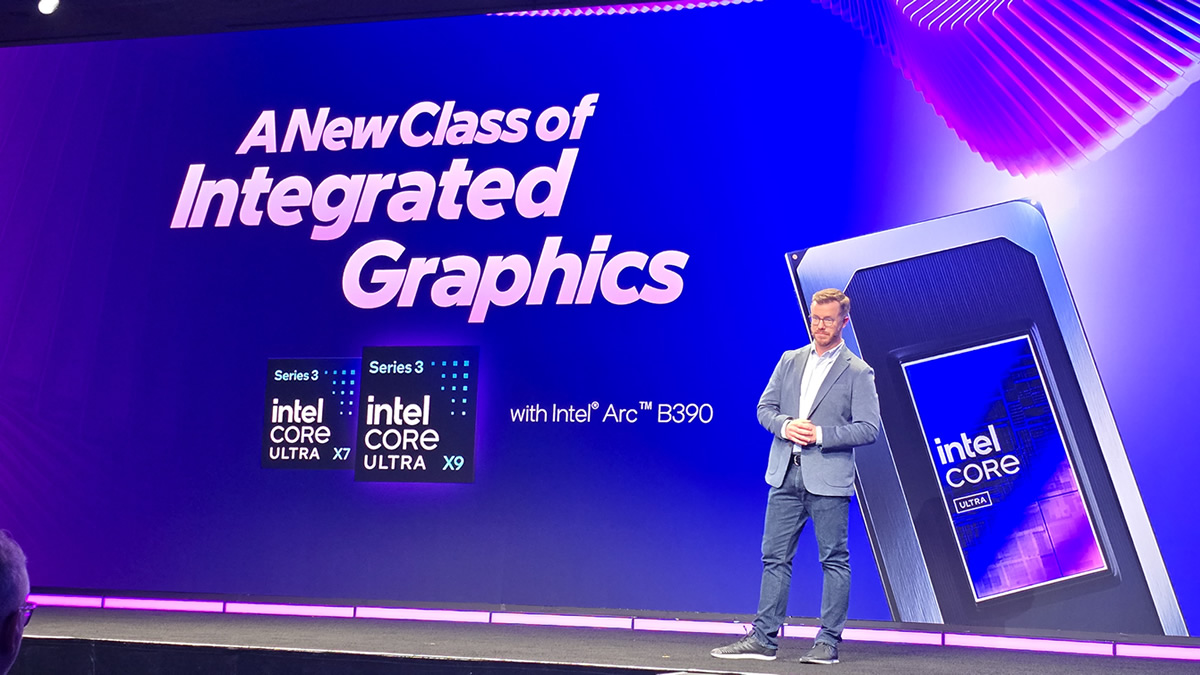
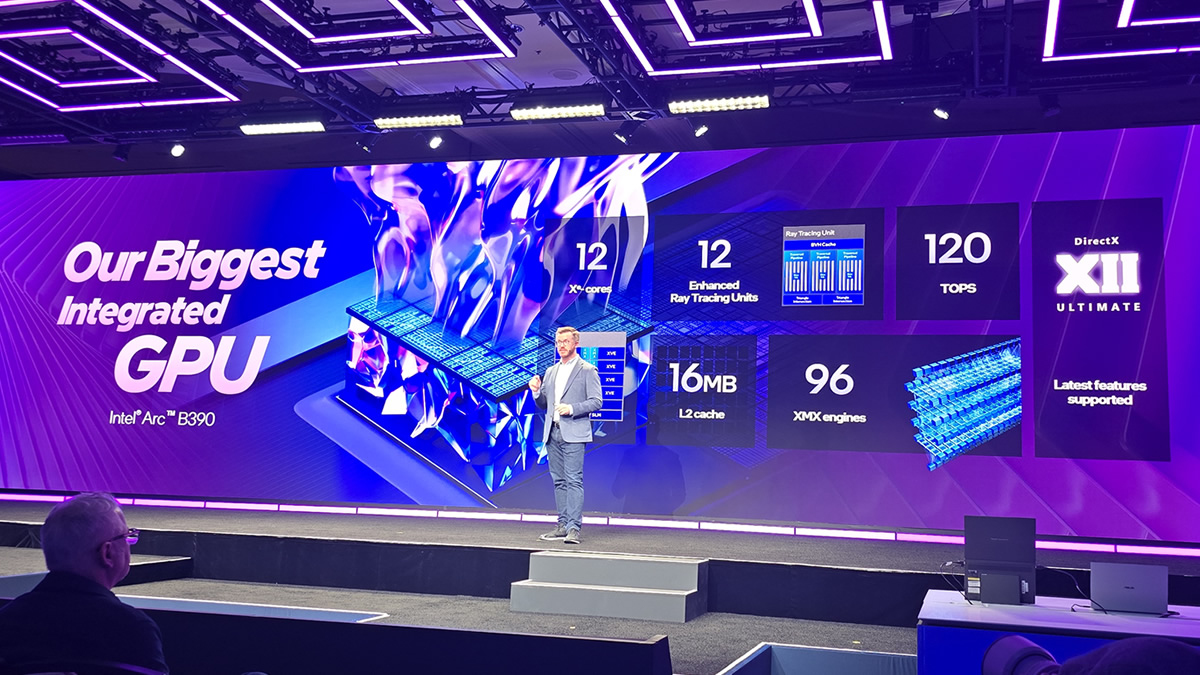
ARC B390 is the high-end GPU option available with Intel’s new Core Ultra X7 and X9 series Panthe Lake CPUs. It uses Intel’s Xe3 graphics architecture and features 50% more Xe cores than its largest Panther Lake integrated GPU. Intel has invested heavily in this new GPU, and that investment has paid off.
With XMX AI accelerators, Intel is ready for its newest AI gaming features. Thanks to enhanced ray tracing units, Intel is better prepared for modern gaming workloads. With DirectX 12 Ultimate support, Intel’s ready for the newest games.
From Lunar Lake to Panther Lake
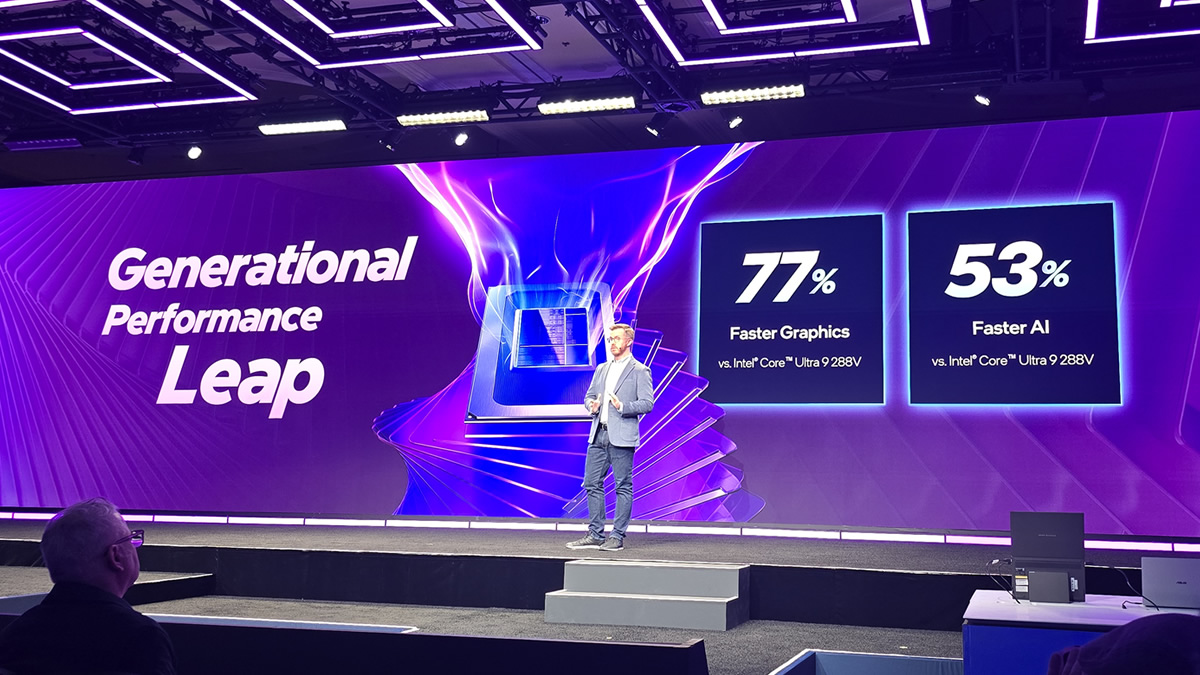
Moving from Lunar Lake to Panther Lake, Intel has delivered a 77% boost to graphics performance and a 53% increase in AI performance in a single product generation. Those are huge performance gains, and they are necessary if Intel wants lead the PC market. With these gains, Intel has turned integrated graphics into an excellent product for gaming, something that seemed impossible as we entered this decade.
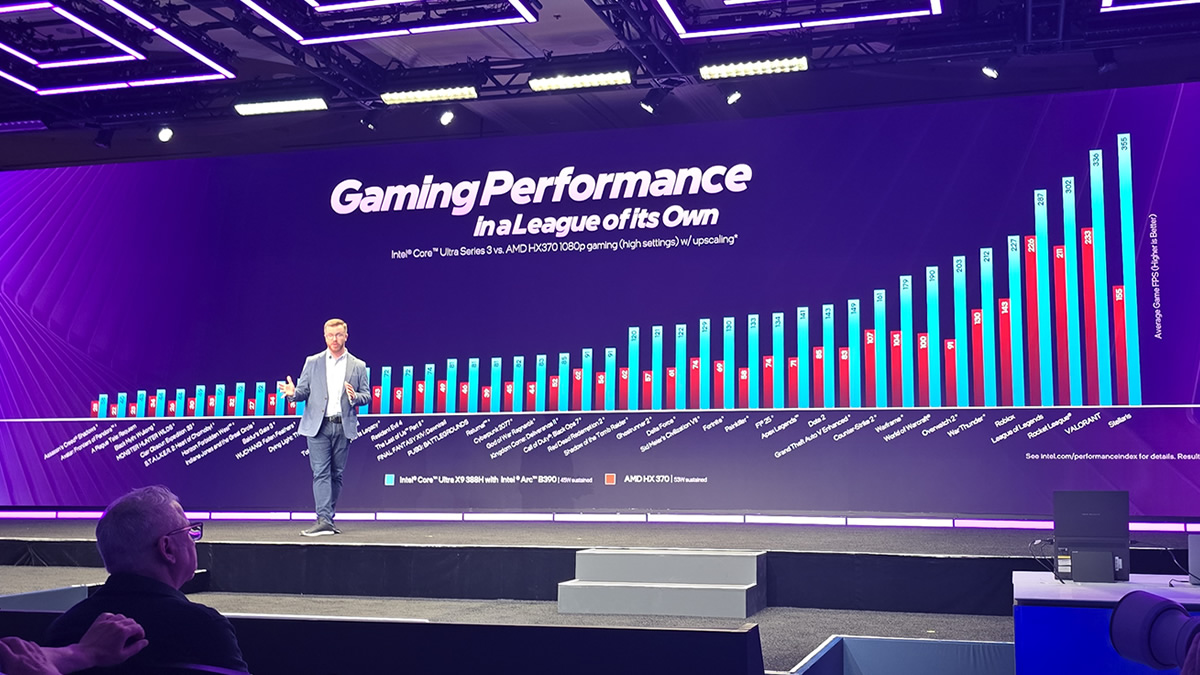
73% faster than AMD on average
Compared to AMD’s HX 370 (at 54W sustained), Intel’s Ultra X9 388H CPU (at 45W sustained) delivered 73% more performance on average. In some instances, Intel achieved double the gaming performance. This was using 1080p high setting with upscaling. To say the least, Intel appears to have smashed AMD. Radeon’s integrated graphics weren’t even close to Intel’s. AMD, the once leader of the mobile gaming market, has been trounced by Intel. Did anyone put that on their 2026 bingo card?
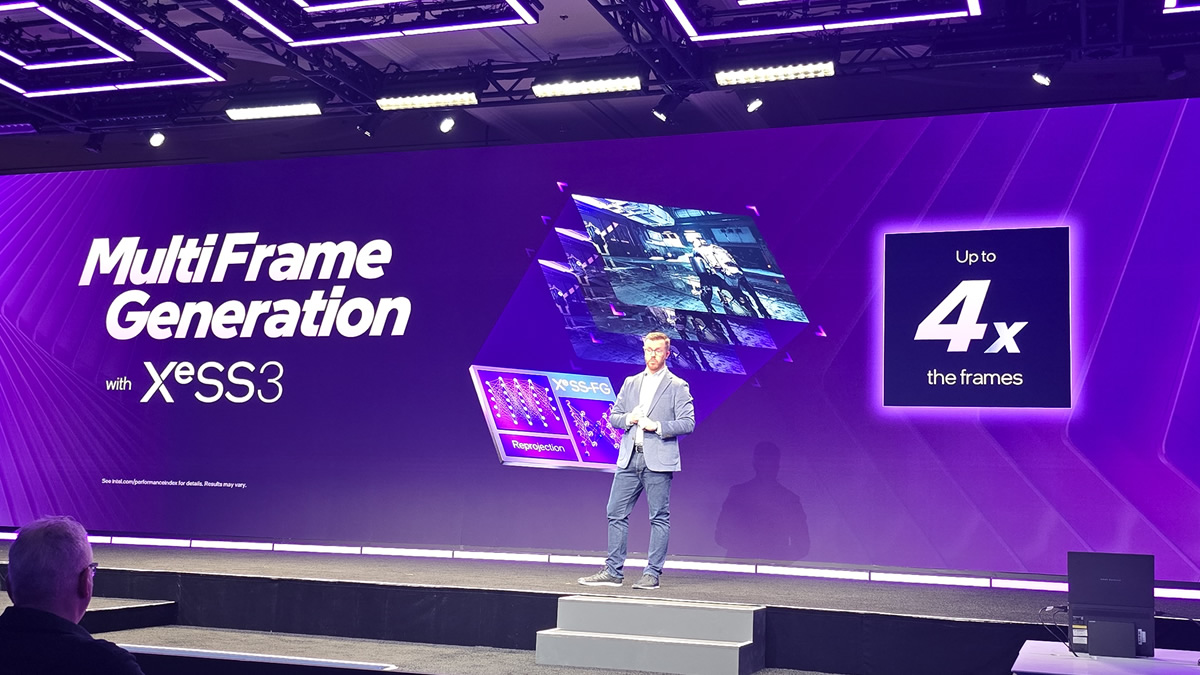
4x Frame Generation on a mobile GPU
While AMD’s top graphics features are exclusive to its RDNA 4 architecture (which isn’t used by its integrated GPUs), Intel’s B390 graphics supports all of Intel’s newest hardware innovations. This includes Intel’s XeSS AI upscaler and its multi-frame generation feature. That’s right, Intel supports 4x frame generation with its integrated graphics, something that no AMD GPU currently offers.
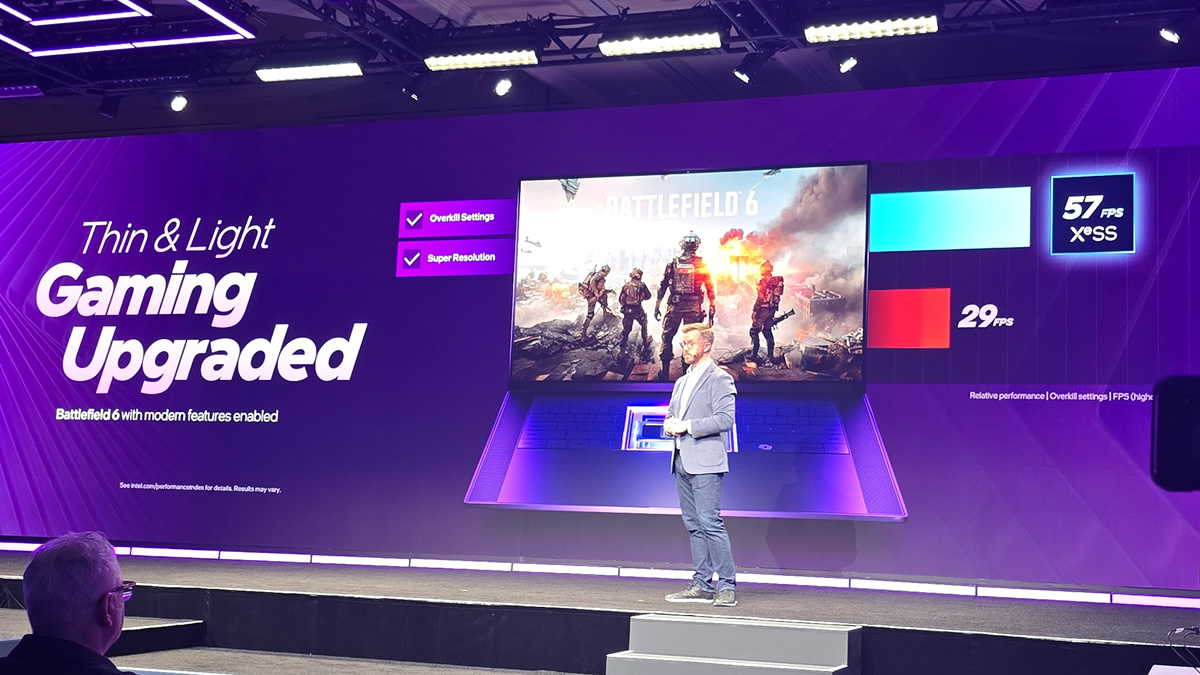
Winning in Battlefield
Intel partnered with EA on Battlefield 6, so we should expect strong performance from Intel’s ARC graphics. That said, we didn’t expect AMD’s iGPU to be defeated so utterly. With overkill settings and upscaling (XeSS VS FSR), Intel has an easy win. It gets worse once frame generation is used.
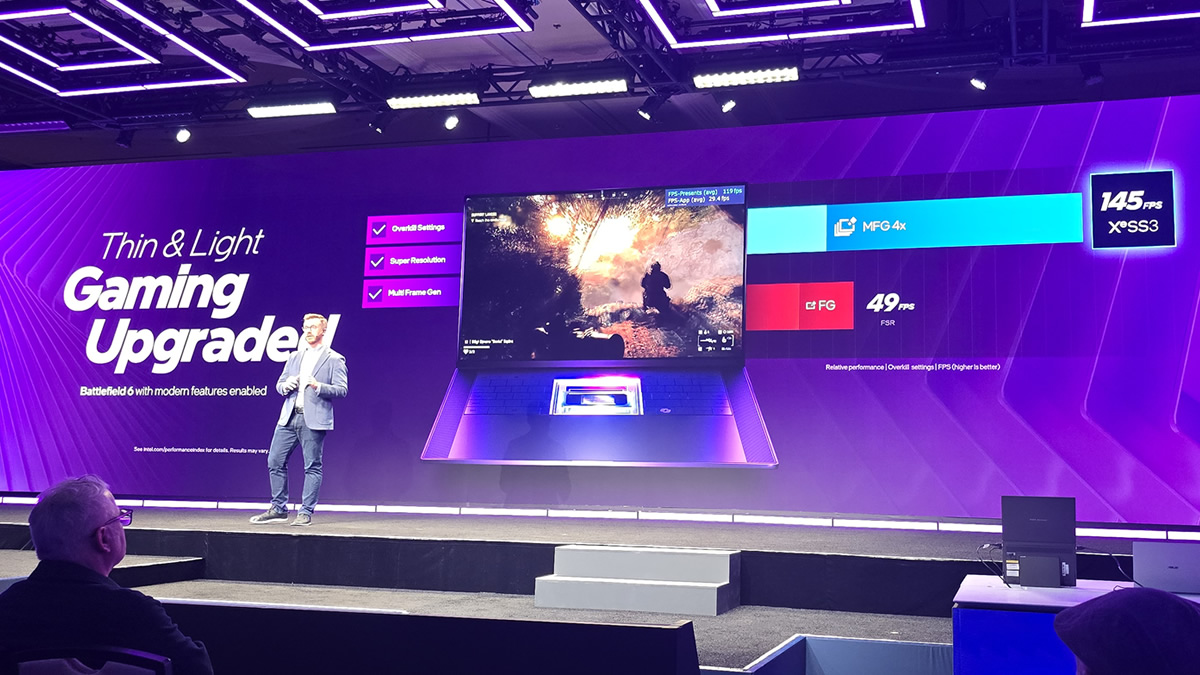
Winning even harder with Multi-Frame Generation
With Frame Generation, Intel’s 4X Frame Generation mode enables it to significantly outperform AMD in Battlefield 6. While much of this is due to AMD’s GPUs supporting only 2x Frame Generation, it highlights that Intel’s iGPU supports the latest GPU technologies, whereas AMD’s doesn’t.
AMD’s complacency gave Intel an easy win in its ARC B390
In a sense, Intel has battled AMD on easy mode, but that’s AMD’s fault. AMD’s current-gen integrated graphics are based on its RDNA 3.5 graphics architecture, while its desktop GPUs use RDNA 4. With RDNA 4, AMD gains support for AI upscaling, receives more powerful compute units, and a suite of architectural enhancements. Had AMD kept its integrated graphics in line with its desktop offerings, AMD would be in a much more competitive position. That said, AMD can only blame itself for letting its mobile graphics fall behind.
With the Steam Deck, AMD hardware created the modern handheld gaming PC niche. It has also been the go-to solution for strong integrated graphics for many years. At CES 2026, Intel came to take this position from AMD, and AMD could barely put up a fight. If AMD wants to regain its mobile gaming crown, it needs to take this segment of the PC market more seriously. Intel certainly is, and it shows.
Intel’s Panther Lake CPUs are shaping up to be incredibly interesting, especially from a gaming perspective. This is excellent news for gamers, as Intel has now broken AMD’s monopoly over this segment of the gaming market. AMD now needs to defend its market share in this segment, and Intel needs to maintain momentum. That should mean better products and competitive prices for gamers. Nobody’s going to complain about that.
You can join the discussion on Intel’s ARC B390 mobile graphics on the OC3D Forums.