


Intel confirms the return of Hyperthreading with 2028’s Coral Rapids

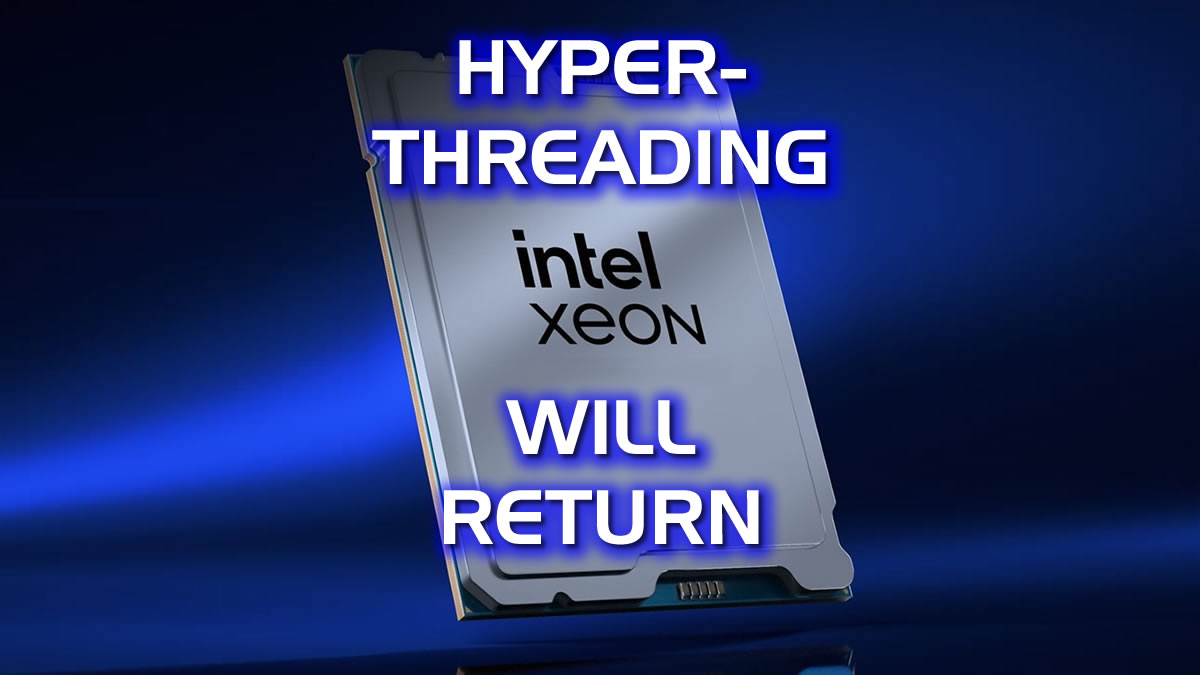
Intel confirms that SMT will return to its server CPUs with Coral Rapids
In recent years, Intel has moved away from Hyperthreading in many of its CPU designs. Its newest desktop and mobile CPUs, Lunar Lake, Arrow Lake, and Panther Lake, have all lacked Hyperthreading. Even Intel’s new Diamond Rapids server CPUs lack hyperthreading. Now, it seems clear that Intel believes that this change was a mistake, with CEO Lip-Bu Tan confirming that SMT (Hyperthreading) will return with Coral Rapids.
Coral Rapids is due to be released in 2028. Currently, it is unknown what lithography node or core architecture Coral Rapids will use. It could be one of Intel’s first 14A products, or a later 18A-PT design.
Intel’s Diamond Rapids CPUs are due to launch with 192 cores and 192 threads. This places Intel behind AMD’s newly unveiled EPYC 9006 series CPUs, which will offer users up to 256 cores and 512 threads.
On the server side, data center side, I think we have a strong roadmap. We have Clearwater Forest, Diamond Rapids, and also Coral Rapids with the SMT involved. I think we continue working on improving the competitiveness against our competitor. I think clearly it’s very important to drive the improvement in the single thread and also multithreading. Multithreading will be coming in the Coral Rapids.
– Intel CEO Lip-Bu Tan
Will SMT return to Intel’s desktop CPUs?
Rumour has it that Intel plans to bring back SMT to its desktop CPUs with its “Unified Core” architecture. This architecture is reportedly due to arrive after Intel’s Nova Lake CPUs and rumoured “Razor Lake” CPUs. If Intel leaks are to be believed, SMT will return with “Unified Core” Titan Lake series Intel CPUs.
Clearly, Intel believes that removing Hyperthreading from its CPUs was a mistake, at least within the server CPU market. Now, Intel appears to be rectifying this mistake, re-adding SMT one product generation after it was removed.
You can join the discussion on Intel’s plan to bring back Hyperthreading on the OC3D Forums.