


ASRock aims to lower DDR5 memory pricing with new HUDIMM tech

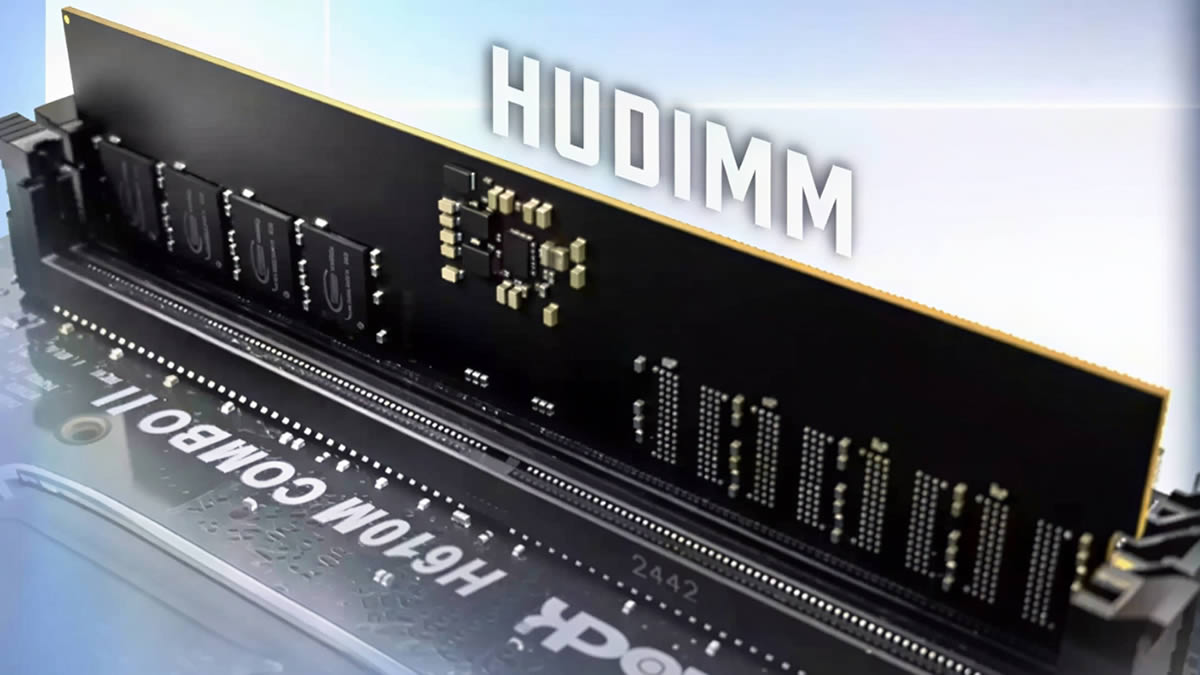
ASRock has a unique solution to the DDR5 shortage
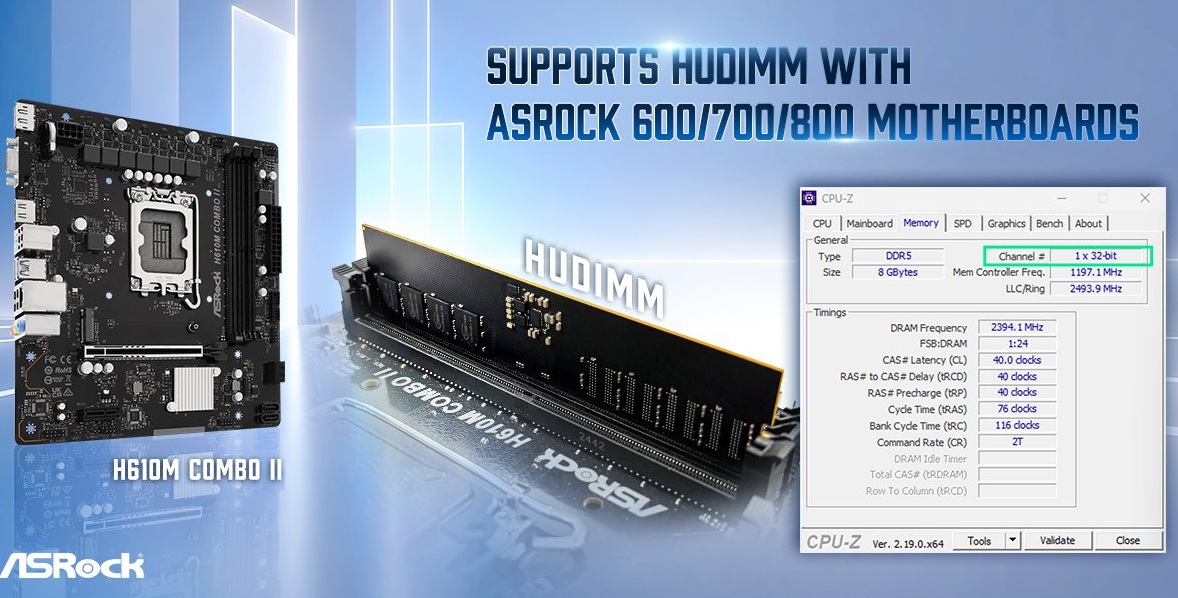
ASRock has an interesting new solution to the DDR5 shortage. On Intel 600/700/800 series motherboards, HUDIMM memory support is now available. These new memory modules use only one of the DDR5 standard’s two 32-bit memory channels, enabling the production of more affordable modules.
With DDR5 memory pricing being sky-high, HUDIMM technology has the potential to make PCs more accessible. That said, this technology is not free of downsides.
We’ve noticed the strong demand for affordable DDR5 modules, with this patent pending technology, it will bring flexibility and affordable cost for global system integrators, we are also cooperating with DRAM manufacture to bring more One sub-channel HUDIMM module to the market.
Chris Lee, Vice President of ASRock motherboard and gaming monitor business unit.
What are HUDIMM DDR5 memory kits
DDR5 memory modules contain two 32-bit memory channels. All standard DDR5 memory modules use both of these channels to maximise performance. With HUDIMM, only one of these channels is used, which enabled the creation of more affordable memory modules.
With ASRock, TEAMGROUP created “one sub-channel” DDR5 modules for testing. Below we can see an 8GB DDR5 memory module with one memory channel. This is half the memory of a standard 16GB DDR5 module, reducing manufacturing costs significantly.
While having only one sub-channel is worse than having two, these new modules create exciting possibilities for PC builds.
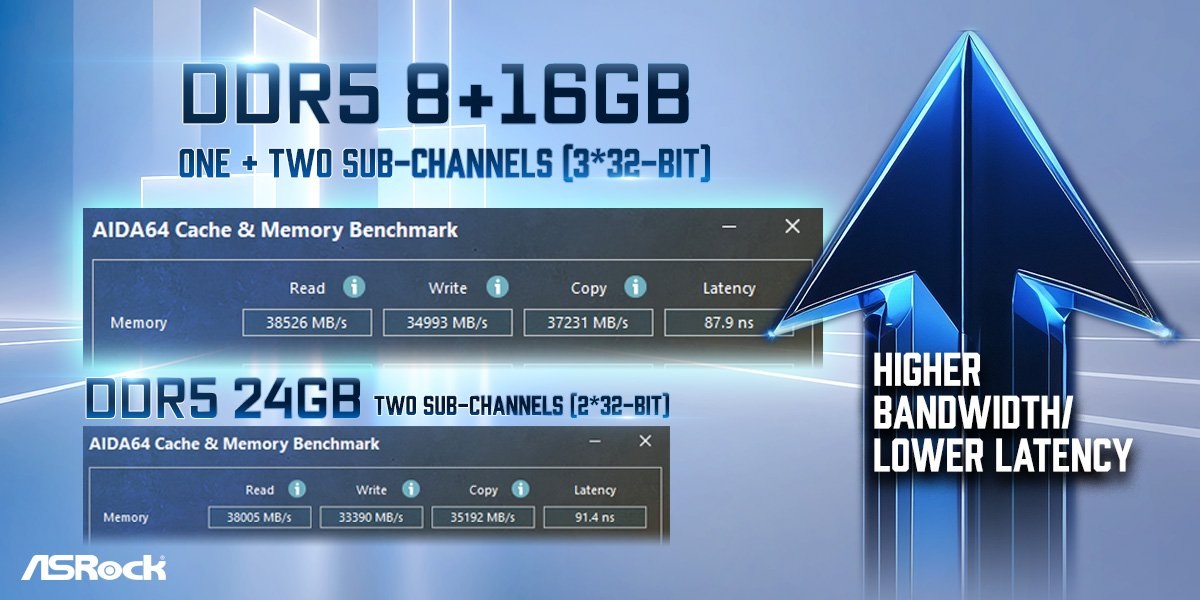
HUDIMM Performance
Right now, many PC builders are creating PCs with one DDR5 memory module. Doing this reduces the price of their PC, but doing so leaves performance on the table. Below, ASRock showcases how a standard 24GB DDR5 memory module compares with a 24GB configuration combining an 8GB DDR5 HUDIMM and a 16GB DDR5 memory module. This two-module configuration uses a single 1-channel module and a 2-channel module, giving the configuration three memory channels. This enables higher bandwidth and lower latencies than the single module (2-channel) configuration.
So far, ASRock has enabled HUDIMM memory support on its 600/700/800 series Intel motherboards. Intel clearly supports this new HUDIMM technology. ASRock’s press release makes no mention of planned AMD motherboard support.
Innovations like ASRock’s One sub-channel DRAM technology are crucial to ensuring desktop computing remains accessible despite the rising demand and costs for DDR5 memory. Intel’s grateful for ASRock’s support in bringing this to market for our 600/700/800-series chipsets, ensuring Intel users have more access to the benefits of DDR5 memory in the years ahead.
Robert Hallock, Vice President and General Manager for Intel’s Enthusiast Channel Segment business unit.
It’s not ideal, but it’s better than nothing
In an ideal world, HUDIMM DDR5 memory modules wouldn’t need to exist. Regardless, we live in a world where there isn’t enough memory to satiate the demand of AI hyperscalers. As a result, DRAM prices have soared, and PCs have become much more expensive. Ideally, DDR5 memory would be affordable enough to make HUDIMMs seem silly. After all, sacrificing a memory sub-channel sacrifices performance. That said, making PC building more affordable is an obvious win for the industry.
ASRock says that it is working with memory makers to bring HUDIMM memory to the market. Perhaps we will see some of the fruits of these efforts at Computex 2026.
You can join the discussion on ASRock’s HUDIMM memory technology on the OC3D Forums.