


OpenAI hardware has arrived, and I’m not impressed


OpenAI’s first hardware release is a glorified Stream Deck for controlling AI agents
OpenAI has officially entered the hardware market with its “Codex Micro”, an “AI agent controller” that can be used to quickly and easily see what agents are doing and issue commands. For $230, it is an expensive add-on for OpenAI Codex users, and while the device appears to be of high quality, it is hard to see this device as anything more than a glorified Elgato Stream Deck. Welcome to 2017 OpenAI…
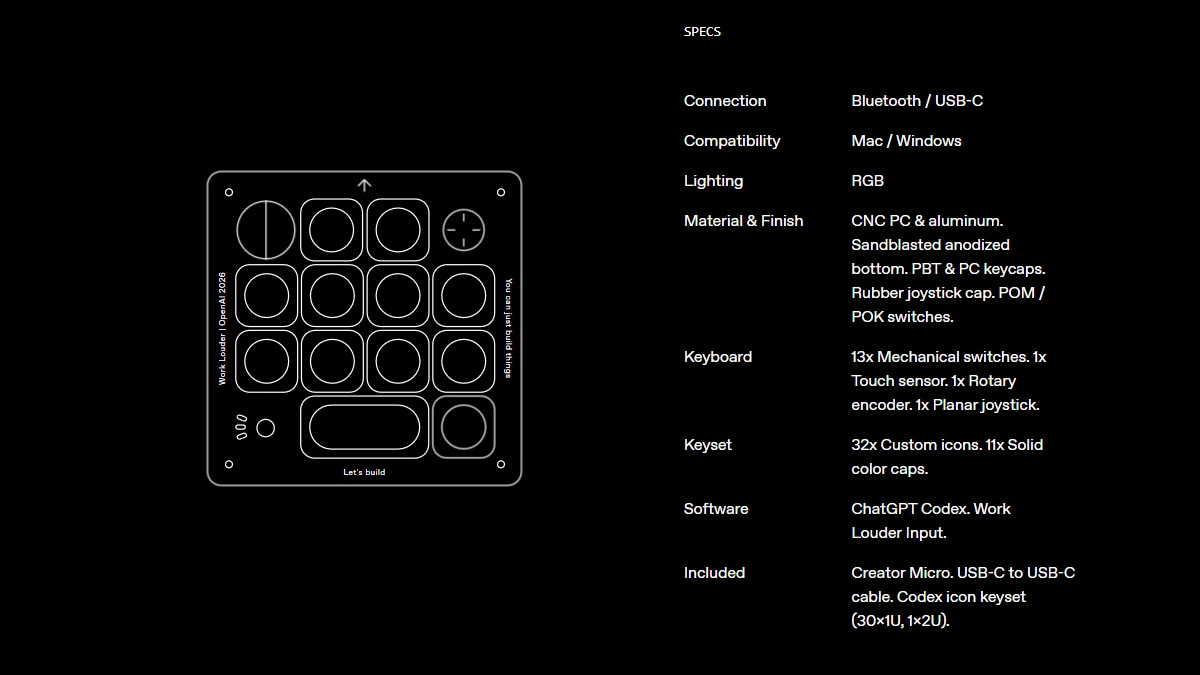
The device has thirteen keys, a joystick, a control stick, a touch sensor, and a rotary encoder. The keys are available with “clicky” and “silent” options, and the device can connect to systems using USB-C or Bluetooth. RGB lighting is available, with lighting signalling when AI agents are idling, thinking, needing input, or erroring. A green light will signal that an AI agent has finished its work.
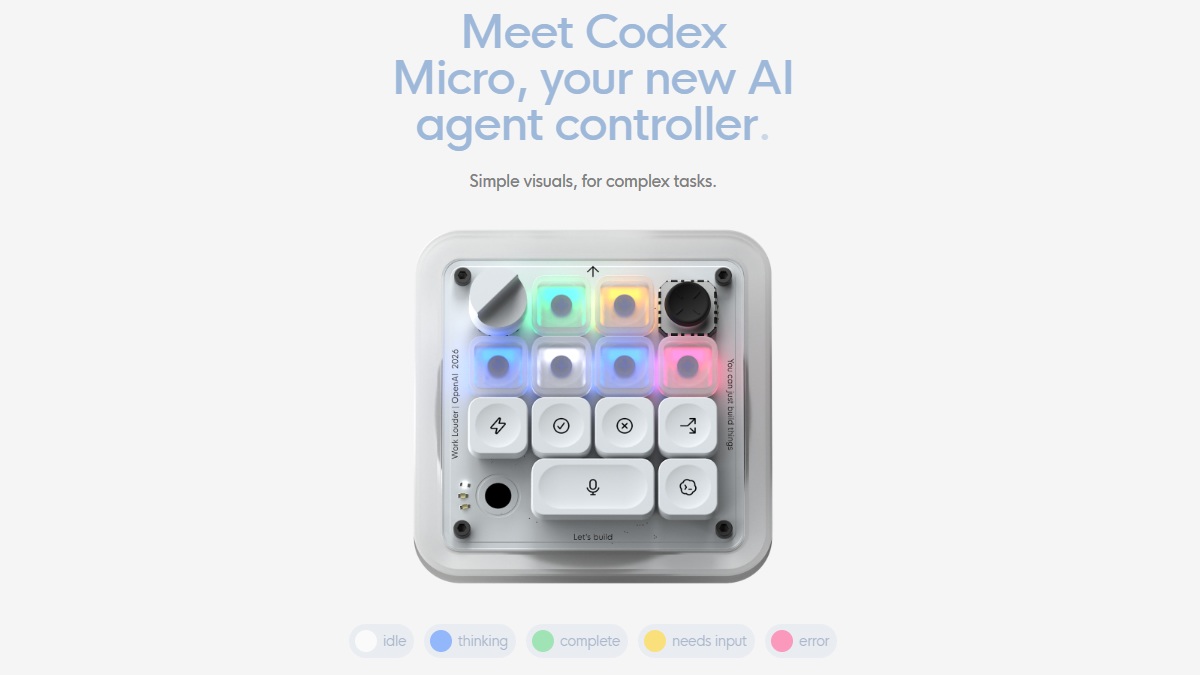
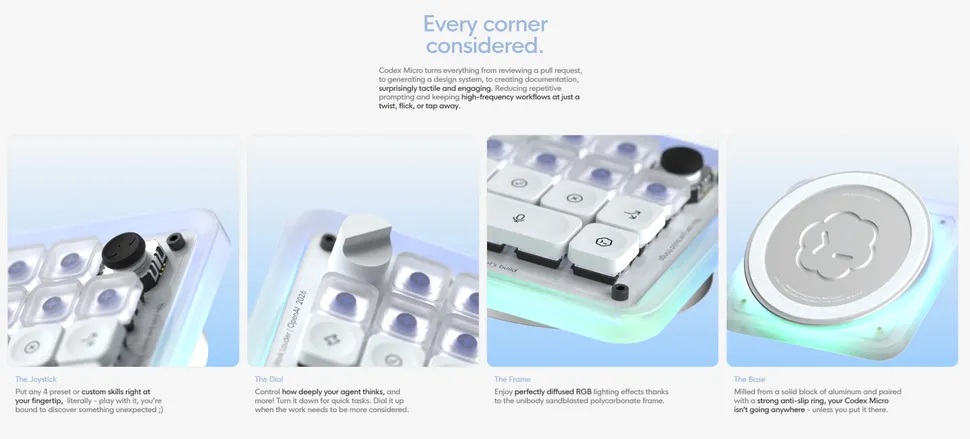
The OpenAI Codex Micro is made by Work Louder, a boutique keyboard maker. The dial on the system can define the “brainpower” of an AI agent, allowing users to adjust reasoning levels to reduce compute costs and increase speeds or deliver “heavier thinking” whenever tasks require it.
The device’s housing is made of CNC-milled aluminium and polycarbonate, making the device sturdy. That said, it is hard to see this as anything more than an expensive Stream Deck for ChatGPT.
It’s a reskinned Creator Micro 2
Hardware-wise, the Codex Micro is a reskinned version of the Work Louder Creator Micro 2. With $174 pricing at the time of writing, it is a much more affordable product with an almost identical aesthetic. Move down to the wired-only version, and it costs $144. In other words, OpenAI hasn’t created anything new here, just a reskinned version of an existing product with a new software use case.
If nothing else, the Codex Micro is a useful companion item for heavy ChatGPT users. That said, a Stream Deck plugin with similar functionality could have been developed at a fraction of the cost. Honestly, I think this device only exists to generate headlines. Since I am writing about it, perhaps this device can be considered a success. It’s already marked as “Out of Stock” on OpenAI’s website, so I guess this device does have a consumer base.
This product is a distraction
While OpenAI generates billions in revenue, its costs are much higher. OpenAI is burning money at an alarming rate, and any attempts to get customers to pay the true cost of their AI tokens have caused a collapse in its user base. As time passes, OpenAI’s ability to eventually turn a profit becomes more questionable. Operating costs are not going down, and raising prices have already caused business users to move from “tokenmaxxing” to “token austerity”. If OpenAI cannot turn things around, its collapse may be inevitable.
If you want my honest opinion, the world does not hate OpenAI enough. They always overstate AI’s capability and rarely keep their promises. The company has moved from idea to idea, flashing a shiny object every now and then to ensure that their hype train is well-fueled. The “AI bubble” they inflated has created a chip shortage, driving the prices of RAM and SSDs to insane heights. Why are practically all electronics more expensive now? Most of the blame can be laid at OpenAI’s feet. Between AI slop software, high SSD prices, and higher RAM prices, OpenAI has committed heinous crimes against the computer and all its users.
For those who love computers, today’s AI era is a catastrophe. It has sucked the life from a tech sector that once prided itself on its rationalism, efficiency, and continual innovation in the consumer and enterprise markets. OpenAI represents the rot within today’s tech sector, where hype and the need for growth at all costs matter more than everything else. Well done, OpenAI; you have built a Stream Deck GPT. Will this finally let you turn a profit? Didn’t think so.
You can join the discussion on OpenAI’s Codex Micro on the OC3D Forums.