


Toshiba announces their RC100 M.2 NVMe SSD and 96-layer QLC NAND technology

Toshiba announces their RC100 M.2 NVMe SSD and 96-layer QLC NAND technology
The first product here is not designed to be a chart-topper on out benchmark tables or deliver anything that most of us would call new but is nonetheless transformative due to its potential to impact that mid-range SSD market. This product is the Toshiba RC100, an M.2 NVMe SSD that is designed to sit in the sweet spot that sits between high-end SATA drives and today’s top-tier NVMe storage solutions, delivering a performance advantage over most standard SSDs while maintaining an attractive price point.
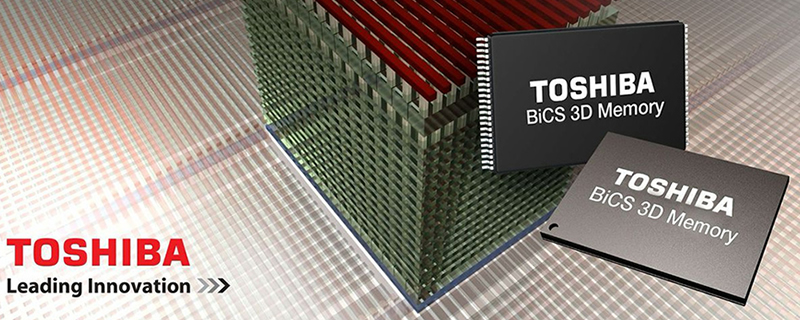
The RC100 will utilise Toshiba’s 64-layer BiSC 3D Flash memory, releasing in a tiny 2242 M.2 form factor, making this drive shorter than most of today’s existing M.2 SSDs. Sadly, Toshiba has not revealed the speed of pricing of this new solid state drive, though it is expected to release within Q1 of this year.
The second announcement from Toshiba is easily the most groundbreaking, revealing plans to showcase the industry’s first flash memory device based on 96-layer 512Gb QLC BiCS 3D NAND.
QLC (Quad Level Cell) NAND allows more bits of data to be stored per cell, allowing for higher capacities without adding more cells to a die. It will be interesting to see if Toshiba reveals the performance consequences of making NAND even more storage dense.
You can join the discussion on Toshiba’s RC100 SSD and QLC 3D NAND on the OC3D Forums.
Toshiba announces their RC100 M.2 NVMe SSD and 96-layer QLC NAND technology
The first product here is not designed to be a chart-topper on out benchmark tables or deliver anything that most of us would call new but is nonetheless transformative due to its potential to impact that mid-range SSD market. This product is the Toshiba RC100, an M.2 NVMe SSD that is designed to sit in the sweet spot that sits between high-end SATA drives and today’s top-tier NVMe storage solutions, delivering a performance advantage over most standard SSDs while maintaining an attractive price point.
The RC100 will utilise Toshiba’s 64-layer BiSC 3D Flash memory, releasing in a tiny 2242 M.2 form factor, making this drive shorter than most of today’s existing M.2 SSDs. Sadly, Toshiba has not revealed the speed of pricing of this new solid state drive, though it is expected to release within Q1 of this year.
The second announcement from Toshiba is easily the most groundbreaking, revealing plans to showcase the industry’s first flash memory device based on 96-layer 512Gb QLC BiCS 3D NAND.
QLC (Quad Level Cell) NAND allows more bits of data to be stored per cell, allowing for higher capacities without adding more cells to a die. It will be interesting to see if Toshiba reveals the performance consequences of making NAND even more storage dense.
You can join the discussion on Toshiba’s RC100 SSD and QLC 3D NAND on the OC3D Forums.