


Intel delivers major improvements with its 18A-P tech

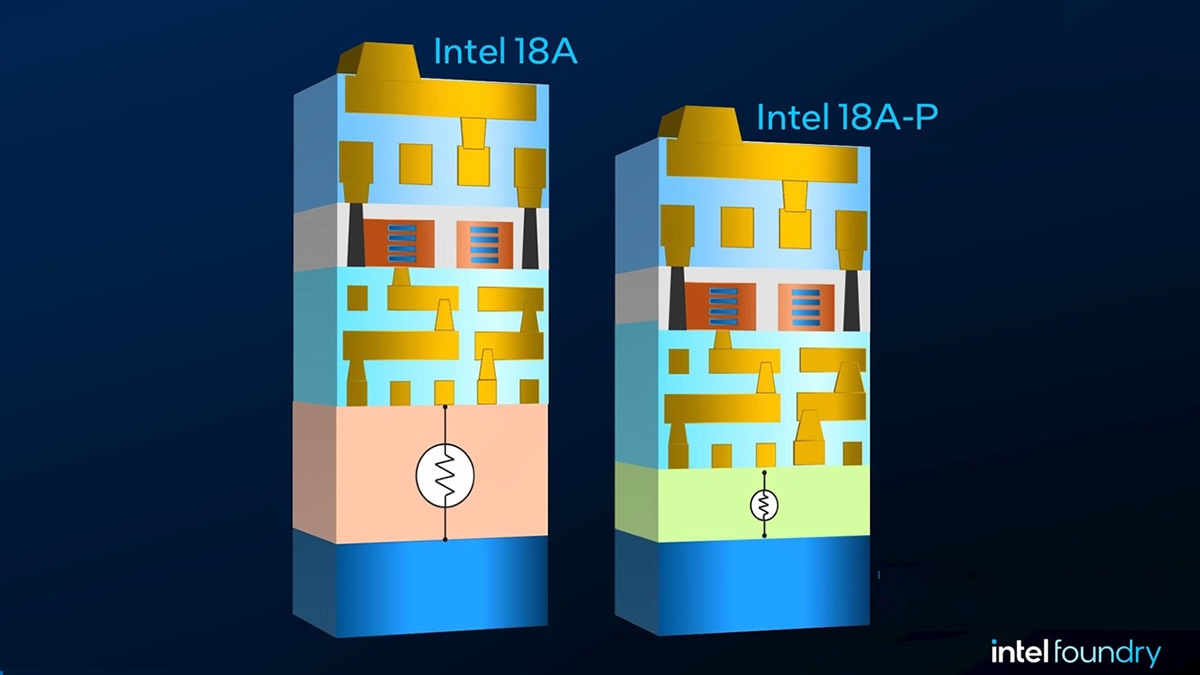
Intel confirms major process tech enhancements with its 18A-P node
At the VLSI Symposium, Intel Foundry has detailed the enhancements that will be available with the company’s new 18A-P lithography node, which is already in risk production.
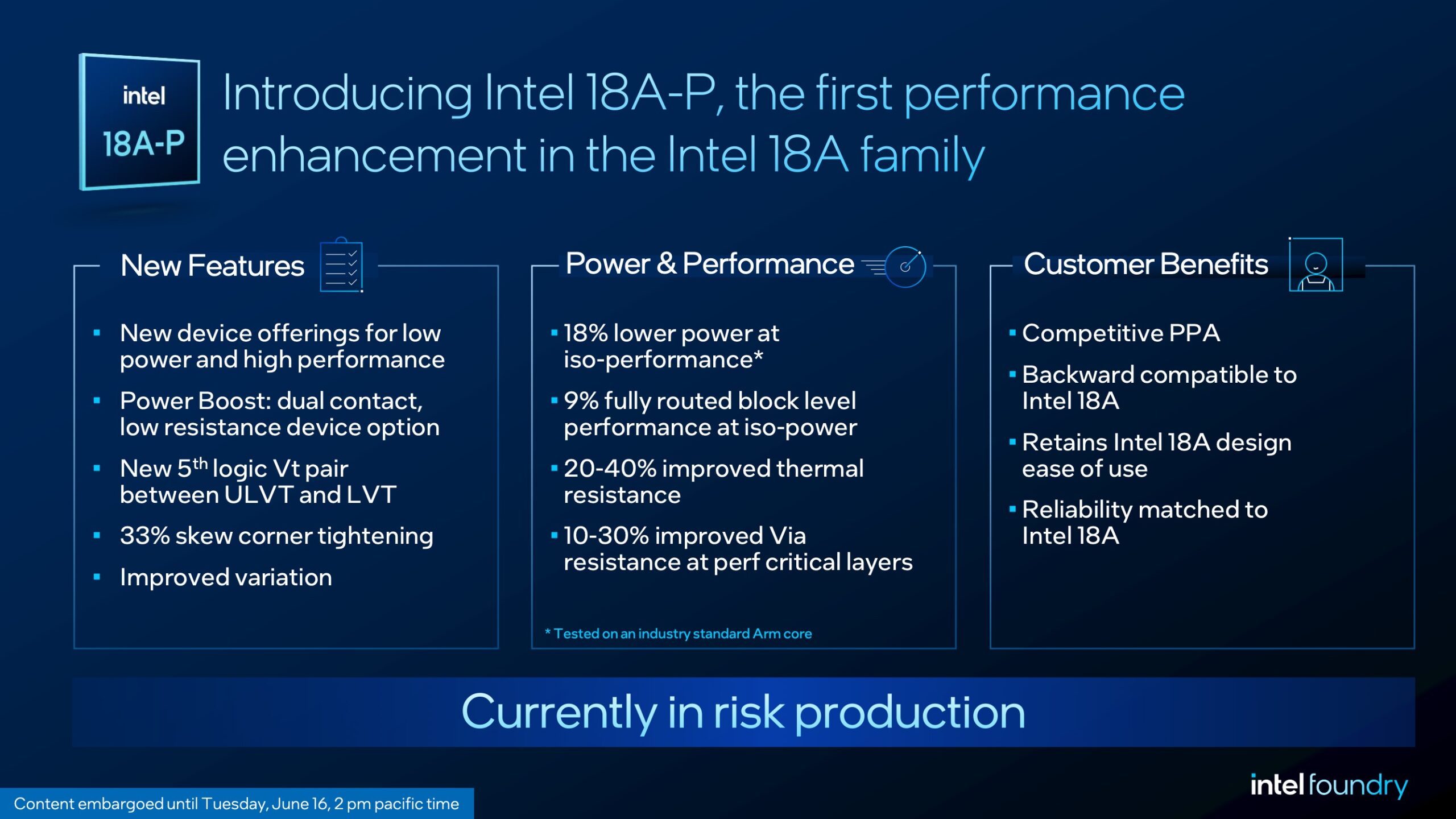
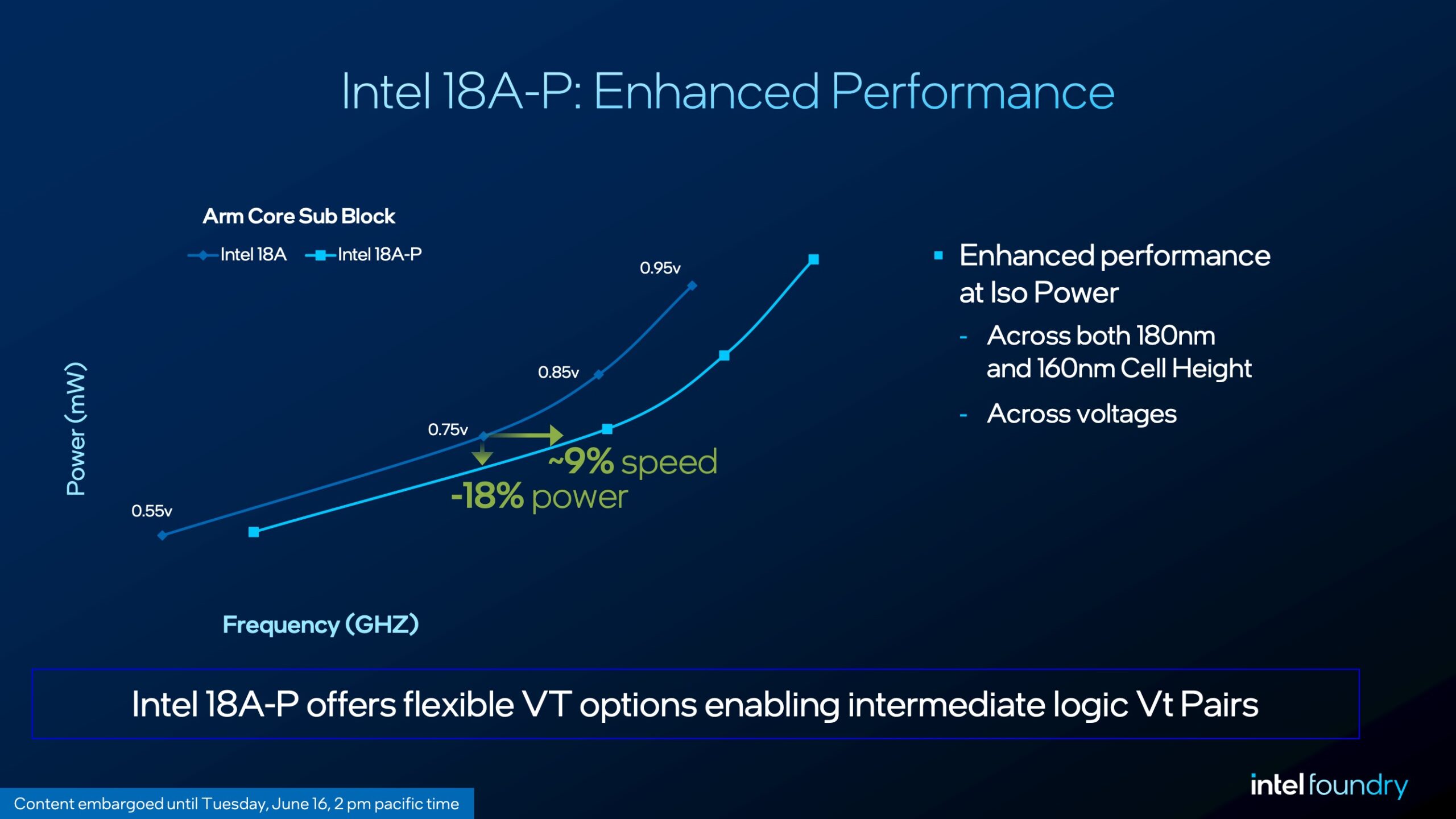
18A-P is an enhanced version of Intel’s existing 18A lithography node. Performance-wise, Intel promises 18% lower power draw at ISO performance, and 9% more performance at ISO power over 18A. Intel has also promised 20-40% improved thermal resistance, making 18A-P chips easier to cool.
No only does Intel 18A-P deliver enhanced performance, it also delivers new features. The new node introduces W1 and W1.5 cells for low-power designs, and W3P cells that use a “dual-contact” design to boost performance without a larger footprint. These changes are available within Intel’s 180HP and 16HD libraries. Thanks to these changes, Intel’s new 18A series node is much more versatile.
Performance enhancements and more
While Intel’s performance and efficiency enhancements are significant, those are only part of the picture. With 18A-P, Intel has delivered 33% improved “skew corner tightening”, which is a way of saying that transistor characteristics are now much more consistent. This means that chips will be much more consistent and have much less variable voltage, clock speed, and timing. This change should help Intel target higher clock speeds in future products and increase its manufacturing yields.
Intel has stated that its 18A-P node is backwards compatible with 18A. This means that 18A designs can be easily transitioned to 18A-P. This means that the company has the potential to create new 18A-P versions of its Panther Lake CPUs with enhanced characteristics. As mentioned before, 18A-P production is already underway.
Intel 18A-P will be used for Diamond Rapids
Intel has confirmed that Diamond Rapids will be the first product to utilise this new lithography node. This new generation of Xeon CPUs will utilise the benefits of 18A-P to deliver higher core counts and increased CPU performance. Diamond Rapids will also be the first Intel platform to support PCIe 6.0.
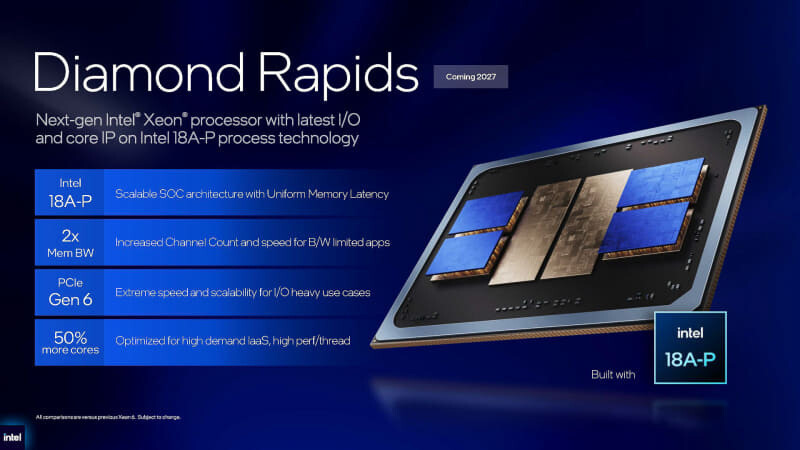
Intel has confirmed that Diamond Rapids will feature 50% more cores than its predecessor, highlighting the density benefits of the company’s newest lithography nodes. Will this be enough to counter AMD’s upcoming Zen 6 CPUs? We will find out in 2027.
You can join the discussion on Intel’s 18A-P node and its enhancements on the OC3D Forums.