


PCIe 8.0 version 0.5 has been released – On track for 256 GT/s speeds

PCI-SIG members now have access to version 0.5 of the PCI Express 8.0 standard
PCI-SIG members have today gained access to version 0.5 of the PCIe 8.0 standard, arriving ahead of schedule to industry partners. This is the official first draft of the PCIe 8.0 specification, incorporating feedback from the standard’s 0.3 release last year. Currently, the standard is on track to be fully released by 2028, delivering a tremendous boost to PCIe performance.
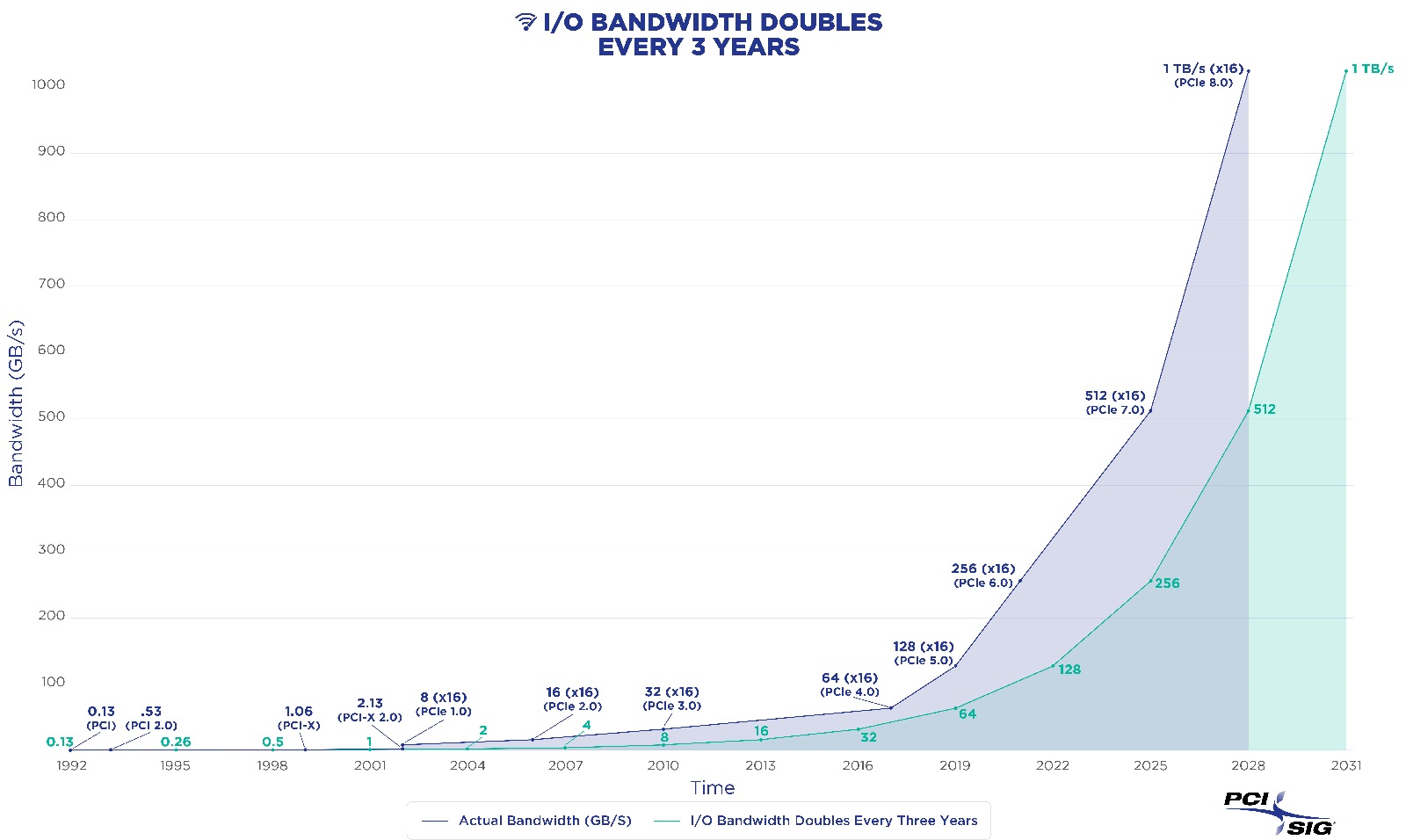
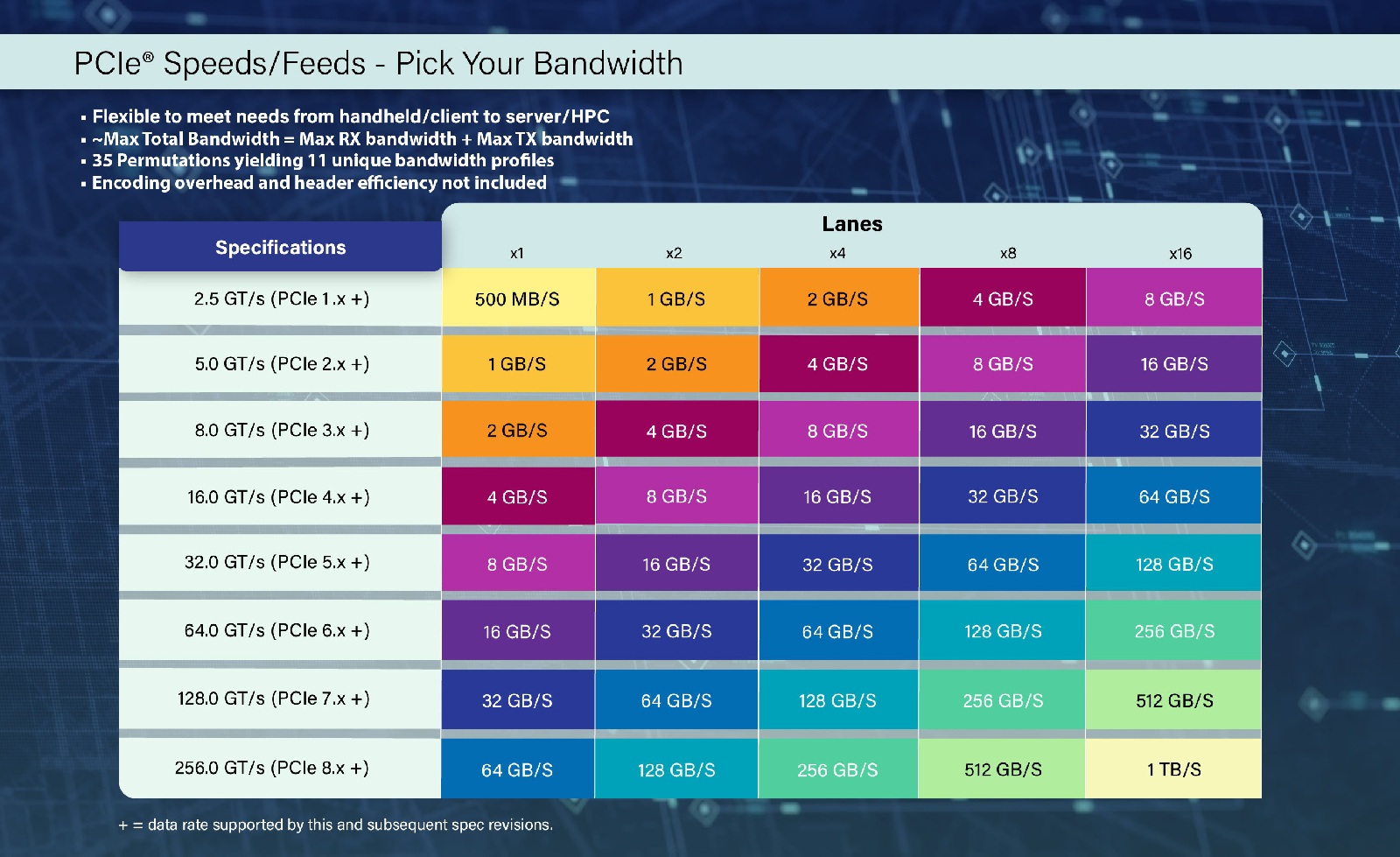
With PCIe 8.0, PCI-SIG aims to deliver a 2x bandwidth boost over PCIe 7.0. PCIe 7.0 is already 2x faster than PCIe 6.0, and 4x faster than PCIe 5.0. In other words, PCIe 8.0 aims to be 8x faster than PCIe 5.0, the fastest PCIe standard available on today’s consumer PCs.
Next-generation CPUs from AMD and Intel are already planning to deliver PCIe 6.0 support to the datacenter market. Furthermore, PCIe 7.0 support is undoubtedly already part of both companies’ CPU, GPU, and AI roadmaps. PCI-SIG is aiming to deliver PCIe 8.0 before the industry needs the bandwidth, allowing the market to plan ahead with PCIe in mind.
PCIe 8.0 Specification Objectives:
- Delivering 256.0 GT/s raw bit rate and up to 1.0 TB/s bi-directionally via x16 configuration
- Evaluating new connector technology
- Ensuring latency, FEC and reliability targets are achieved
- Maintaining backwards compatibility with previous generations of PCIe technology
- Improving bandwidth through protocol enhancements
- Reducing power through additional techniques
Why do we need PCIe 8.0?
Most PC users consider PCIe 4.0 and 5.0 to be more than fast enough for their needs. Regardless, the needs of the enterprise market are always changing. The growth of AI and other applications has demonstrated clear demand for higher-bandwidth connections. Furthermore, PCI-SIG doesn’t want innovation to be limited by the performance of its PCI Express standard. If that happens, the industry will seek alternatives.
Soon, PCIe 6.0 will be available in datacenters, and there is interest in moving to PCIe 7.0. The industry’s bandwidth requirements are growing, and PCI Express must keep pace with those demands. While many consumers do not feel the need to upgrade to a faster PCIe standard, that time will inevitably come.
PCI-SIG aims to double the bandwidth of PCIe Express (PCIe) every three years. So far, the group has achieved this with PCIe 5.0, 6.0, and 7.0.
While increased raw bandwidth is always the aim of any new PCIe standard, power efficiency is also critical. Today’s bandwidth could be delivered using fewer PCIe lanes or with lower power draw. As always, PCI-SIG’s goal is to improve PCI Express and meet the needs of the PC market before such high levels of bandwidth are necessary.
PCIe 8.0 is coming, and the standard should be ready by 2028. By this time, we expect the datacenter market to transition to PCIe 6.0 and begin adopting PCIe 7.0.
You can join the discussion on PCIe 8.0 on the OC3D Forums.