


Microsoft starts rolling out Windows 11’s LLP CPU boost mode

Microsoft is starting to make Windows 11 snappier, and low-end PC users will see the biggest impact
Windows 11’s KB5089573 is now available in preview, and it has started rolling out Microsoft’s new Low Latency Profile (LLP). Windows Latest were the first to spot this new update and judge its implications. They have noted increased responsiveness for Windows 11’s Start Menu, Notifications Center, and other areas that feel “laggy” on lower-end hardware.
Microsoft’s Low Latency Profile forces CPUs to enter a boost state for a limited time. This accelerates the performance of Windows PCs for a limited time, making actions like opening the start menu and notifications center faster. This CPU boost lasts for 1-3 seconds. That’s enough time for Windows’ UI to feel much faster, but not long enough to have a dramatic impact on battery life, at least for most Windows users.
This new update includes features that are “rolling out” over time. This means this feature may not be enabled immediately after you install this update. Users can force enable Windows’ LLP feature using ViveTool. Windows Latest has a guide for this.
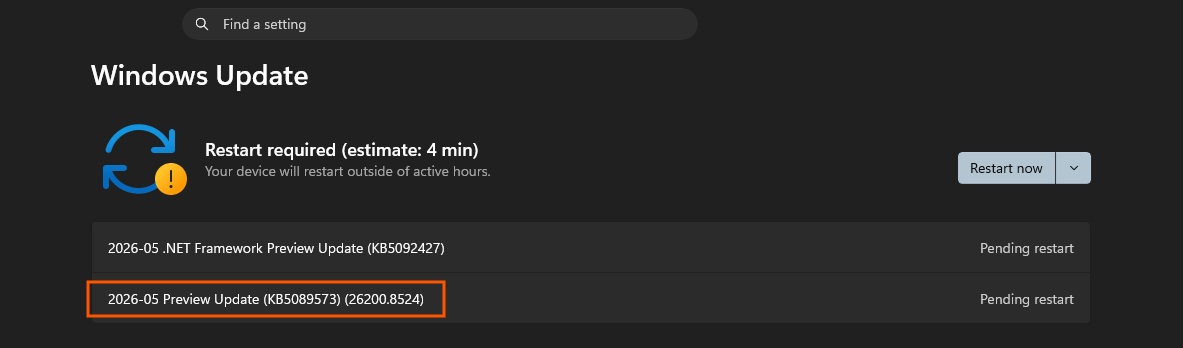
(Image from Windows Latest)
Criticisms and future updates
Many Windows users have criticised Microsoft for creating its Low Latency Profile (LLP) feature. Some see it as cheating, and others think it will greatly shorten laptop battery life. The reality is that this feature is similar to the behaviour of Android devices, Apple Macs, and Linux PCs. Everyone else does this, and Microsoft is behind the times. This “cheat” is part of the reason why other OS’ feel snappier than Windows. Microsoft’s just catching up.
As for battery life, a 1-3-second CPU boost won’t have a huge impact on a device’s battery life. These CPU boosts are used at specific times to deliver a better user experience. They aren’t enough to overwhelm CPU coolers and to dramatically impact battery life.
For now, LLP is limited to specific scenarios. Right now, the update accelerates the Windows Start Menu, Notifications centre, and other core shell experiences within Windows. Note that Windows Latest states that LLP for apps is currently unavailable. If Microsoft is true to its roadmap, this feature will soon accelerate app start times, making Windows feel snappier.
Windows’ LLP mode is part of Microsoft’s Windows “K2” project, which aims to fix Windows with a suite of changes. This includes moving Windows 11’s UI elements to WinUI3 (cutting bloat), making WinUI3 faster (further accelerating performance), and addressing longstanding complaints with Windows. If Microsoft can deliver on these promises, Windows 11 will be in a good state.
You can join the discussion on Windows 11’s Low Latency Profile starting to roll out on the OC3D Forums.