


ASUS ROG Z11 ITX Gaming Case Review

Conclusion
With an MSRP of around £240, the ROG Z11 Gaming Chassis isn’t for everyone. You can buy much cheaper cases for practically any form factor. The ROG Z11 isn’t about affordability or price-to-performance rations. This PC enclosure is about aesthetics, and for many consumers, that’s enough to justify this case’s pricing.
With most of this case being comprised of steel aluminium and tempered glass, it is easy to see why this case has such premium pricing. Those machined panels are made from real aluminium, not plastic imitations. With this case weighing over 8 kilos on its own, this chassis oozes a premium look and feel. This case is for buyers who are prepared to spend some serious money, making discussions regarding the pricing of little consequence. If you can’t afford this case, you are not in the Z11’s target market.
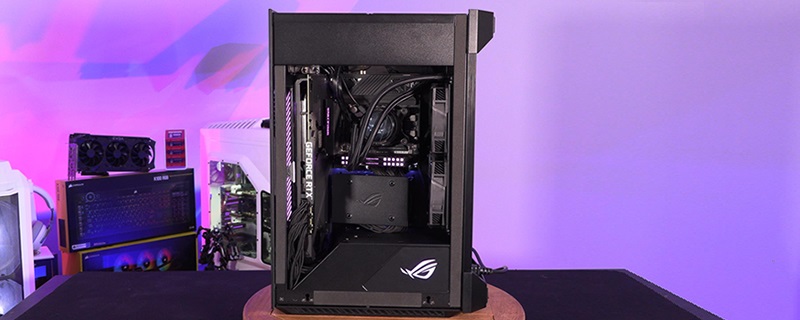
The build quality of ASUS’ Z11 is outstanding, and its design cannot be compared to anything else in today’s market. The Z11 is designed for those who want a unique system, be it for LAN events, or home use. The case’s horizontal and configuration options also play well into this goal, as two otherwise identical systems will offer different looks depending on how the Z11 is laid down on your desk.
Unlike most ITX enclosures, the ROG Z11 also offers official support for larger Mini-DTX motherboards. Like all cases designed for the ITX/DTX market, the ROG Z11 has to make compromises to fit within such a small form factor. One example is how this enclosure’s design eliminates free access to the Z11’s motherboard/GPU I/O options, which requires users to remove several panels to add new USB connections or attach displays to your graphics cards. ASUS’ compact and unorthodox design comes at the cost of convenience. Even so, that inconvenience is mitigated somewhat by the case’s external I/O options.
Users of this enclosure will need to be careful with their cable management, as overly bundled cables could case the Z11’s aluminium side panel to bulge or flex. This can be seen in the video below.
GPU Support
The Only real flaw that the ROG Z11 has it its GPU support, as graphics cards that are more than 2.7 slots thick will suffer from restricted airflow. This restriction will increase GPU thermals and result in lower than expected GPU performance. While graphics cards that are up to three slots thick can fit into the system, we cannot recommend that anyone uses graphics cards that are more than 2.7 slots thick. If anything, we believe that dual-slot graphics cards are ideal.
ASUS showed us a prototype of this case at CES 2020. It was designed before ASUS created its huge 2.9-slot RTX 30 series Strix GPUs and before Nvidia pushed the TDPs of new high-end graphics cards to new heights. The ROG Z11 chassis was designed before such thick graphics cards became common within the high-end market, which is a shame for those who want to pair this case with an ROG Strix RTX 3080/90 graphics card.
GPU thickness restrictions are commonplace within the world of ITX PC enclosures. Even so, we feel that an extra 5-10mm of depth in the ROG Z11 would have had a massive impact on GPU thermals, especially for thick 3-slot graphics cards. That said, 2.5-slot or thinner graphics cards are still relatively common within today’s market.
For the ASUS ROG Z11, we feel that only our Enthusiast Grade award is appropriate. This case is for those who want an enclosure which features a premium build quality, a unique style and windows which showcase your hardware selections. On these counts, the ROG Z11 is a success, even if the case has its limitations.
You can join the discussion on ASUS’ ROG Z11 Gaming Mini ITX/Mini DTX chassis on the OC3D Forums.
