

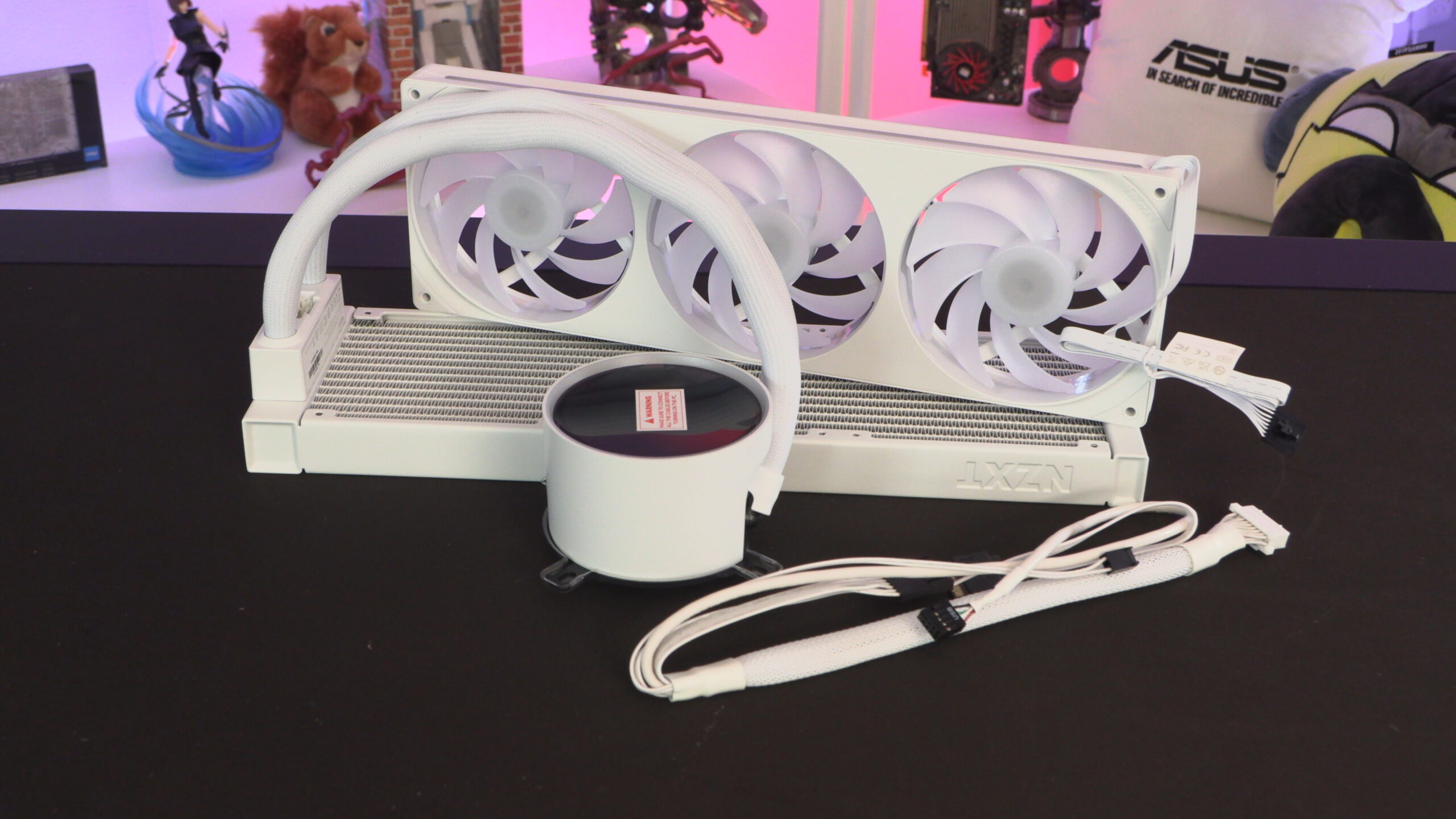
NZXT KRAKEN ELITE RGB V2 240, 280, and 360 CPU Cooler Review

Gaming Tests
OC3D CPU Cooler Gaming Test
With this new CPU testing rig, we wanted to experiment with analysing the “gaming” performance of CPU coolers. After all, all-core stress tests are not a common workload for PC users. Games do not usually put huge levels of stress on all cores of your processor, especially if your CPU has a high core count. We also wanted to see if your choice of CPU cooler impacts GPU thermals under a GPU-focused stress test. After all, your CPU cooler can have a huge impact on the overall airflow pattern of your PC.
This testing procedure uncovered something. What we found was that AIO CPU liquid cooling solutions gave us lower GPU thermals. This makes sense, as these solutions pump hot air directly out of our test system and act as an exhaust. That said, the impact on GPU thermals was minimal. We only saw drops of 2-3 degrees during this test. Given this lack of difference, we will now focus exclusively on CPU thermals with this test.
For our CPU game test, we used Final Fantasy XIV Endwalker’s benchmarking tool for our gaming test. This test can run for a long time and moves between CPU and GPU-limited parts of the game. This test was used at a resolution of 1080p at maximum settings.
1000 RPM Performance
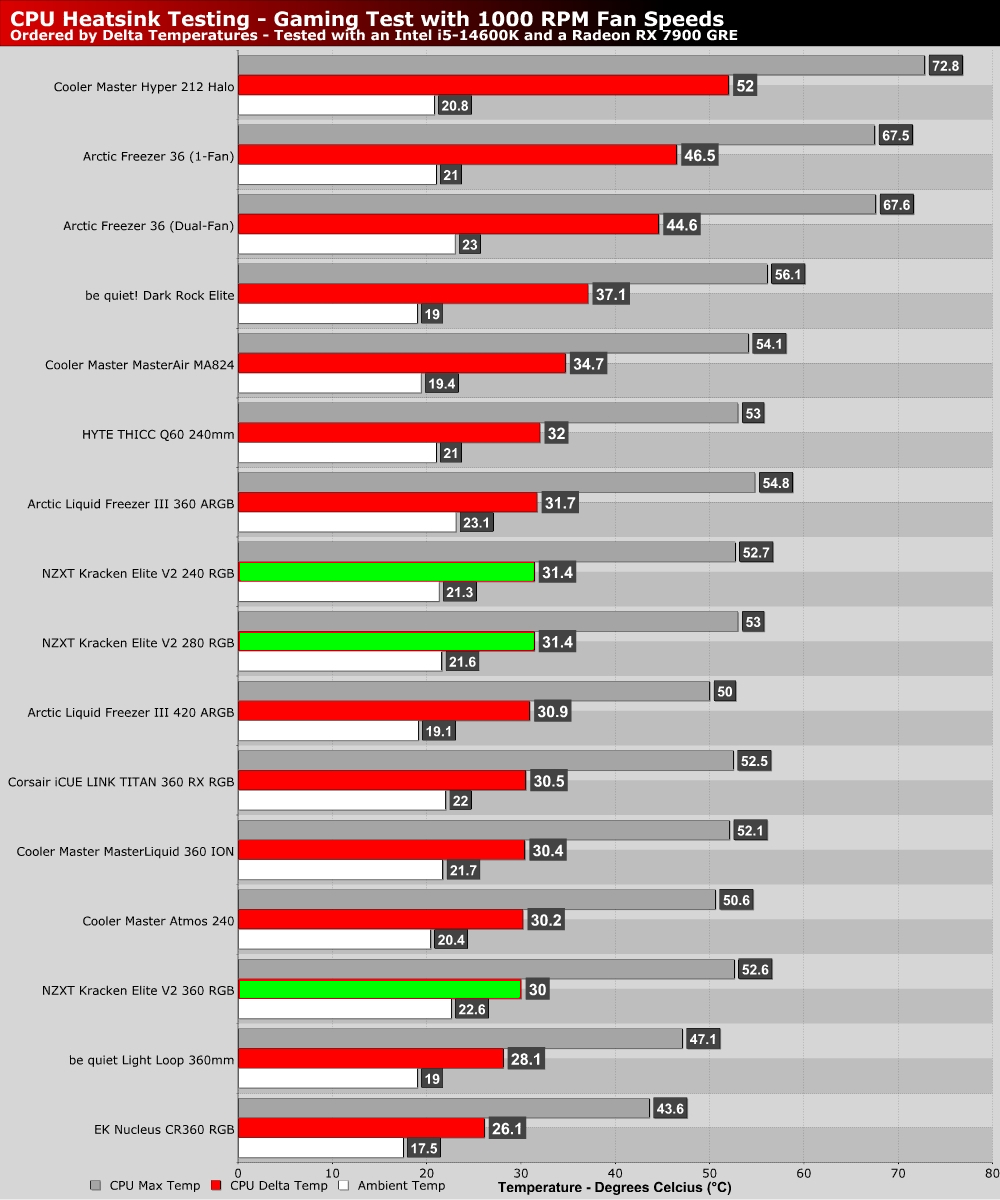
In low-load gaming workloads, all of the AIO liquid cooling solutions that we have tested deliver impressive results. Simply put, there isn’t enough thermal load here for any of these coolers to push ahead of the others. That said, we can see a clear difference between air coolers and their liquid cooling counterparts.
1500 RPM Performance
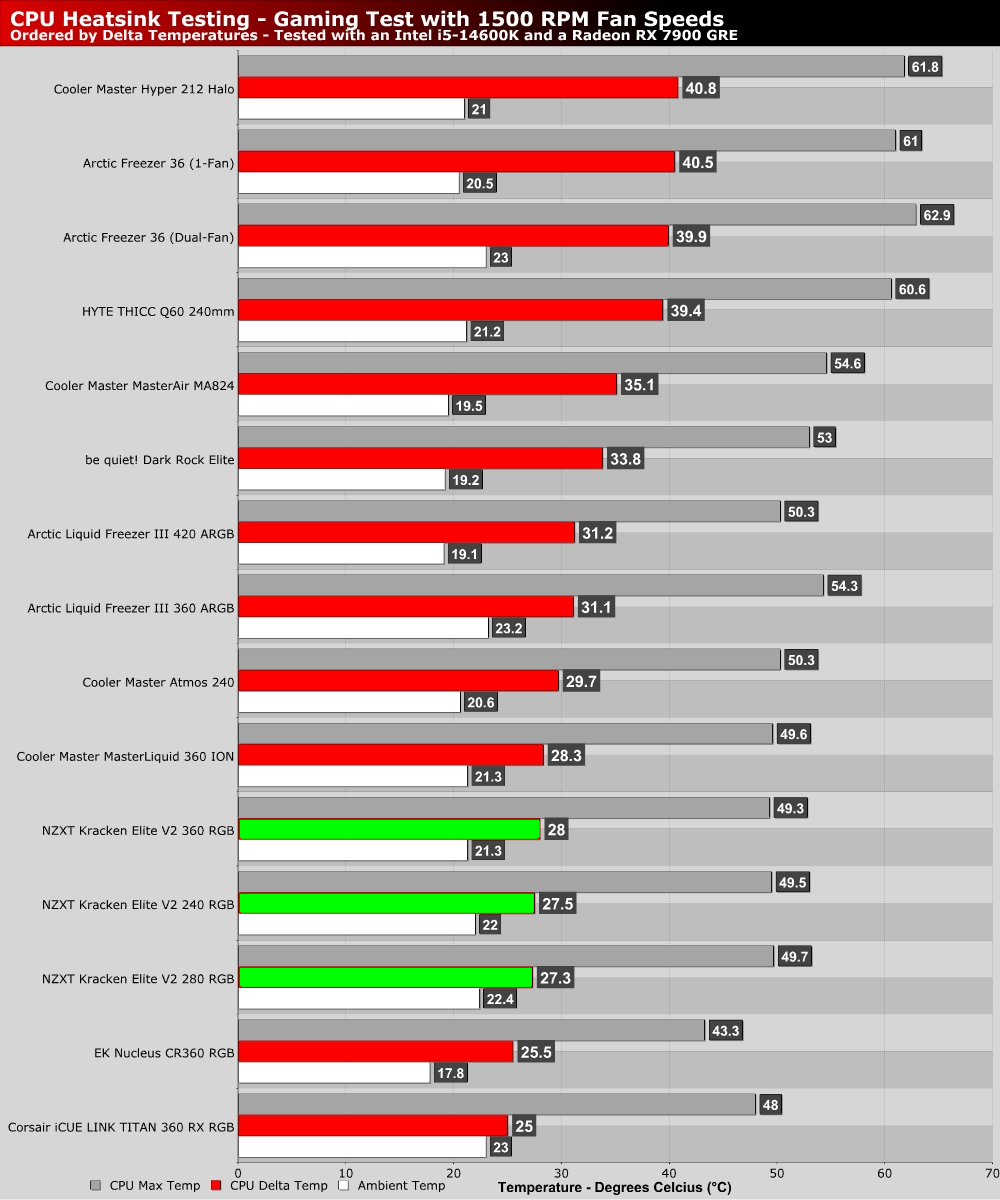
At higher fan speeds we can see load temperatures drop, but not by much.
Max RPM Performance
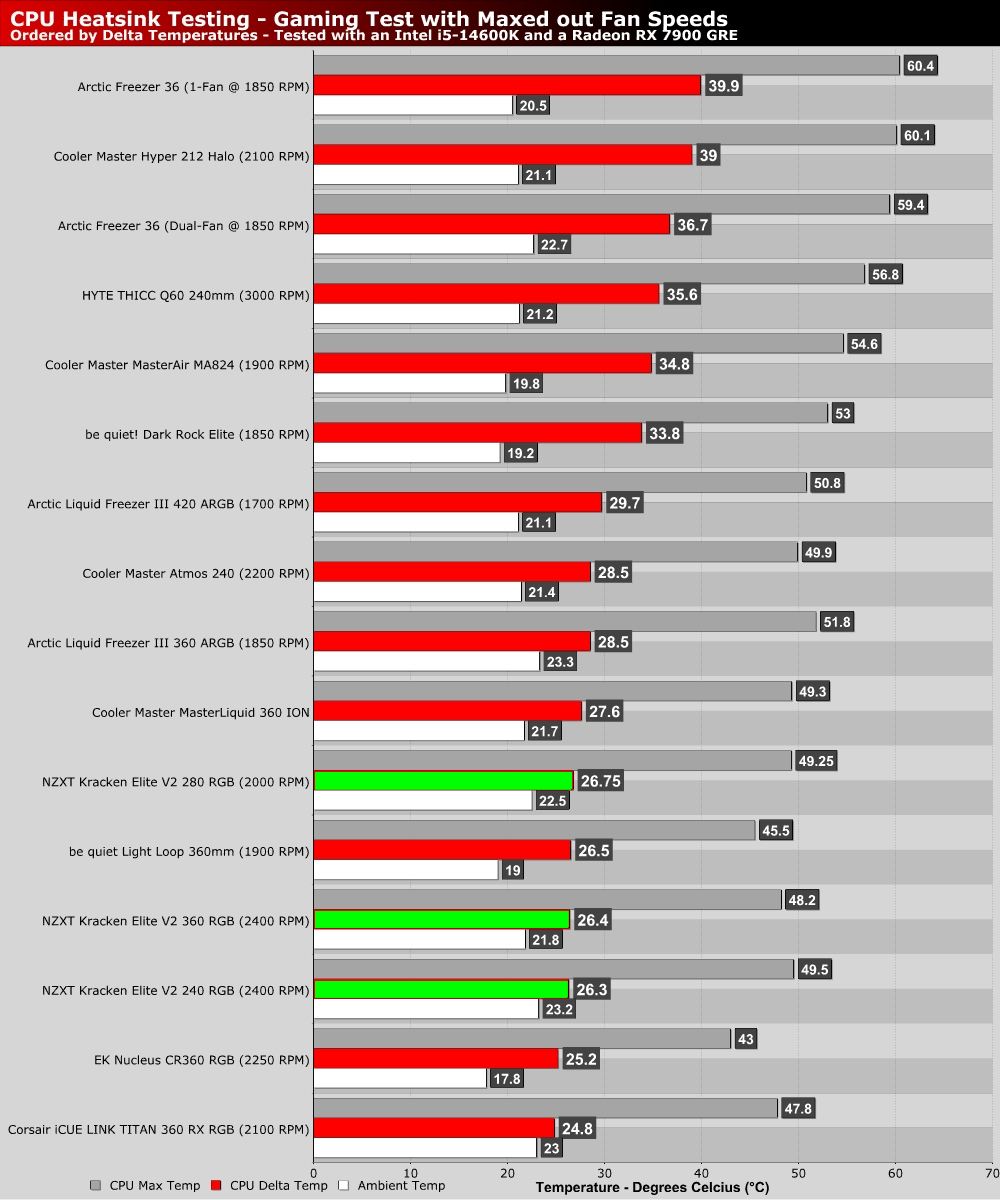
At their highest fan RPMs, we can see NZXT’s newest coolers push ahead. That said, this thermal workload isn’t overly challenging for these CPU cooling solutions.