





Forget CPUs and GPUs, AMD’s interested in making discrete PC AI accelerators

AMD’s exploring the idea of making discrete AI accelerators for PCs
AMD’s all-in on AI. AMD has been making huge investments in its AI hardware and software, to the point where it is now “talking to customers” about discrete AI accelerators for future PCs. AMD’s Rahul Tikoo, AMD’s head of client CPUs, has confirmed to CRN that they are exploring “potential opportunities” for dedicated AI accelerator chips. These chips are not GPUs; they are dedicated NPUs (Neural Processing Units).
AMD’s new AI PC CPUs feature Zen CPU cores, RDNA Graphics, and an XDNA NPU. AMD already has NPU technology, but it can deliver much more AI performance if it expands its NPU tech into discrete products with its own memory and power budget.
While graphics cards can be used for AI, discrete NPUs could deliver similar (potentially higher) levels of AI performance at a lower price and with a lower power draw. This could allow customers to achieve “GPU-level compute capacity at the fraction of the cost and power consumption.”
This move has obvious benefits for AMD
Qualcomm has already created a discrete NPU called the AI 100, and it is available as part of AI workstation PCs from companies like Dell. AMD could enter this market with its own NPU tech. If this happens, AMD has the potential to dominate this market. After all, AMD NPU tech is already available within its Ryzen AI CPUs. If AMD created discrete NPUs, developers have more reasons to support its AI accelerators, benefiting its discrete NPUs and Ryzen AI CPUs.
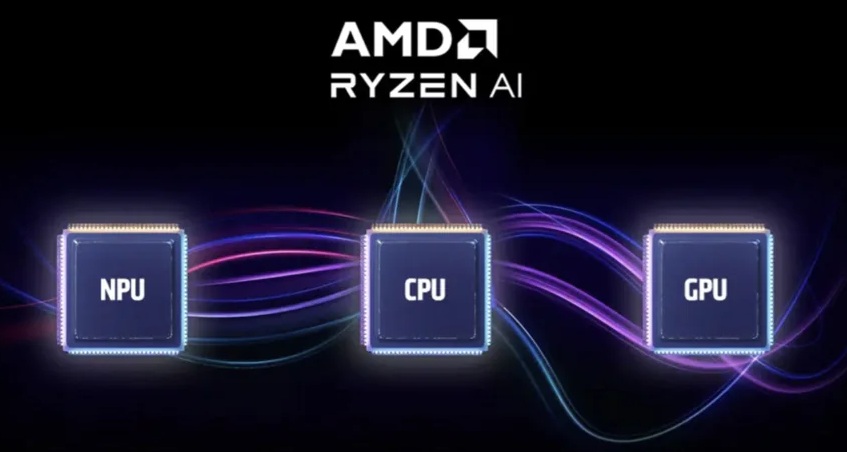
(AMD has NPU IP; they just need to make it bigger)
While AMD is exploring this opportunity, they have not committed to creating a dedicated NPU product. Rahul Tikoo stated that he couldn’t “talk about a future roadmap”, saying that everything was under NDA (a non-disclosure agreement).
Discrete NPUs have a lot of potential. While graphics cards are good at AI, not everyone needs a high-end graphics card. A discrete NPU could be less expensive and less power-hungry while delivering high-end performance. That’s the benefit of using a specialist product for specialist workloads.
If this idea took off, it’s possible that future PCs could feature discrete CPU, GPU, and NPU components. Each part could be dedicated to its tasks while the others accelerate the workloads that require them. Could discrete AI accelerators become the PhysX cards of the modern age? Probably not, but it is possible.
You can join the discussion on AMD’s discrete AI accelerators on the OC3D Forums.