


Valve just killed Meta Quest with its Steam Frame

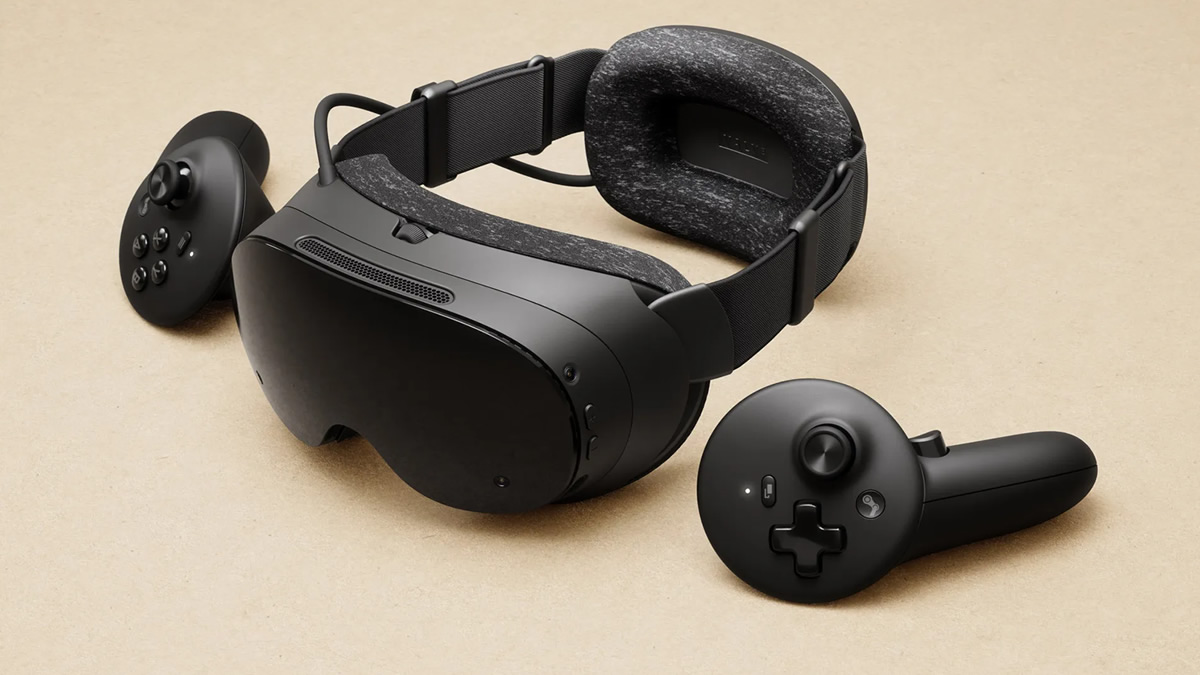
Valve has built a standalone VR headset that gamers will want to buy
As much as I respect VR as a medium, I have no respect for Meta. Do I even need to say why at this point? Facebook is a mess, the “Metaverse” was silly, and the glory days of Oculus VR are behind us. Now that Valve has unveiled its Steam Frame VR headset, I no longer have any desire to use a Meta Quest product again.
The Steam Frame isn’t a successor to Valve’s Index VR headset; it’s a standalone VR headset with a “streaming first” design. PC VR support isn’t an afterthought; it is a core element of Valve’s design. Additionally, Valve has provided users with valuable features that competing headsets lack, such as MicroSD support. Valve doesn’t want you to buy a new headset if you need more storage. You can install a MicroSD card if you want more space for games.
The Steam Frame proves that Valve respects its customers
Unlike Meta, Valve has considered user desires when building its standalone VR headset. PC-to-headset streaming is a key consideration, as is storage upgradeability. All standalone VR headsets that lack support for storage expansion disrespect their users. The companies behind such headsets want users to pay obscene markups for premium headset models with additional storage.
Valve has also considered the needs of gamers. Their new VR controllers utilise AA batteries, enabling users to quickly replace them to continue gaming. Each battery will offer users around 40 hours of battery life. Additionally, Valve is utilising magnetic thumbsticks to prevent “stick drift” and extend controller longevity.
Valve Steam Frame Specifications
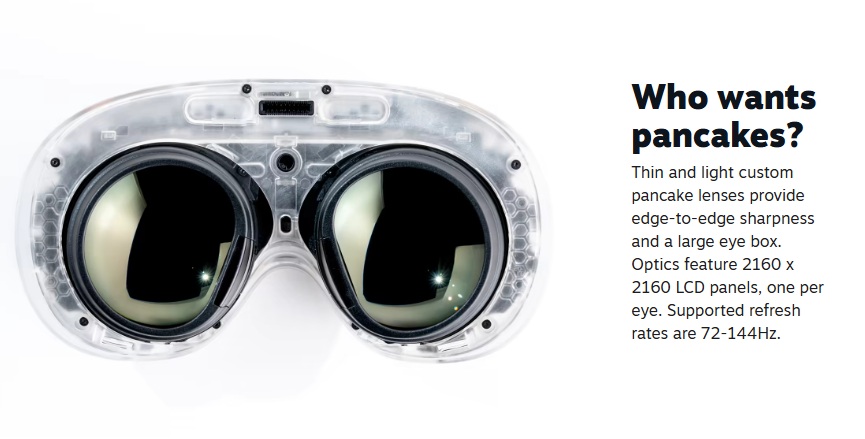
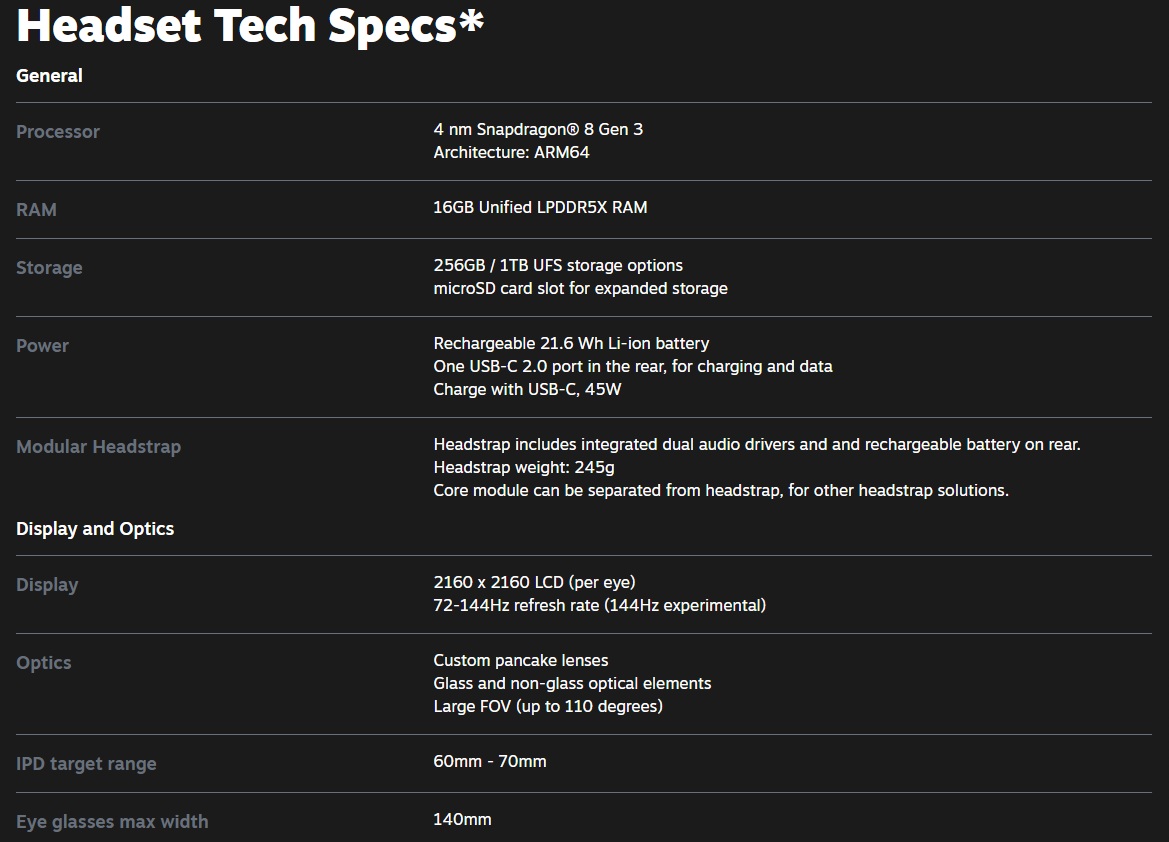
Valve’s new VR headset features a Qualcomm Snapdragon 8 Gen 3 processor and 16GB of LPDDR5X memory. The Frame had a more powerful SOC than Meta’s headset. Furthermore, it has double the RAM of Meta’s Quest 3 headset.
Valve’s new Frame headset has two LCD screens. The headset has a per-eye resolution of 2160×2160, with the headset supporting a refresh rate of between 72 Hz and 144 Hz. Valve’s Frame headset also uses custom pancake lenses. The headset can also be used with eyeglasses up to 140mm wide.
A streaming-first VR headset
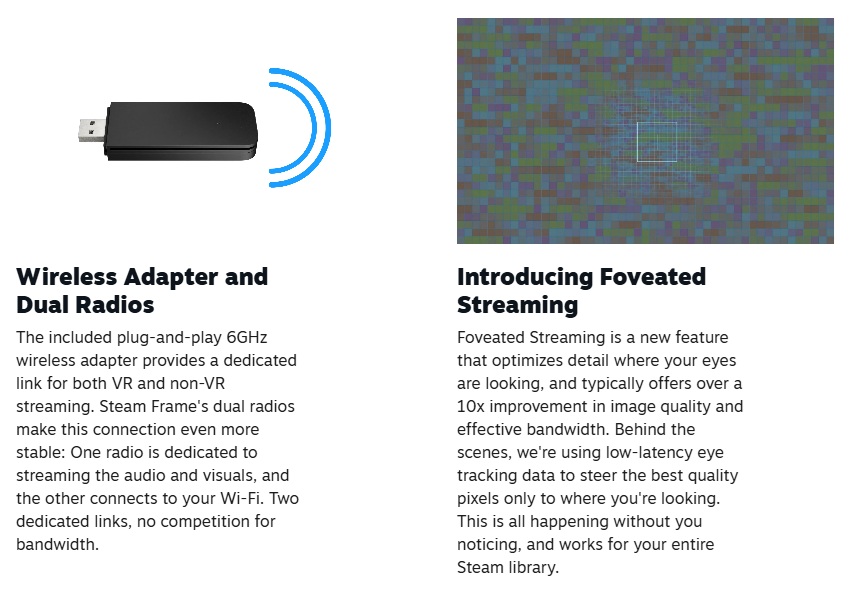
The Steam Frame can play games directly, but it can also be used to stream games from a more powerful PC. To ensure a strong streaming experience, Valve is shipping its headset with a dedicated wireless adapter for PC streaming and a dedicated radio for this connection. This means that there is no competition for streaming bandwidth, and no need to use home WIFI for streaming.
Additionally, Valve’s Foveated streaming and eye-tracking tech allows Valve to deliver higher levels of streamed image quality in areas where your eyes are looking. This feature works with all games, providing users with a stronger VR gaming experience while streaming. The Steam Frame is designed to work well as a standalone VR headset, and as a dedicated PCVR device.
Valve has not revealed the pricing of its Steam Frame VR headset. The headset is due to be released in early 2026. The device uses Valve SteamOS. The device also has a dedicated “Steam Frame Verified” program to help gamers find compatible standalone VR games.
You can join the discussion on Valve’s Steam Frame VR headset on the OC3D Forums.