


Nvidia predicts HUGE DLSS 5 performance boost

Nvidia predicts HUGE DLSS performance gains with new optimisations
Nvidia’s DLSS 5 tech may launch tomorrow, but that doesn’t mean its development is over. Nvidia has confirmed it plans to significantly improve DLSS 5 performance with a new wave of optimisations. Its optimisation curve hasn’t flattened yet, which means DLSS 5 can deliver much higher framerates.
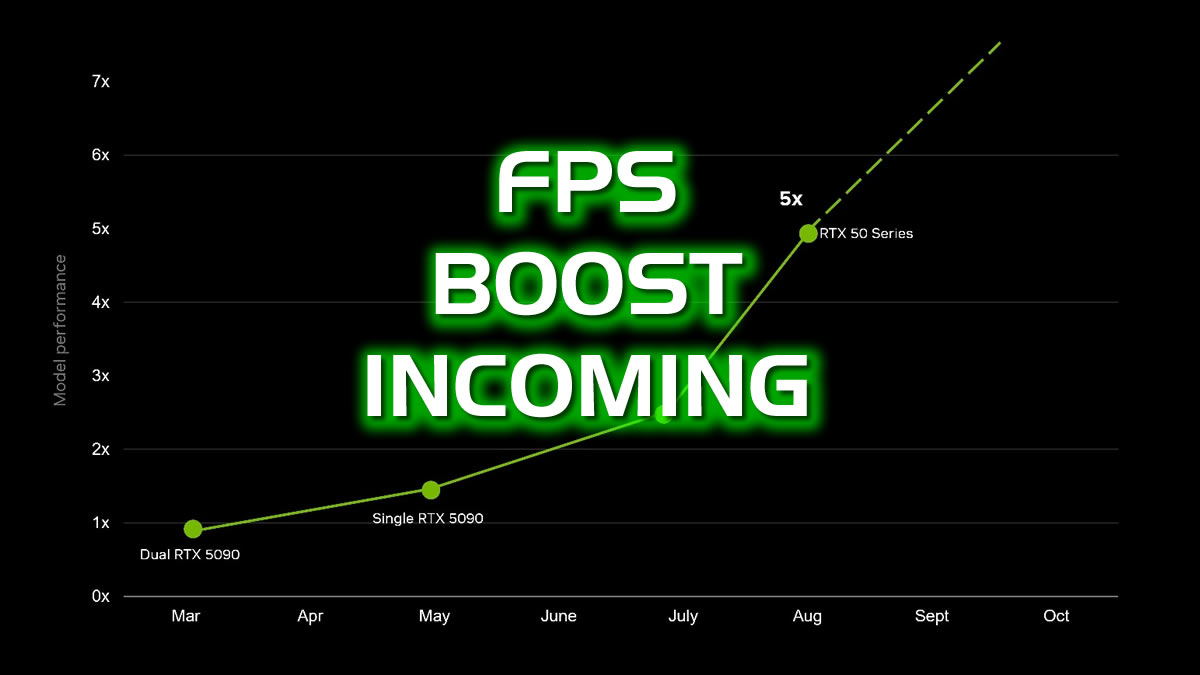
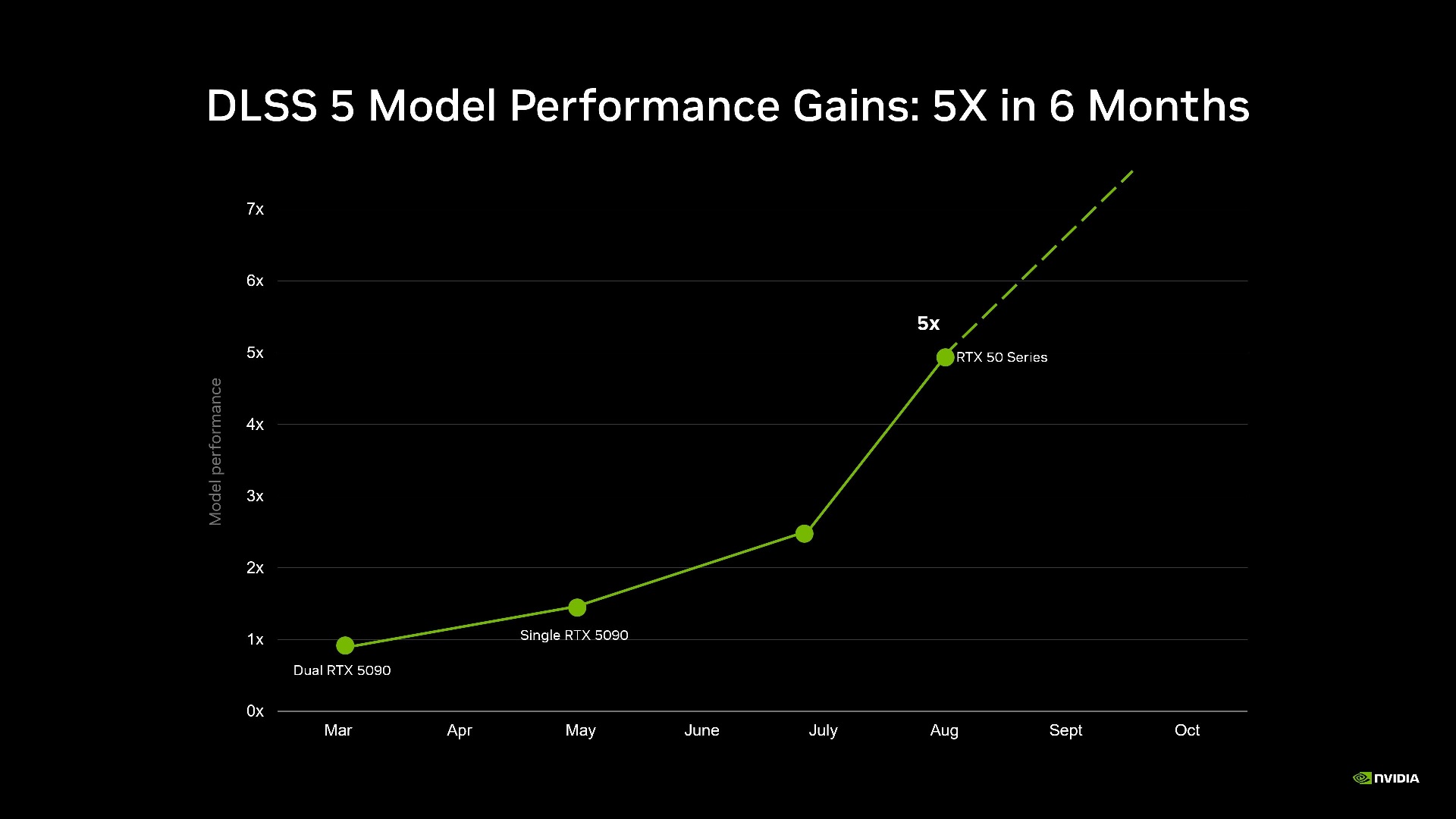
Compared to Nvidia’s March 2026 reveal of DLSS 5, Nvidia has increased its performance by 5x. Based on Nvidia’s chart, it expects performance gains to exceed 7x in October. If Nvidia reaches 7.5x their original DLSS 5 performance, that would represent a 50% gain over today’s DLSS 5 performance. That’s a significant drop in DLSS 5’s performance overhead.
Since the initial announcement of DLSS 5 in March, our progress has been rapid: from running on dual GeForce RTX 5090s to now a single graphics card, we’ve achieved a 5X performance gain in just six months, making DLSS 5 available for all GeForce RTX 50 Series GPUs and Laptop GPUs. This milestone stems from a combination of systematic pipeline optimizations, and neural model refinements that yield both faster execution and better image quality.
Our optimization curve isn’t flattening out, and we have further optimizations in active development. We expect upcoming model updates coming in the Fall to boost performance beyond today’s baseline. Backed by over a decade of DLSS expertise, we remain committed to continuously pushing the boundaries of performance and image quality, and this is only the beginning.
– Nvidia
It’s clear that Nvidia isn’t finished with DLSS 5. The feature’s implementation in NBA 2K27 feels like an early showcase. Ideally, Nvidia would launch DLSS 5 in its future, more performant state. That said, its use in NBA 2K27 confirms that DLSS 5 isn’t just an AI filter and doesn’t change the structure and geometry of rendered frames.
Alongside upcoming optimisations, Nvidia has also promised to enable fast/easy game integration through Nvidia Streamline and an Unreal Engine 5 Plugin. Clearly, Nvidia is putting a lot of effort into DLSS 5, and it isn’t willing to let the technology’s poor initial reception stop it from investing in what it believes is good technology.
While major performance optimisations will be welcomed, DLSS 5 will remain a highly taxing technology. Nvidia’s next-generation GPUs will likely invest heavily in AI improvements that will directly benefit all forms of DLSS. If Nvidia can make DLSS 5 less taxing, it could become Nvidia’s next major differentiator, keeping itself one step ahead of AMD and Intel in the GPU market.
You can join the discussion on Nvidia’s plans for DLSS 5 on the OC3D Forums.