


AMD confirms Zen 6 Ryzen CPU support on socket AM5

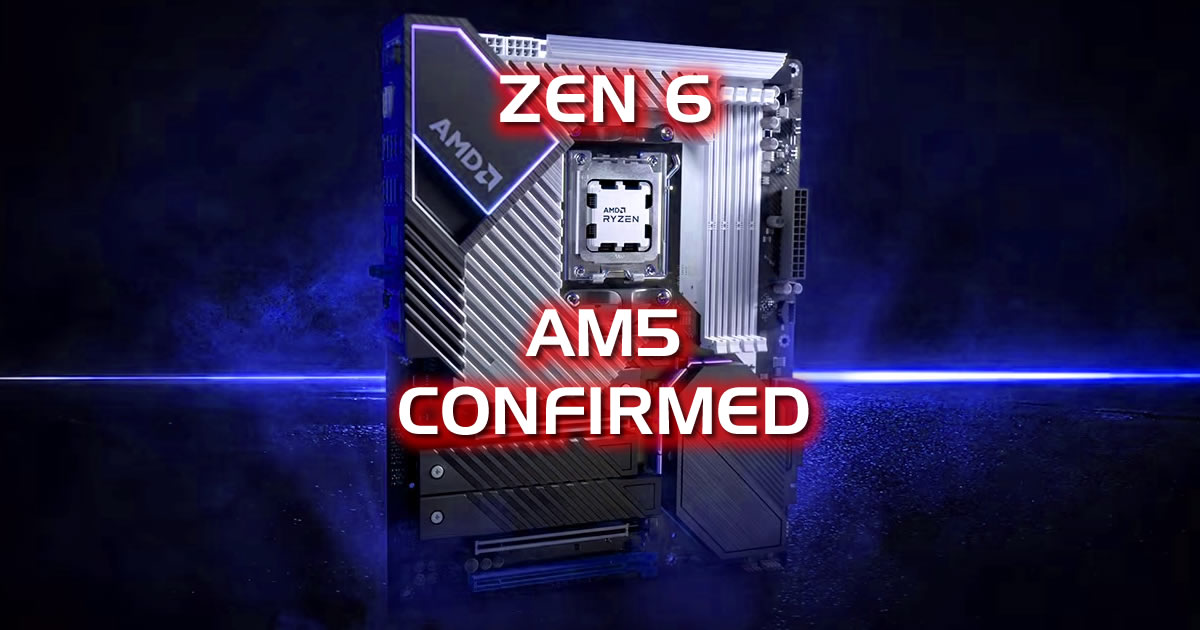
AMD documents confirm that Medusa and Olympic Ridge CPUs are coming to socket AM5
AMD has officially confirmed that two Zen 6 CPU families are coming to socket AM5: Olympic Ridge and Medusa1. InstalLatX64 spotted this information after finding listings for these CPU families on AMD’s website.
Based on previous leaks, AMD’s “Olympic Ridge” desktop CPUs are AMD’s mainline Zen 6-based Ryzen desktop CPUs. These CPUs will reportedly offer up to 24 CPU cores across two 12-core CCDs. These CPUs will reportedly offer more cores and more per-CCD resources than their Zen 5 counterparts, offering 50% more cores and 50% more L3 cache per CCD.
Medusa1 is an AMD APU design that will be available for AMD FP10 laptops and desktops. It will feature Ryzen CPU cores, Radeon GPU cores, and an NPU component. A smaller APU, Medusa2, is also in the works, though it will not be available on socket AM5 (it’s laptop/FP10 exclusive).
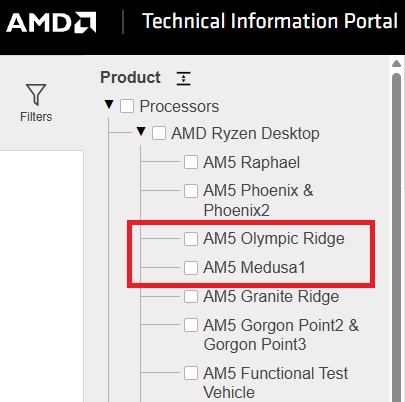
(Source – AMD Documents)
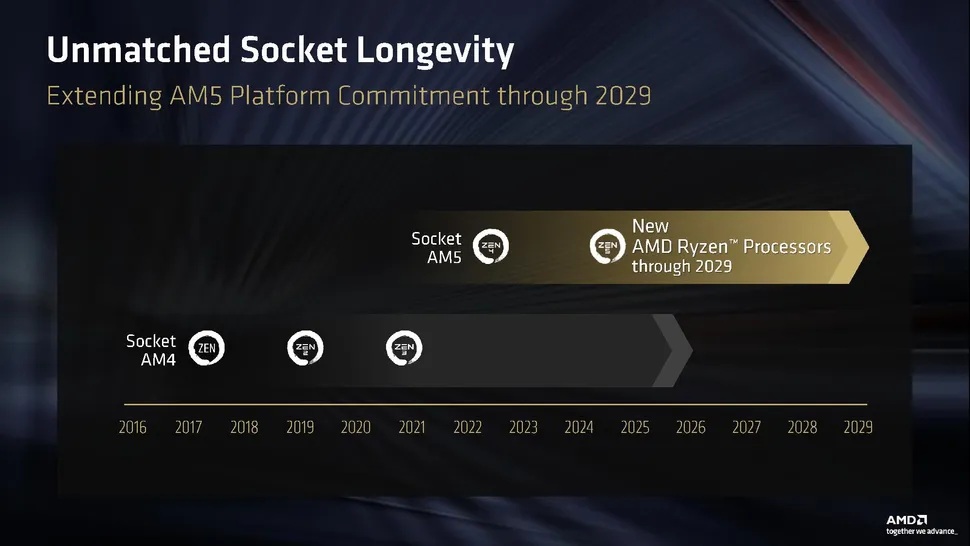
AMD has confirmed that it will support its AM5 socket “through 2029”. While AMD has not directly confirmed support for Zen 6 CPUs on AM5, AMD’s prior reveal implies it. That means fresh motherboard BIOS updates should let existing AMD AM5 motherboards support new Zen 6 CPUs.
While older AMD AM5 motherboards should support Zen 6 CPUs, newer motherboards may offer unique benefits. Newer motherboards could deliver faster memory support, more connectivity options, extra BIOS features, and other platform upgrades. While older AM5 motherboards may support Zen 6, newer motherboards may deliver the best user experience.
Will Zen 7 be supported on AM5?
AMD’s EPYC CPU roadmap places Zen 7’s launch in 2028. With AMD supporting AM5 “through 2029”, it is likely that AMD’s AM5 socket will support CPUs beyond Zen 6.
Longstanding rumours suggest AMD has extended AM5’s lifespan to support its planned Zen 7 CPUs. This will allow Zen 7 CPUs to support DDR5 memory and launch on a mature platform. AMD hopes this will be advantageous, as it will let customers avoid early/high DDR6 memory prices. That said, this move means that Zen 7 will not benefit from DDR6’s enhanced performance, at least on desktop platforms.
When Zen 7 launches, server CPU platforms will have already moved to DDR6 memory. This should help make DDR5 memory more affordable, as it will no longer be used for new/cutting-edge servers. This move should help ensure a strong value proposition for their Zen 7 desktop CPUs, though at the cost of maximised performance.
You can join the discussion on AM5’s Zen 6 CPU support on the OC3D Forums.
https://t.co/O1s37LRpjG confirmed these old rumors:
– #Medusa1 is FP10/AM5
– #Medusa2 is FP10
– #OlympicRidge is AM5#Zen6 #Zen6chttps://t.co/BSOlXQvXFZ https://t.co/CNYgmJ382i pic.twitter.com/Hpg6x8uSid— InstLatX64 (@InstLatX64) August 26, 2026