


ASML’s High NA EUV tech enters volume production with Intel 18A

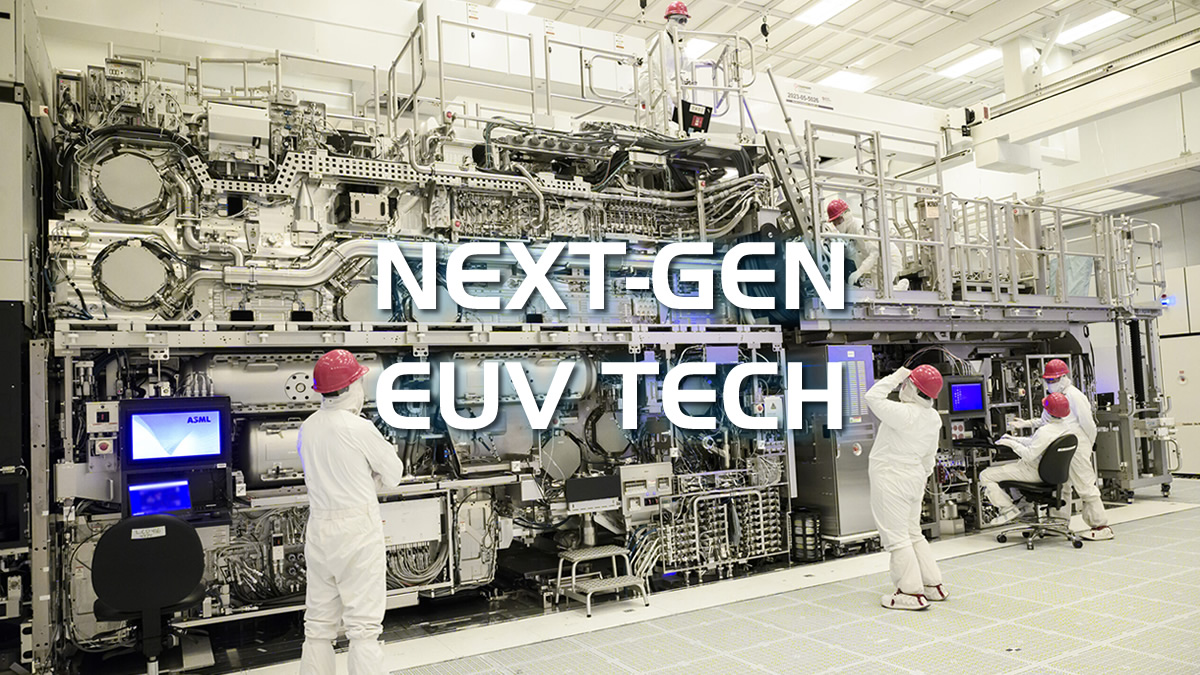
ASML confirms that Intel has brought High NA EUV into high-volume production
ASML has reported that Intel Foundry is now using its High NA EUV technology on its Intel 18A process node to produce a “subset of its Intel Core Ultra 3 processors”. This is the first time that High NA EUV machines have been used to produce high-volume silicon.
In 2024, Intel installed ASML’s first-generation EXE:5000 High-NA EUV machine for research purposes. In December 2025, Intel installed their newer TWINSCAN EXE:5200B High NA EUV machine. With this new model, ASML retains the same level of detail while increasing productivity by using a higher-power EUV light source, a new wafer stocker architecture, and tighter alignment controls. In other words, the new tool can work faster, more consistently, and more accurately.
High-NA (High Numerical Aperture) EUV is the next generation of EUV technology. There are two ways to increase the resolution of EUV machines. The first is to use a shorter-wavelength light. The second is to improve the optics, control and tooling of their machines. High-NA EUV technology takes the latter approach to improve upon existing EUV lithography technology.
How Intel are using ASML’s High NA EUV technology
ASML claims that Intel’s 18A node is “dual qualified” on High NA EUV in its Oregon fab. By Dual qualified, ASML means that the node is qualified using both High NA EUV and standard EUV lithography machines. Intel has managed to match its silicon yields using both EUV platforms. Specifically, Intel is using High NA EUV to pattern specific layers for its 18A products.
This process allows Intel and ASML to gather data and further refine their system setup. This paves the way to broader High NA EUV adoption and utilisation within Intel. Future Intel process nodes will make broader use of High NA EUV technology. It is likely that Intel’s next-generation A14 node will only be producible using High NA EUV lithography machines.
High NA EUV technology will help semiconductor manufacturers push forward and create denser, more performant transistors. This will help push next-generation CPUs, GPUs, and other chips to new performance heights. Intel is the first company to adopt this technology. TSMC plans to continue using Low-NA EUV machines for its process nodes until 2029, highlighting its confidence in existing technology. Their slow adoption of ASML’s latest tech could give Intel an advantage. That said TSMC is confident that they don’t need High NA EUV yet.
You can join the discussion on ASML’s latest tech entering high-volume manufacturing with Intel on the OC3D Forums.