

be quiet! Shadow Base 800 FX PC Case Review

Cooling Performance
Thermal performance is an essential factor for any PC case. Your system may look fantastic and seem silent from the outside, but all of that is for nought if your PC has the internal temperature of an oven. Your PC case needs enough airflow for your components to remain cool under load and to prevent any form of thermal throttling. For our test, we used the following hardware using fixed fan speeds (so that only the case and its included fans can influence thermal performance).
be quiet! Shadow Base 800 FX
Intel i9-9700K @4.8GHz at 1.2V
ASUS ROG Strix Z370-F Gaming @ 100% Current Capacity/ LL lvl16
Cooler Master Hyper 212 Black Edition @ 9V via Fan Speed Reducer
Nvidia GTX 980 Reference @ 60% Fixed Fan Speed
Corsair LP Vengeance LP (Grey) @ 3200MHz
Corsair MP500 M.2 NVMe SSD
Corsair RM550X Power Supply
The graph below showcases Delta temperatures with a controlled ambient temperature of 20 degrees Celsius.
600 RPM
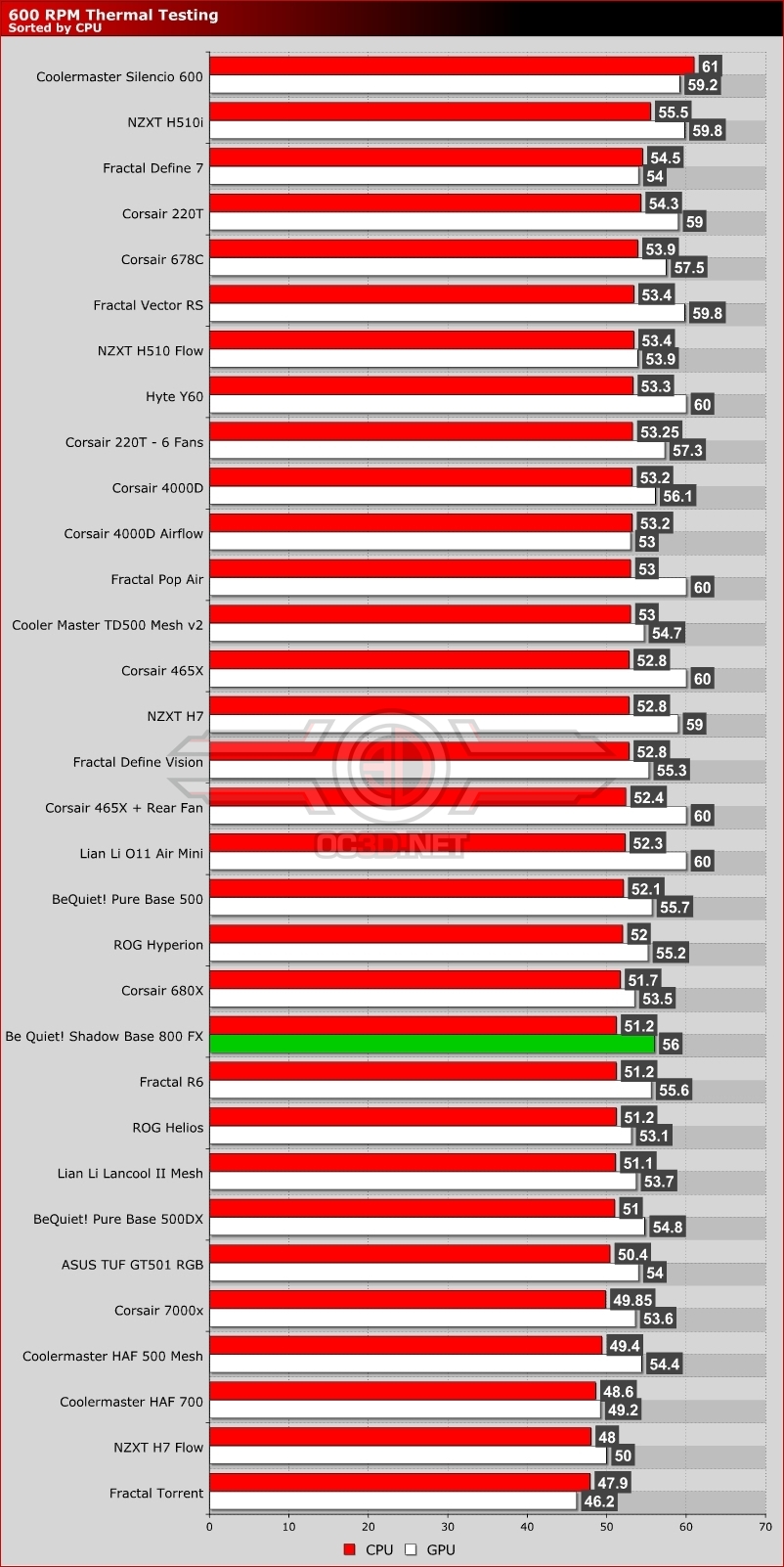
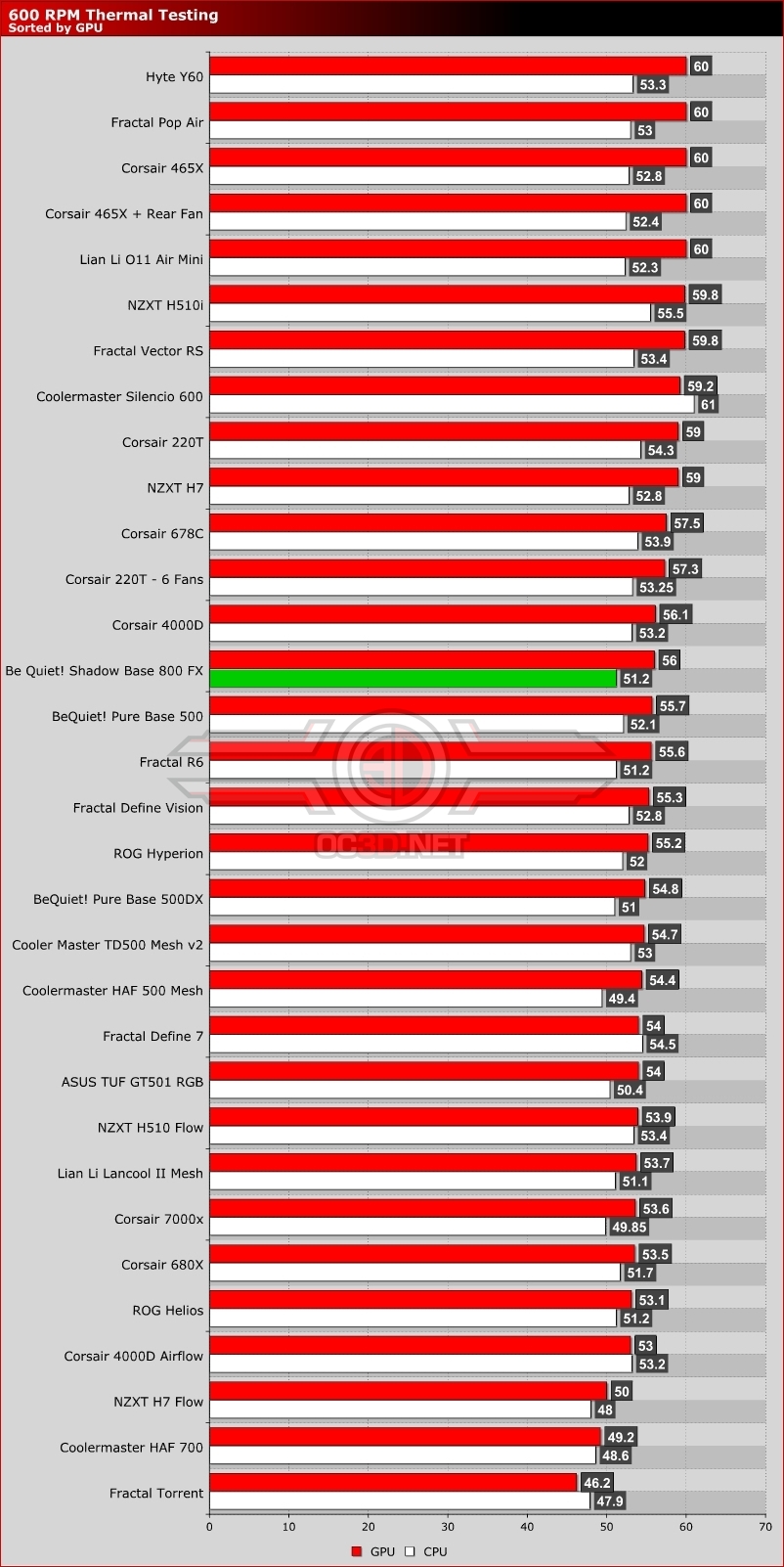
When we set all of the Shadow Base 800 FX’s fans to 600 RPM, the case delivers us fairly good thermals, at least on the CPU side. Remember that this test is designed to stress test cases, and cases with poor airflow design often fail this test when used with fans running this slowly. Even with slow fans, the Shadow Base 800 FX comfortably passes this test, and if you fill this case’s additional fan slots, I’m sure it would do even better.
1000 RPM
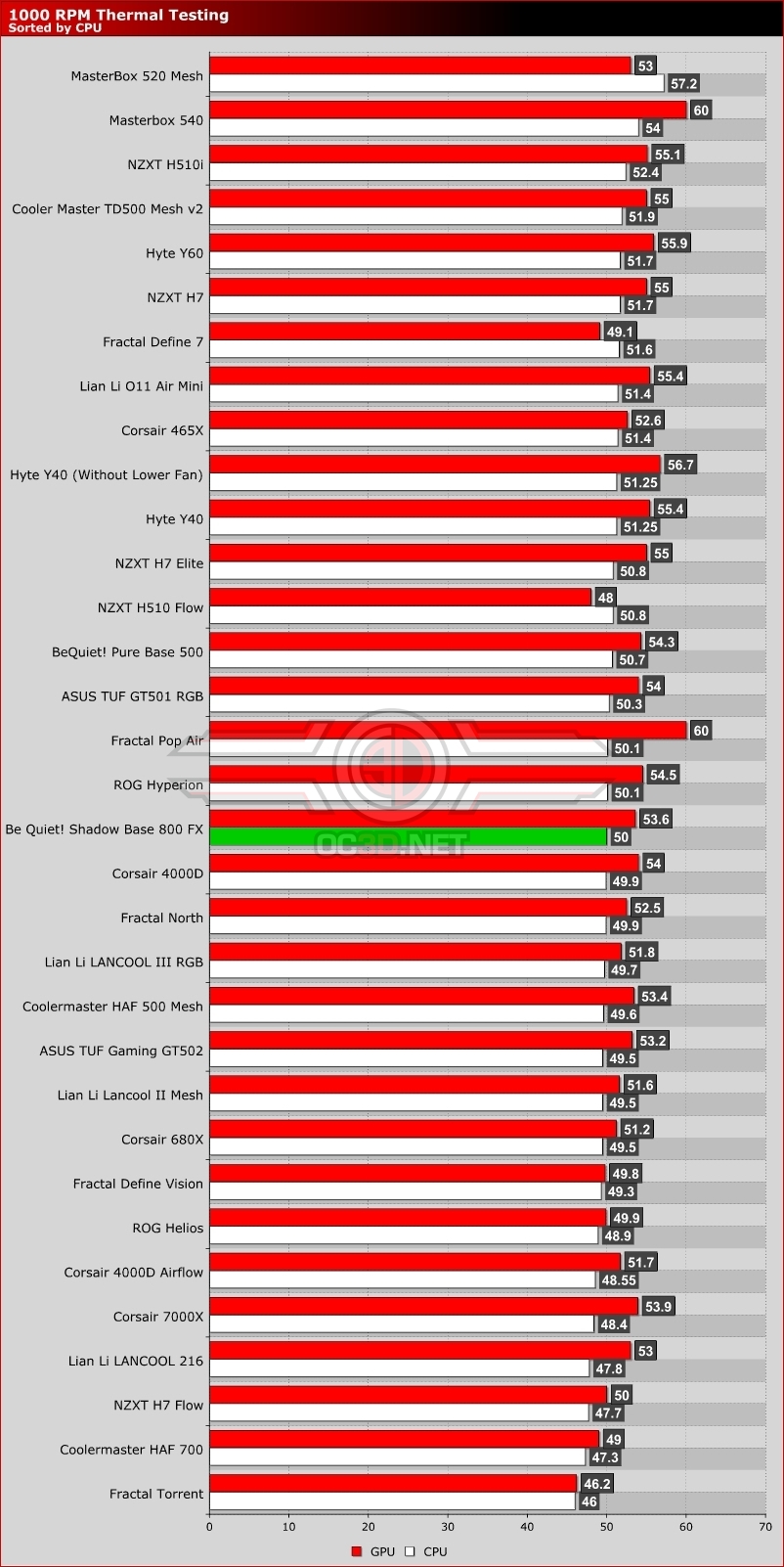
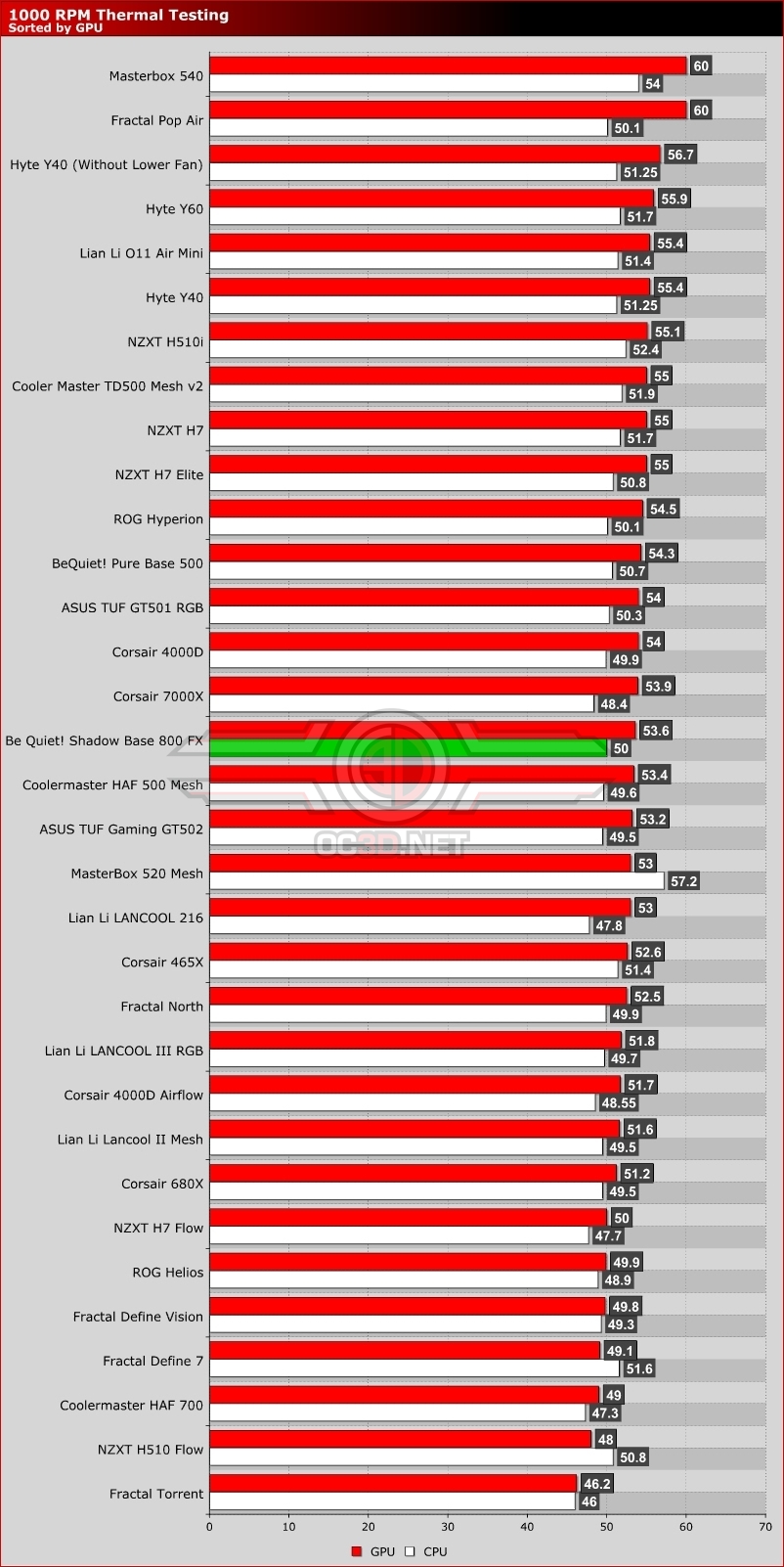
Cranking up the Shadow Base 800 FX’s fans to 1000 RPM sees our CPU and GPU thermals drop notably, delivering us strong thermal results. While this case is not a top performer on our graphs, these thermal results are nothing to complain about, and this case has a lot of additional space for fans if you want to give your hardware additional airflow.
Max RPM
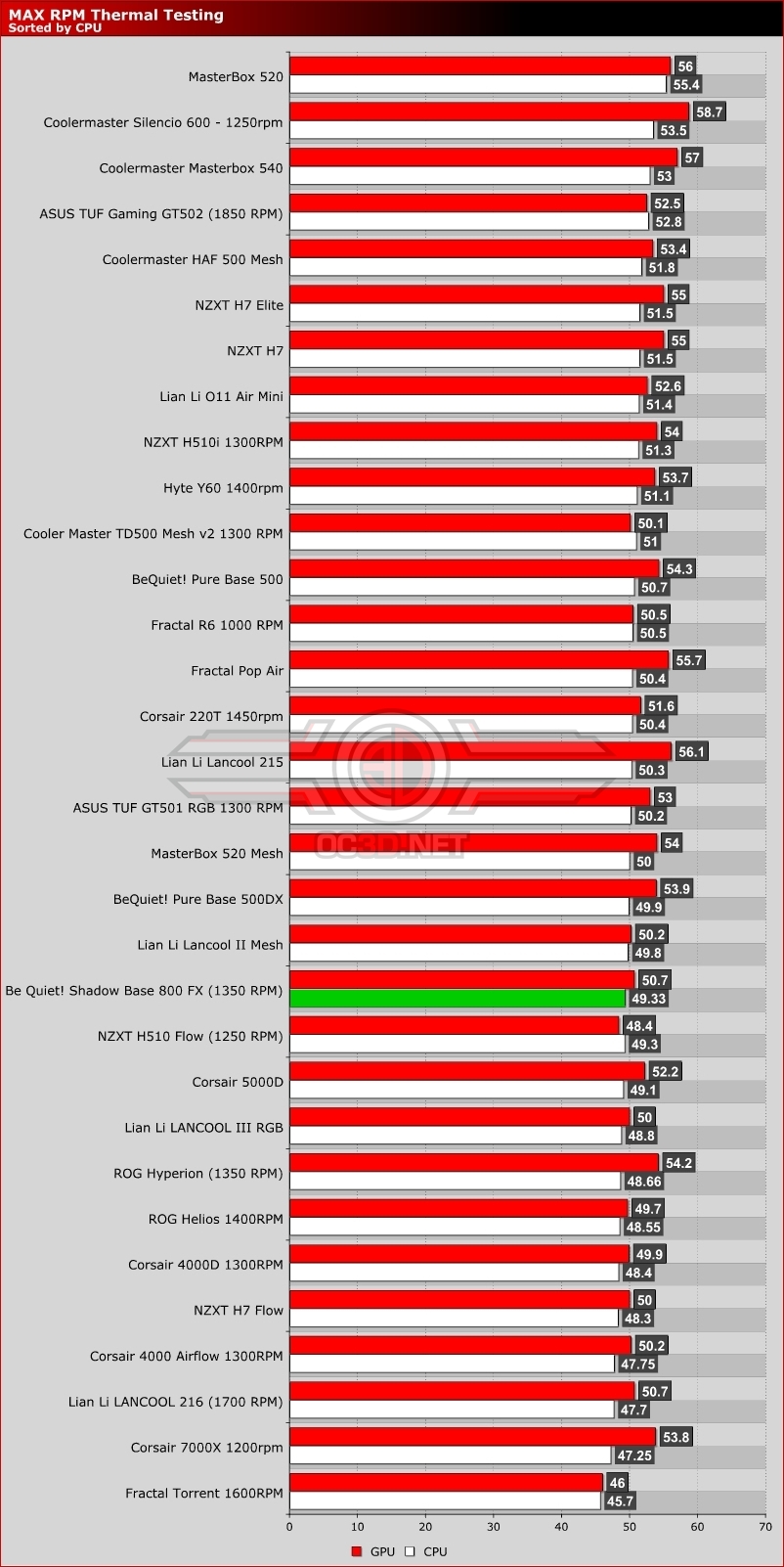
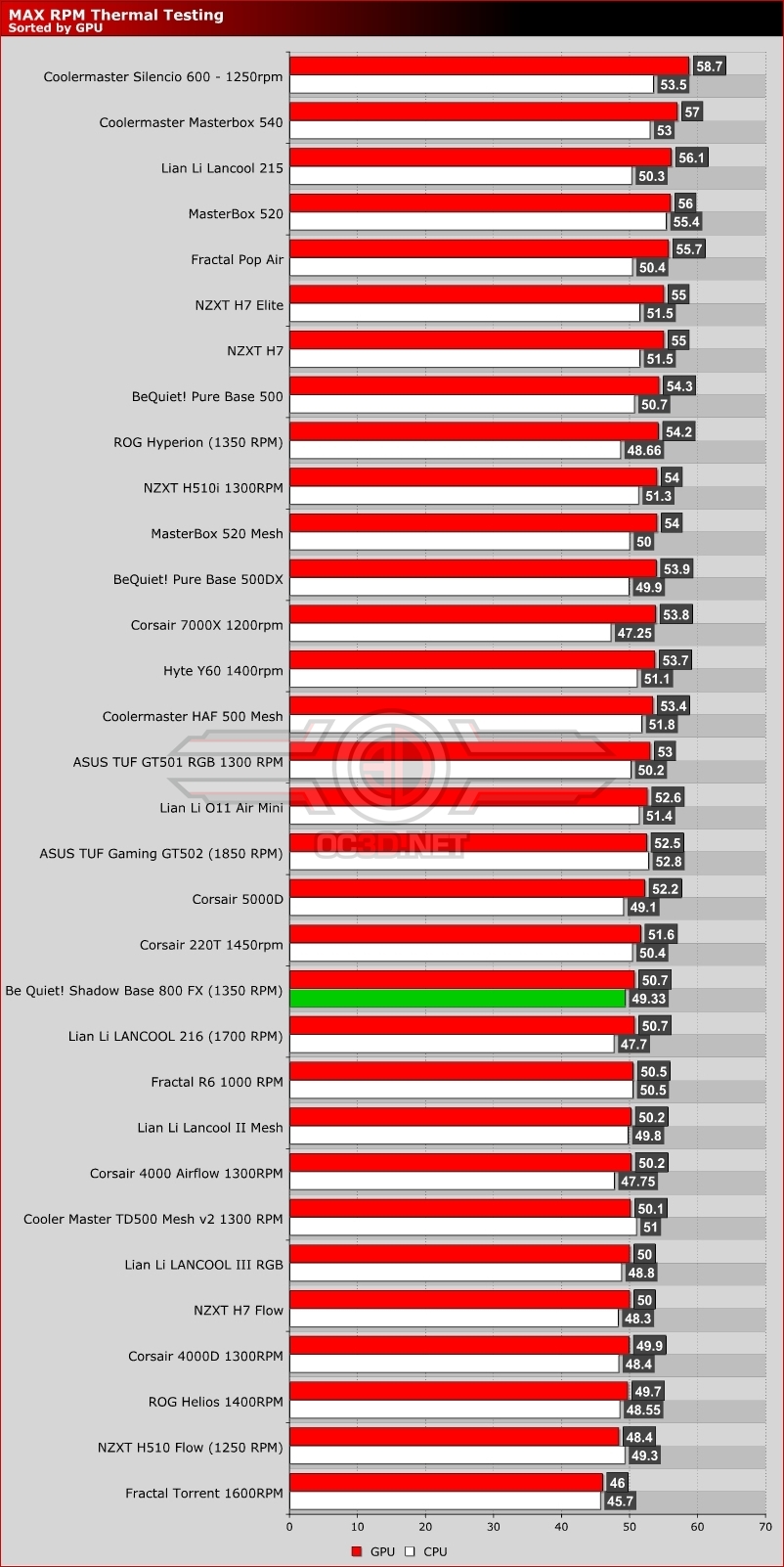
As their company name suggests, be quiet! cases are designed to be quiet. That’s why the Shadow Base 800 FX’s fans top out at 1350 RPM, a speed that gives users a solid balance between noise levels and airflow generation. In our graphs, this case performs better than most, but again we expect users to be able to achieve better thermal results if added fans, or CPU liquid cooling. This case was clearly designed with a top mounted liquid cooling radiator in mind.