


NZXT N7 Z370 Preview

Under the Shroud
NZXT are new to the motherboard game, which means that the company does not have the manufacturing facilities to create high-end motherboards on their own, which means that NZXT needed external help to develop their N7 Z370 mainboard.
ECS is the company that constructed NZXT’s N7 Z370, a company that is mostly known for their OEM hardware offerings. ECS is relatively unknown within the boutique PC building market, though NZXT has showcased a lot of confidence in their product by offering a four-year product warranty.
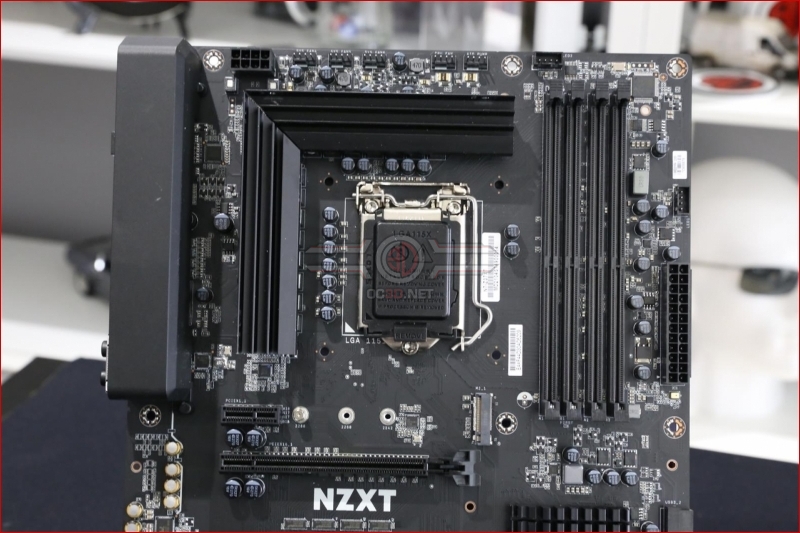
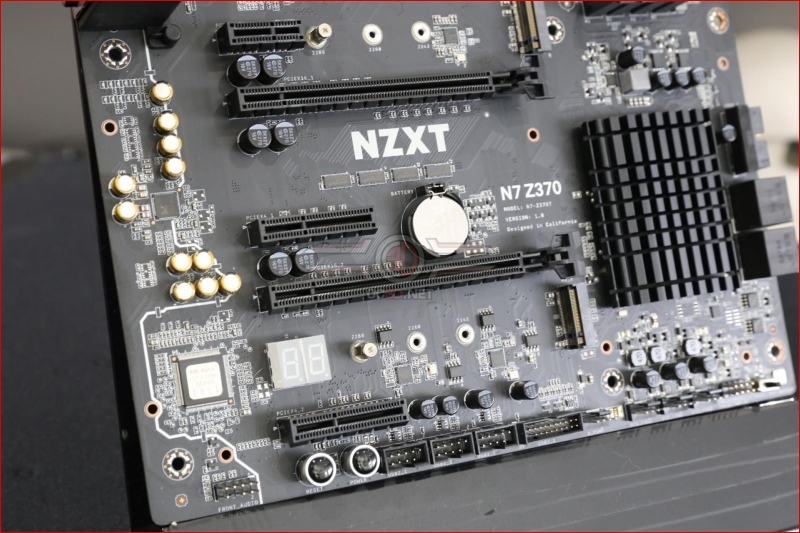
Like most Z370 motherboards the N7 Z370 offers its users two M.2 slots, both of which are covered by removable plastic plates. The bottom M.2 cover also conceals a post-code reader, allowing users to cover it up when it is not required. Post-code readers are only useful when your motherboard/system is having issues, making NZXT’s cover a helpful feature for anyone who dislikes seeing post-code readers on fully operational systems.
Unique Features
Aside fromNZXT’s unique aesthetic and customisation options, the company has also integrated support for both GRID fan control and HUE RGB control technology directly into the N7 Z370, features which all other motherboards lack.
While these features lock users into the NZXT software ecosystem, which will push users towards other NZXT hardware and accessories, though it is unlikely that anyone is going to purchase this motherboard without fully knowing what they are getting into in this regard.
The advantage of NZXT’s GRID and HUE integration is that both the motherboard’s internal and NZXT’s external hardware can all be synced with a single piece of software, making the creation of a CAM enabled system more accessible than ever before. Every fan and LED in your system could be controlled by a single software utility, which is excellent news for N7 Z370 users.
Another thing to note here is that the N7 Z370 also offers users three USB 2.0 connections at the base of the motherboard, which could be used to connect several smart components to the system like fan controllers, LED controllers, AIO controller or even PSU monitoring utilities. Most modern motherboards lack enough USB 2.0 connections for today’s smart components, which is a major plus point for NZXT’s N7 Z370.

USB ports
While we can praise NZXT’s inclusion of an ample number of USB 2.0 internal headers, it would be silly of us to skip the fact that this motherboard lacks USB 3.1 Gen 2 ports, both as an internal or external I/O option.
Having at least two USB 3.1 Gen 2 is standard on most Intel Z370 series motherboards, making this a huge downside for those of us who like to be a little future proof when it comes to connectivity standards. Today there is almost no hardware that legitimately uses USB 3.1 Gen 2 transfer speeds, so this will be a non-issue for most PC users at the time of writing.

