


ASUS ROG Strix Radeon RX 5700 XT Review

Conclusion
Usually at this point in the proceedings the conclusion almost writes itself. We look at a new generation of GPUs and enjoy the benefits their bring to our gaming experience, then the partner cards appear with beefier cooling and factory overclocks and they unlock the full potential of the new hardware and thus let us peek into the true abilities of that particular technology.
Recently the Nvidia Super range of cards sidestepped this ‘carved in stone’ format by being so quick in its reference trim that even better cooling afforded by the follow-up cards couldn’t unlock any more potential from the revised TU104 GPU. Yes you got a flashier RGB setup, and yes you got a cooler, quieter card, but you didn’t actually get any more of those valuable frames per second.
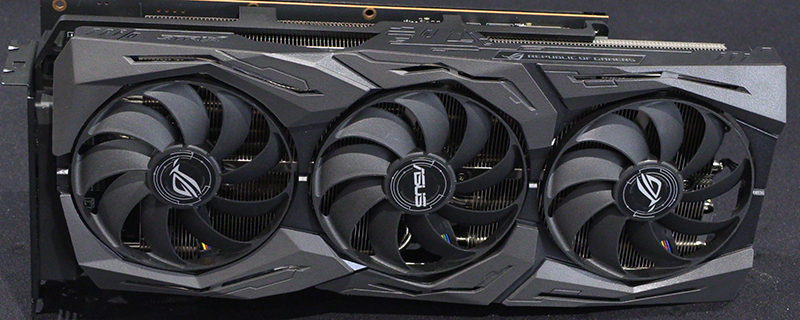
Given how AMD Radeon reference cards have been somewhat hobbled in the past with AMDs resolute resistance to dispense with their blower style cooler, usually the vendor cards have fertile ground upon which to strut their stuff. The Navi Radeon RX 5700 and RX 5700 XT continued to hold tightly to the single fan ‘waterwheel’ approach to cooling so we were confident that the ASUS RX 5700 XT Strix with its Direct CU triple fan cooler could push the GPU much further than the already impressive reference Radeon card. As you can see from our results that wasn’t the case. It’s still very impressive, but in real world performance terms, actual frames per second, there wasn’t anything to separate the vanilla Navi card from this Strix model.
How that affects you depends largely upon where you place raw performance in the list of important things a graphics card can do. For those of you who are on extremely tight budgets and want the maximum gaming ability regardless of any other considerations it makes the AMD take on the formula a very attractive proposition. If, however, you prefer a cool, quiet card then the Strix has much to offer. It’s not that the AMD reference card is either warm or particularly loud. Clearly though, if you place an extremely beefy heatsink cooled by three fans on a card then those fans can run at a lower speed the majority of the time which means that less heat soaks into rest of your system and that, generally, your system produces less noise even under harsh loadings. Additionally the Strix cooler has always looked the part and the RX 5700 XT model is no exception with RGB lighting and a visually impressive heatsink bursting out from beneath the shroud like the Incredible Hulks muscles burst from his shirt.
Understandably there is a price premium to be paid for the cooler and the attention to detail that ASUS place into the building of their cards. The ASUS Strix brand on its own is enough to cause the card to be slightly more expensive than its AMD counterpart, and once you include the cooler then the card comes out at a higher price point than the reference Radeon. All of which means that your budgetary requirements will largely be the determining factor in how desirable the ASUS Radeon RX 5700 XT Strix will be to you. If you’re on limited funds and just want the performance shorn of other considerations, it is perhaps a tougher sell than the AMD version, but if you want your RX 5700 XT to be the very best it can be – and it’s very good indeed – then the ASUS Strix offers enough to make the extra cost of little consideration.

Discuss the ASUS Radeon RX 5700 XT Strix in our OC3D Forums.
