


Asus Radeon HD 6870 DirectCu

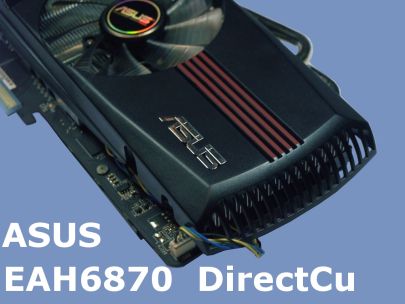
DirectCu; simply cooler..?
So you should have noticed that the Asus HD 6870 sports an interesting bespoke cooling design. While sometimes a manufacturer specific cooler may prove to be a cost cutting exercise, you can be assured that this is not the case for anything “DirectCu” branded. Moreover Asus claim the DirectCu unit to be as much as 20% more effective than AMD’s reference counterpart. So what exactly is going on under the hood?
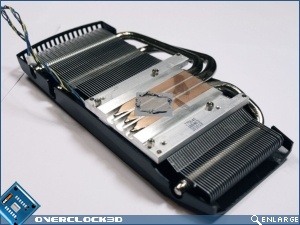
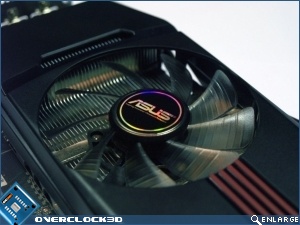
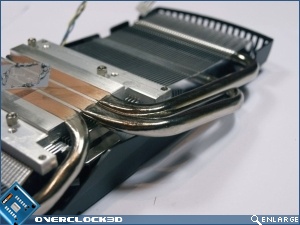
As the name suggested, there are two 8mm “Direct Contact” heatpipes presented as the central focus of the main heatsink module, which stretch to either side for optimal coverage. This is all immersed in a dense array of aluminium fins for a large usable surface area. The duct is specifically designed to exhaust air in multiple directions from the centrally positioned fan, also aiding airflow coverage.
However this is where the plot thickens. The Radeon HD EAH6870 DirectCu may well be poised to perform in a quieter and cooler fashion than its stable mates, but some of the reasons behind it have nothing to do with the cooling solution. That’s right folks, Asus have implemented three further physical optimisations to their graphics card to keep it chilly.
Super Alloy Choke, Capacitor & MOS…
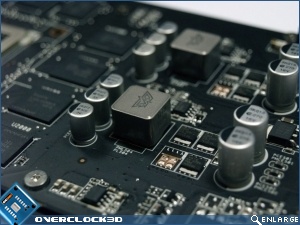
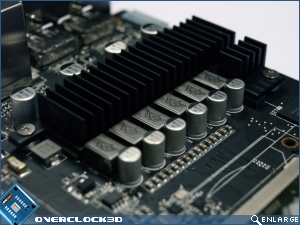
Above is the missing piece of the puzzle. Asus have incorporated alloy based electrical components to the EAH6870 PCB, which offers a mix of higher voltage tolerances, lower operating temperatures and consequently a longer operational lifespan. As with any graphics card, a lot of early stage failures are the result of weak cores or memory, a better built circuit board is beneficial for the long run.
To add a context to this, the implementation of higher quality power regulation equipment is very similar to the reasons behind choosing higher end motherboards for example. Perhaps one could consider this the choice between a Gigabyte UD3 board and a UD5.
Aside system longevity, the uprated hardware is expected to offer greater levels of tolerance for graphics card overclocking, although it is likely that you would need exotic cooling solutions to really feel the difference. We will put this to the test on the next page.
