


PowerColor HD4870 512MB PCI-E

Conclusion
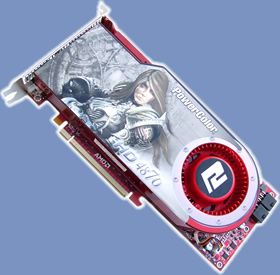 As I’m sure many of us will already know – the HD4870 regardless of manufacturer is one great card. While many will argue that it’s little brother, the HD4850 can do the job just as well with a little bit of overclocking and also leave you with enough money in your back pocket for a take-away dinner, the GDDR5 memory found only on the 4870 allowed us to push the overclocking slider all the way to the edge without even having to test for stability. This was also true for the core clock speed which showed no signs of visual corruption or other artifacting when running the GPU at speeds approaching 800mhz
Benchmarking the HD4870 against the likes of NVIDIA’s GTX260 and GTX280 gave a mixed bag of results with the HD4870 taking the lead (sometimes above the GTX280) in a select few games, while locking horns with the GTX260 in others. Even in Crysis at high resolutions, the HD4870 managed to turn out some very good number, falling only 7fps behind the green teams current flagship card.
Thanks to PowerColor’s no-frills approach to packaging and accessories, the HD4870 also came in at around £25 cheaper than the GTX260 (despite NVIDIA’s heavy price cuts) and managed to score well on our overall Cost Per Frame scale as seen below:
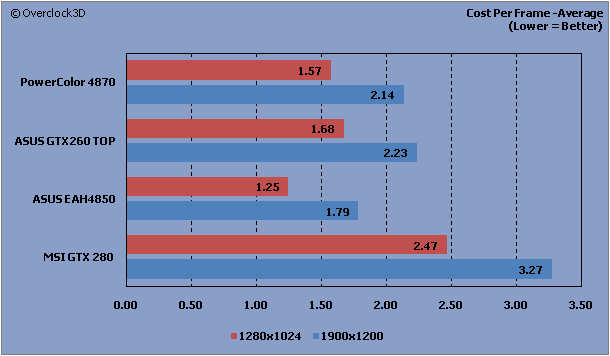
In summary, the PowerColor HD4870 manages to combine excellent performance along with a price that is fairly easy to swallow. Even with the beastly HD4870x2 right around the corner, this card is set to be a market favourite for a long time to come.
The Good
– Performance on-par with the GTX260
– Overclocking is effortless and could easily be taken higher with the right tools.
– Excellent value for money.
The Mediocre
– Those seeking free games, keychains and other “freebies” should look elsewhere.
The Bad
– Absolutely nothing.


Thanks to PowerColor for providing the HD4870 for review. Discuss this review in our forums.
