


Radeon RX 9070 XT – Sapphire, ASUS and XFX Review

Conclusion
Conclusion
Normally we always look to review things on their own merits, away from any other considerations. Given the current state of the financial markets coupled to issues of getting stock it’s very difficult to step away from those determinant factors.
For the purposes of this paragraph, let’s assume that the newest RDNA 4 cards from AMD will hit the market at the price they are expected to, and in sufficient quantities that everyone who wants one can get one. If that is the case then one thing is clear. Just like it was with the 7000 range of cards, the tiny price difference – we’re told £50 – between the vanilla card and the XT is absolutely worth spending. The RX 9070 in both ASUS and XFX forms are good performers, albeit not jaw-dropping. The extra hardware on the RX 9070 XTs really makes itself felt.
In fact the RX 9070 XT pair really makes the RDNA 4 architecture shine. The work that AMDs R&D team have put in to improving the ray-tracing capabilities has born fruit. With the 7000 series, even the flagship RX 7900 XTX, turning on ray-tracing generally was knee-capping the performance. With the new RDNA 4 cards that’s not the case. Obviously Nvidia is still ahead in raw power, but when you utilise the FSR and even AFMF technologies the Radeon cards perform admirably. AMDs brief was to get 4K performance at 1440 prices, and in that endeavour you can see that they’ve been successful.
Pricing and Stock
However, this is the point where AMD really need to work in partnership with all their manufacturing partners – not just XFX, Sapphire and ASUS that we have here – to ensure that there is stock, and that the price is reasonably close to their MSRP**. Nvidia have left a massive hole in the market. They’ve created a huge demand for new graphics cards, then utterly failed to deliver cards to the shops. Those that do make it are significantly more expensive than the claimed price. If AMD are serious about staking out a big chunk of the GPU world, there has never been a better time. They might get back to HD4870 days. Cards that XFX, Sapphire and ASUS all produced. Now we feel old.
Why we’re cautious is that the RX 9070 – XT inclusive – performance is much more game dependant than the Nvidia options. If you have a RTX card it’s great in everything. The RX is certainly great in a lot of titles, including some that absolutely we wouldn’t have expected. The AFMF 4K score in path-traced Cyberpunk 2077 was staggering. There are, however, titles where the RX 7900 cards match the performance, which would be disappointing if you are a red team member who just upgraded. It’s why everyone needs to band together to make sure that you can buy cards, and that you’re not getting your wallet gouged in the process.
Wrap Up
Naturally we don’t know what the stock situation will be, and we know even less about the actual street pricing of the cards**. All we can do is report on the performance. In that way the efforts AMD have gone to have paid off. The FSR 4 has fantastic performance in FSR 3+ titles. We wish there were more, instead of the FSR 2 limited ones. AMDs frame generation technology also is greatly improved in both performance and image quality metrics. Lastly the ray-tracing performance is seriously usable.
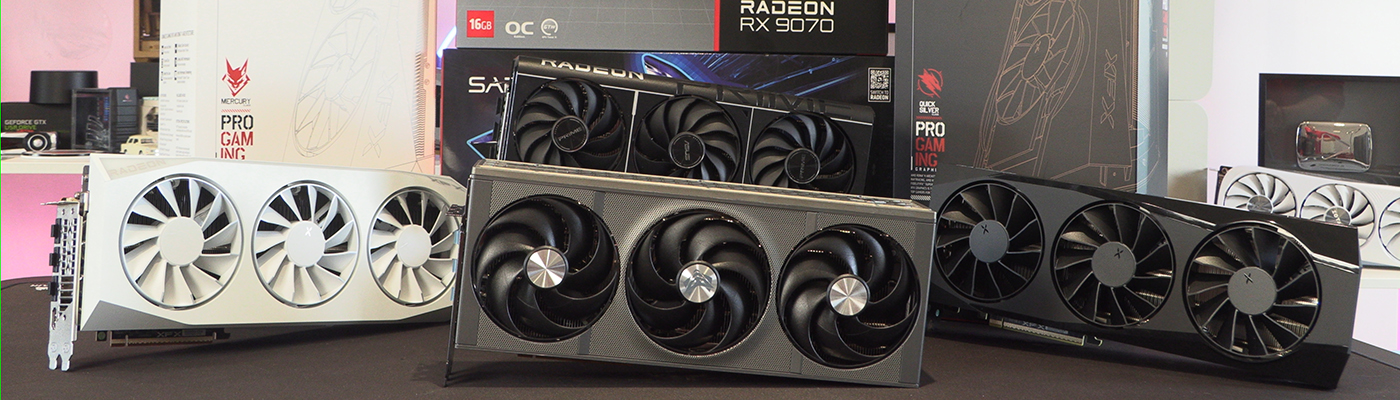
All four cards have excellent build quality and cool designs. We do have to highlight the Sapphire power cable solution though. For all the difficulties there have been making graphics card power look neat, with the Nitro+ Sapphire have solved it in a method so simple we’re stunned nobody thought of it. But then all the best ideas are obvious when you see them. For that reason all the Radeon RDNA 4 cards win our OC3D Gamers Choice award, and the Sapphire also wins our Innovation Award.
** Late News
Just as we were about to hit the “go live” button we’ve been told that the Sapphire – the best performing, most innovative of our four cards – is going to have a street price of £699 and there are plenty of cards in stock. That means right now you can buy a card which pumps out over 60 FPS in 4K ray-traced Cyberpunk for under £700. If that isn’t enough for you the XFX plan to be on shelves with their bananas Mercury XT at £729 and the RX 9070 a mere £619 we think both of these price are a little over what we hoped especially when the competition are cheaper AND faster. The Asus Prime RX9070 OC is expected to be available on launch day at £549. On shelf price, stock on hand. It instantly makes any Nvidia option below the RTX 5080 pointless. We said that all AMD needed to do was not eff up the stock and price situation to really steal a march on Nvidia in the biggest selling segment, and they have done exactly that. Wonderful news, Beeks, wonderful.
—–*****Cards on sale 14:00 GMT – March 6th*****—–
XFX RX 9070 Quick Silver (£619) and XFX RX 9070 XT Mercury OC (£729)

ASUS RX 9070 Prime OC (£549)
Sapphire RX 9070 XT Nitro+ (£699)


Discuss the XFX RX 9070 XT Mercury, XFX RX 9070 Quick Silver, ASUS RX 9070 Prime OC and Sapphire RX 9070 XT Nitro+ in our OC3D Forums.