

MSI MEG Ai1600T PCIe 5 PSU Review

Power Efficiency and Ripple Testing
Voltage Ripple and Efficiency Testing
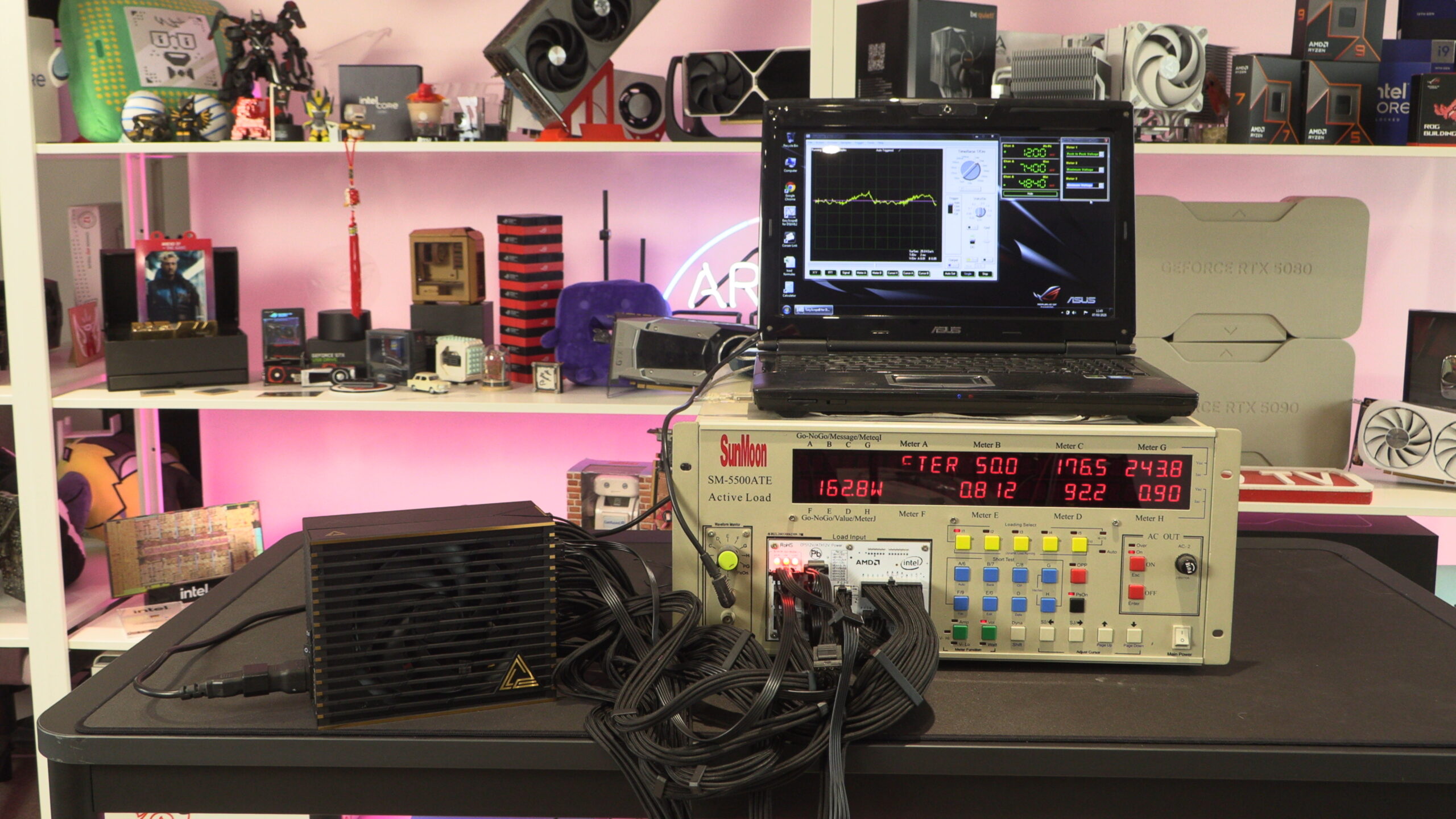
When reviewing new power supplies at OC3D, we use our dedicated SunMoon PSU Tester, one of the most expensive (if not the most expensive) tools in the company’s arsenal. Here, we can see exactly how well a unit functions. We look at both a PSU’s efficiency and power stability. To do this, we utilise bespoke PSU testing equipment to give us an in-depth look at each power supply’s performance. This kind of data collection is impossible when using a PSU with standard PC components.
Note that MSI’s new MEG Ai1600T PSU is a 1600W power supply. Sadly, even our beefy SunMoon PSU tester cannot handle those loads. Our equipment maxes out at 1200W, making this the highest power level we can test. As such, our “100%” load test is actually a 1200W test.
Power Efficiency
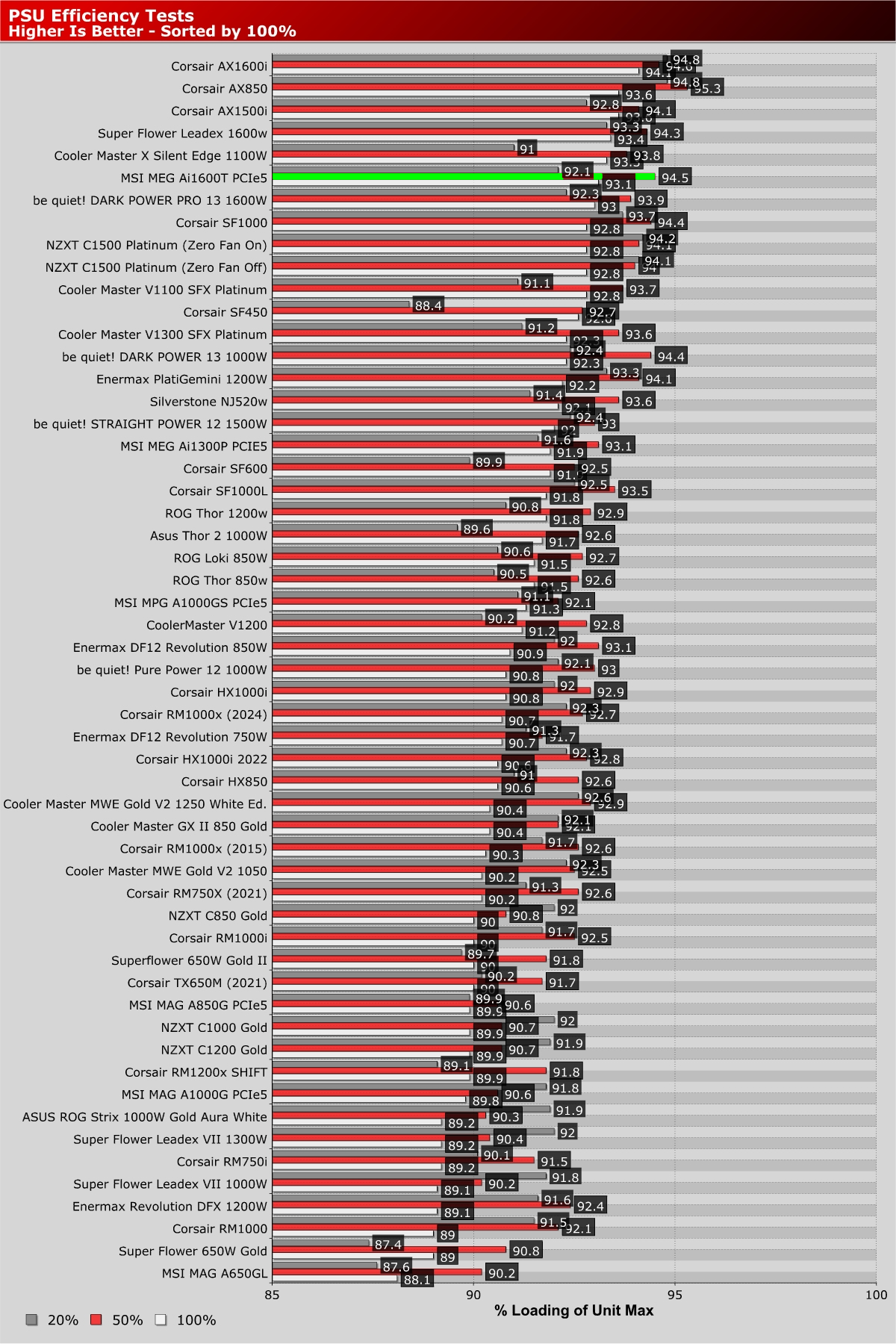
Given this PSU’s Titanium efficiency ratings from both 80 Plus and Cybenetics, it makes sense that the MSI MEG Ai1600T sits amongst the best power supplies on our charts. In all of our testing scenarios, this PSU delivered efficiency levels of 92% and higher. At 50% loading (800W), we saw efficiency levels of 94.5%. This is a solid result, and MSI’s engineers should be very happy with what they have achieved.
Voltage Ripple
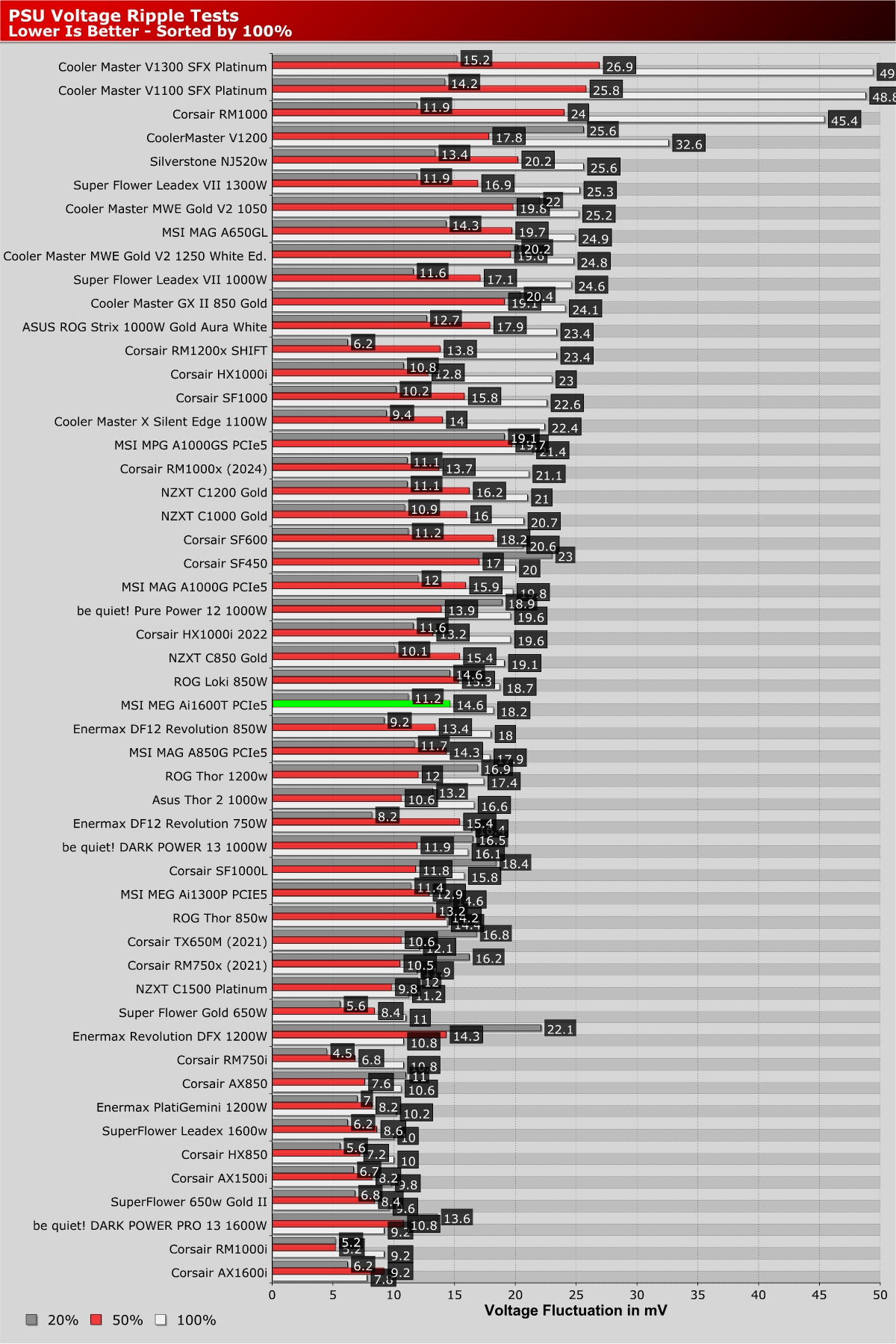
Voltage ripple is often overlooked by consumers. It is best described as the stability of specific voltages that the PSU delivers. A PSU with bad ripple will see voltages vary a lot more. In extreme cases, this can damage components or shorten their lifespans. Voltage ripple stability is one of the many reasons you should buy a high-quality power supply. That means buying from a reputable brand and avoiding anything that isn’t 80+ certified.
An important thing to note here is that none of the PSUs in this graph are “bad.” Even units with the highest ripple in our charts, like the original Corsair RM1000 (from 2014), are usable within your system without any issues. We used this specific power supply within one of our main workstations for years and had no trouble with it. As we said before, only extreme levels of voltage ripple are dangerous. Regardless, we feel that these results are important, as we do not want to see PSU manufacturers moving backwards with this metric. We do not want to see the return of PSUs with high levels of voltage ripple.
With MSI’s Ai1600T PCIe 5, we see voltage ripple levels that sit in the middle of our performance charts. This is a good place to be. Yes, lower is better, but keeping fluctuations below 20mV at solid achievement. While better results can be achieved, nobody can say that this PSU’s voltage stability is poor or sub-par.