


Silicon Motion unveils its PCIe 6.0 SSD plans at FMS 2025

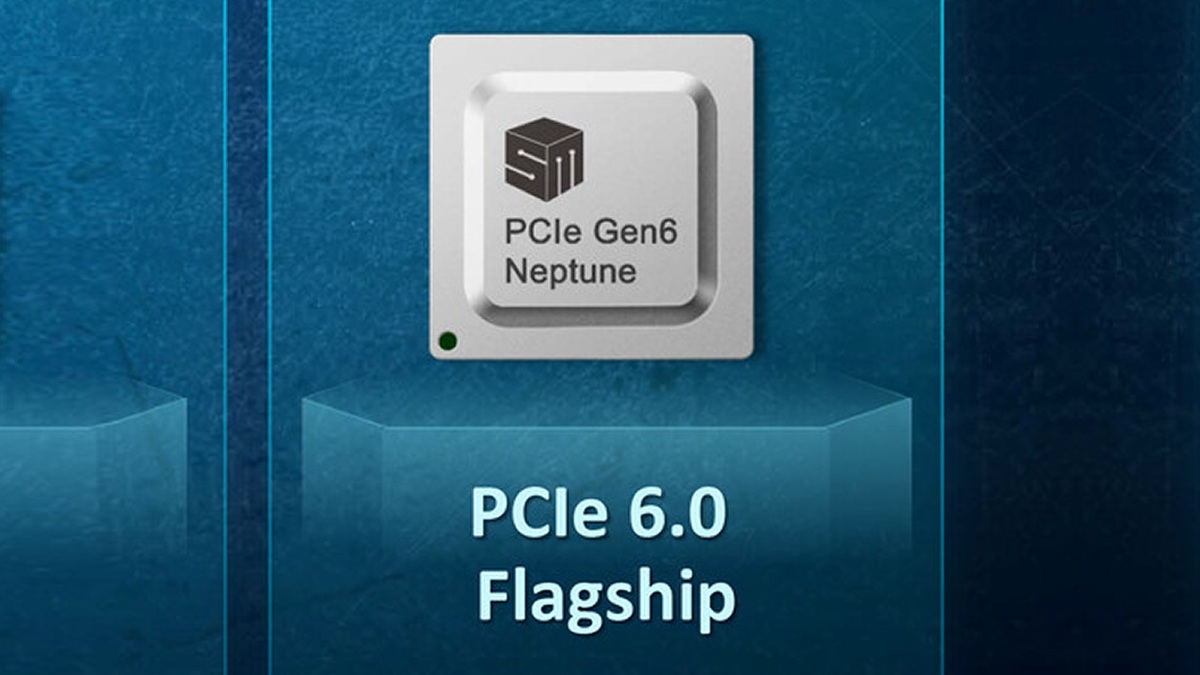
Silicon Motion plans to start mass production of a client PCIe 6.0 SSD controller in 2028
At the Future Memory and Storage Conference (FMS) 2025, Silicon Motion has unveiled a range of next-generation client SSD controllers. On the high-end, Silicon Motion has its PCIe 6.0 “Neptune” controller, which promises 25+ GB/s speeds, 3.5 million IOPS, and support for next-generation 400+ layer NAND.
Silicon Motion’s planned “Neptune” SSD controller is due to enter mass production in 2028. This is a clear sign that motherboard manufacturers are not ready to release consumer-oriented PCIe 6.0 motherboards. This would make the launch of PCIe 6.0 storage solutions at an earlier date pointless. Note that this mass production date lines up with the likely launch year of AMD’s next-generation AM6 CPU socket.
Next year, Silicon Motion also plan to release a next-generation SM2524XT PCIe 5.0 SSD controller. This controller will support faster NAND and support SCA technology. Separate Command Structure (SCA) support separates an SSD’s command and transmission paths, allowing both workloads to be addressed simultaneously. Without this tech, both tasks are completed sequentially, lowering bandwidth while increasing latency. Silicon Motion’s new SM2524XT controller supports 4800MT/s NAND across four channels, delivering the same IOPS and sequential speeds as Silicon Motion’s high-end SM2508 controller. With this new controller, Silicon Motion will deliver high-end SSD performance with fewer NAND channels. This should make PCIe 5.0 SSDs less expensive.
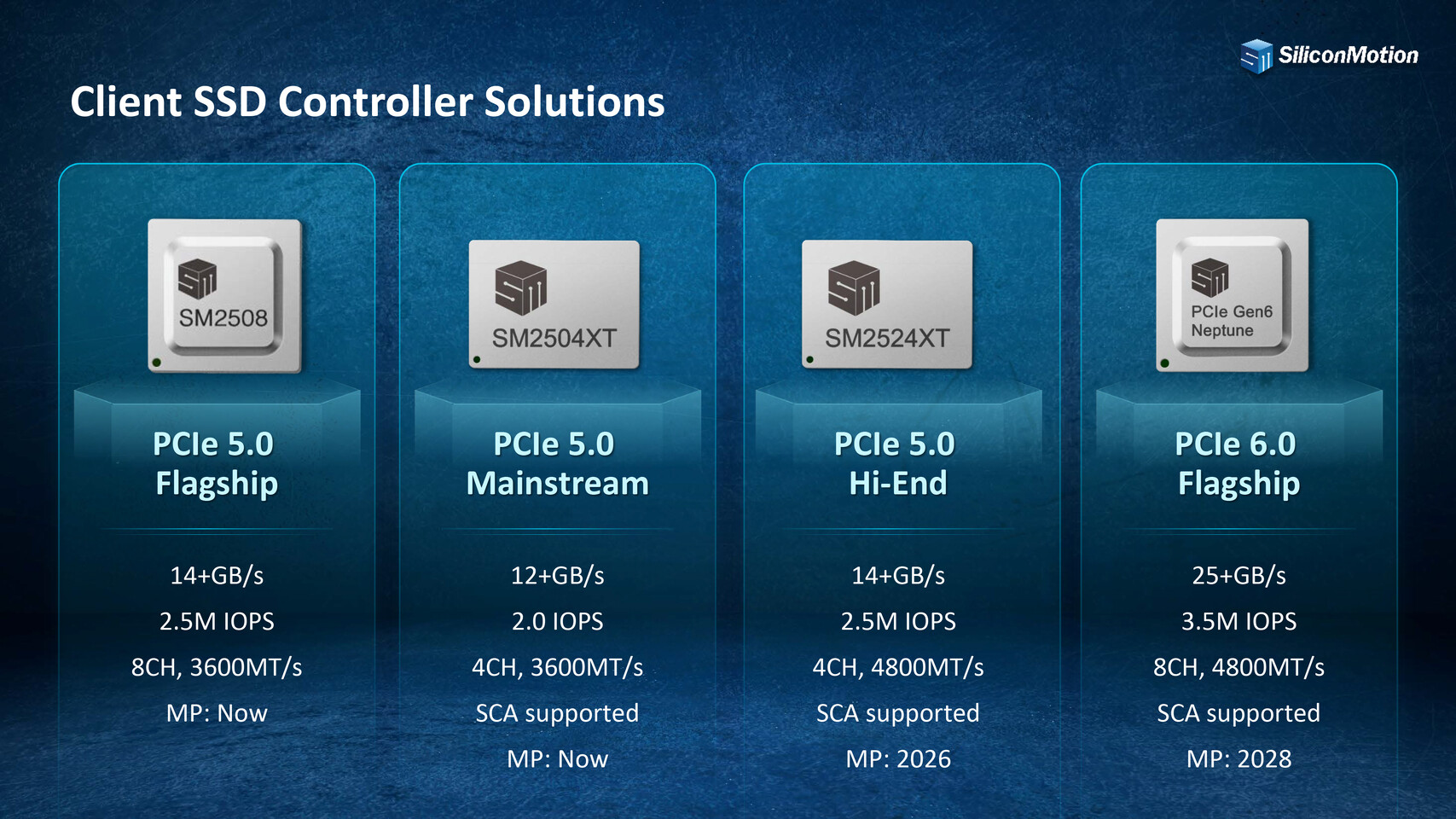
(Image from Silicon Motion – Via Tom’s Hardware)
Future SSDs will be faster and less latent
With its adoption of SCA technology and planned move to PCIe 6.0, Silicon Motion aims to reduce SSD latencies while increasing bandwidth. While higher levels of bandwidth will be useful, the adoption of SCA may have a larger impact on the user experiences of PC users. After all, reduced latencies will have a direct impact on how “snappy” a PC will feel. This could have a major impact on many SSD workloads and deliver snappier storage without increasing maximum read speed values.
As for PCIe 6.0, motherboard manufacturers are not interested in the standard, at least for consumer PCs. PCIe 5.0 isn’t mainstream yet, and the consumer PC market isn’t ready for a higher-speed, more expensive PCIe standard. PCIe 6.0 will arrive in enterprise/server CPUs next year, but it won’t be available on consumer PCs anytime soon. If Silicon Motion isn’t mass producing its PCIe 6.0 SSD controller until 2028, we may not see consumer-grade PCIe 6.0 SSDs hit store shelves until 2029.
You can join the discussion on Silicon Motion’s PCIe 6.0 consumer SSD plans on the OC3D Forums.