


Intel Panther Lake graphics deliver console-like performance in Alan Wake 2

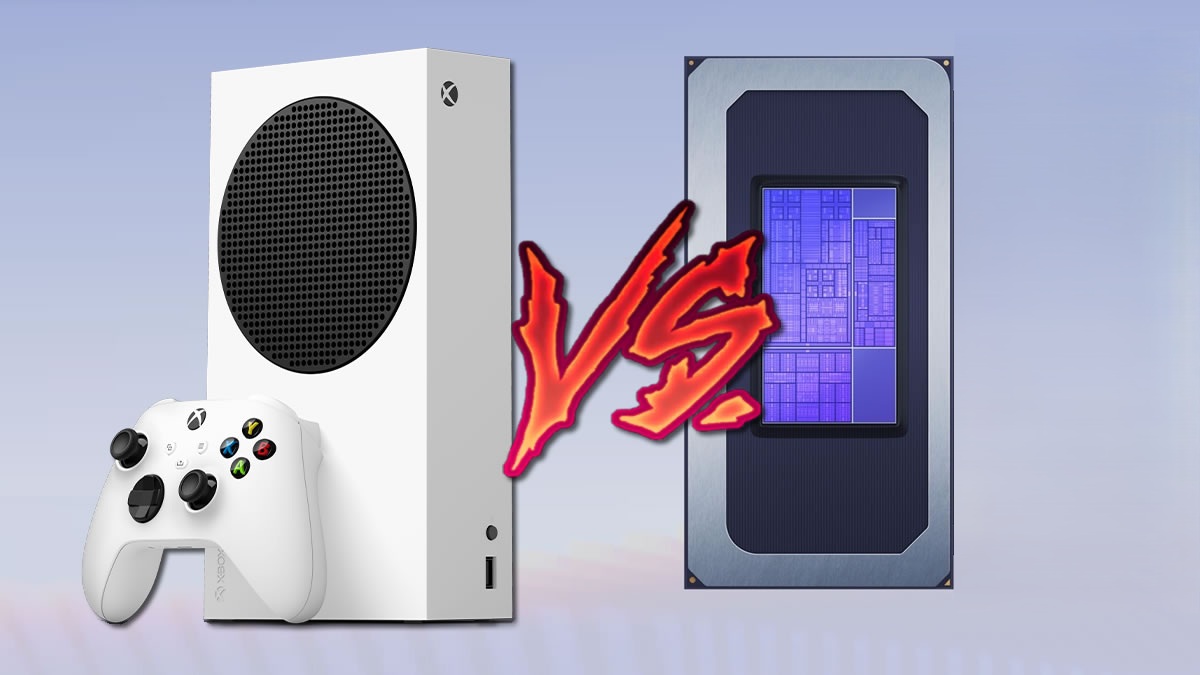
Intel’s ARC B390 graphics chip delivers console-like performance in Alan Wake 2, despite using higher game settings
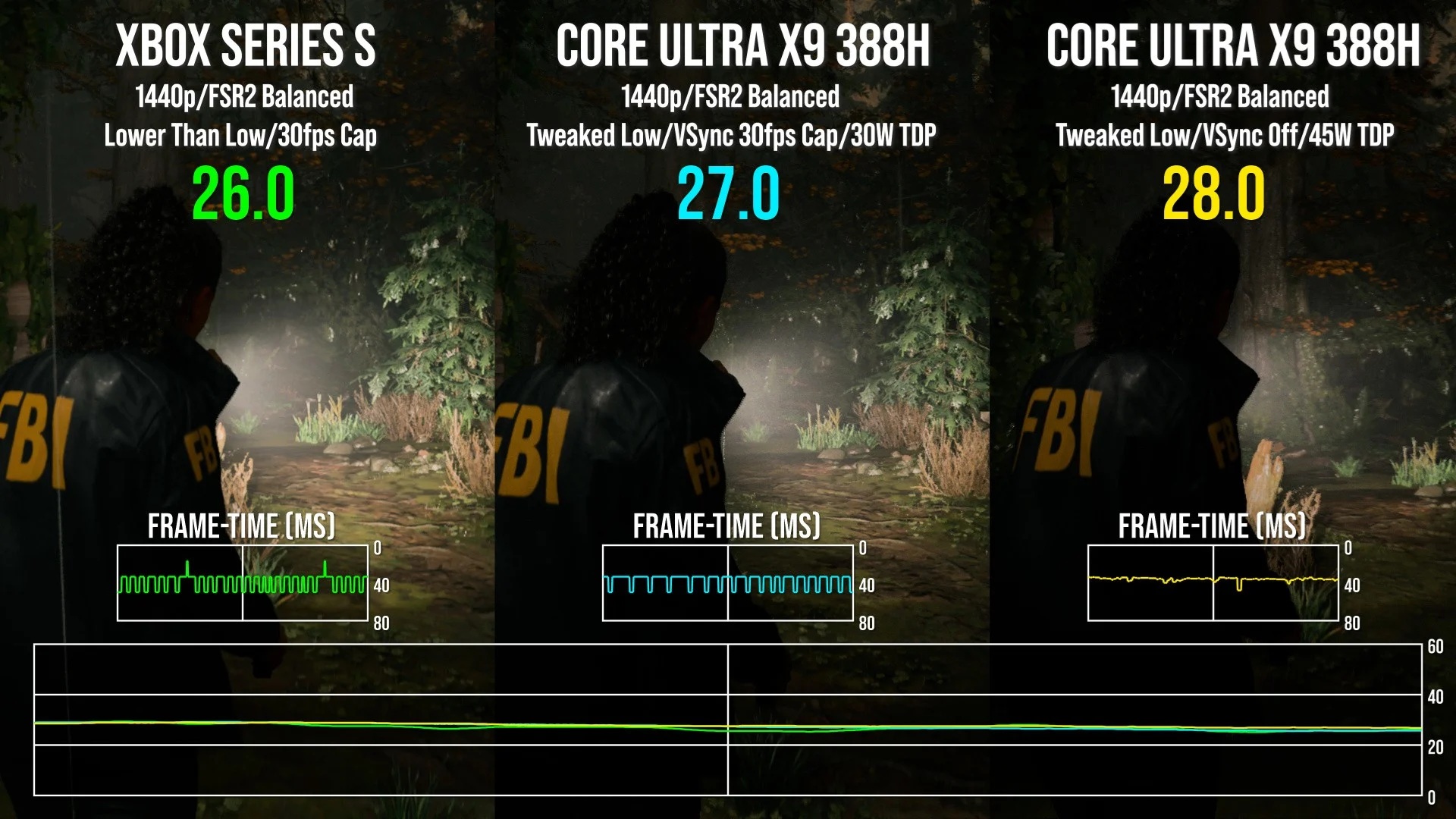
Intel’s Panther Lake ARC B390 graphics chip has been benchmarked against Microsoft’s Xbox Series S in Alan Wake 2, with Digital Foundry reporting strong performance from Intel’s integrated graphics. At both 30W and 45W TDPs, Intel’s iGPU delivered performance levels that surpassed Microsoft’s baseline Xbox Series console.
The testing below was conducted on a Lenovo IdeaPro 5 laptop with an Intel Core Ultra X9 388H CPU. Alan Wake 2 was played on PC with settings nearly identical to the Xbox Series S version. However, it is worth noting that some PC settings cannot be matched precisely. The game was run at 1440p with FSR 2 set to Balanced mode.
Overall, Intel’s Panther Lake integrated graphics chip delivered more stable performance than the Xbox Series S. At both 30W and 45W, the chip achieved a more stable 30 FPS, though it wasn’t a locked 30 FPS.
(Image from Digital Foundry)
What about PS5?
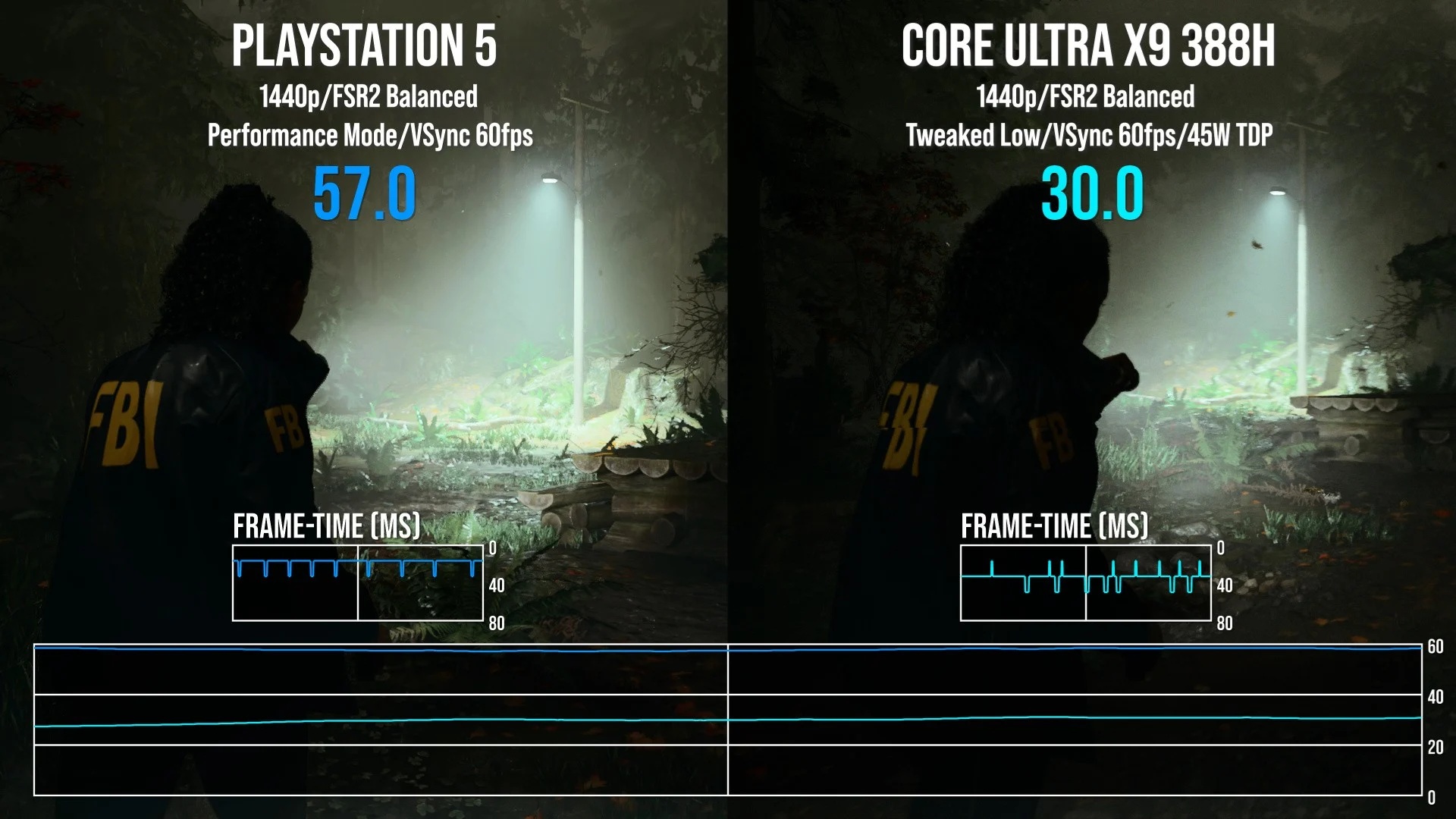
In a cheeky comparison, Digital Foundry also compared Intel’s Panther Lake CPU to Sony’s PlayStation 5 console, testing Panther Lake again. Digital Foundry used PS5’s “Performance Mode”, which targets a 60 FPS framerate. As you can guess, this test showcased the limits of Panther Lake, which could not get close to PS5 performance levels.
Note that Sony’s PS5 console consumes 190-220W under intense gaming loads. Since Panther Lake can only have its TDP set to a maximum of 45W, this comparison is a little unfair. Regardless, it showcases that integrated PC graphics have a long way to go before they can deliver PS5-level performance.
(Image from Digital Foundry)
Digital Foundry’s comparison is interesting, but far from definitive. After all, this is just a one-game test. Furthermore, it does not consider aspects of Intel’s graphics like XeSS. Remember, XeSS upscaling can deliver higher levels of image quality than FSR 2, and that’s before frame generation and multi-frame generation are considered. That said, this test was designed to be as “apples-to-apples” as possible, so it needed to use FSR 2. Even so, the results of this test are clear. Panther Lake can deliver console-like gaming performance.
You can join the discussion on Panther Lake’s gaming prowess on the OC3D Forums.