


Beastly Specs – Intel Nova Lake Specifications Leak

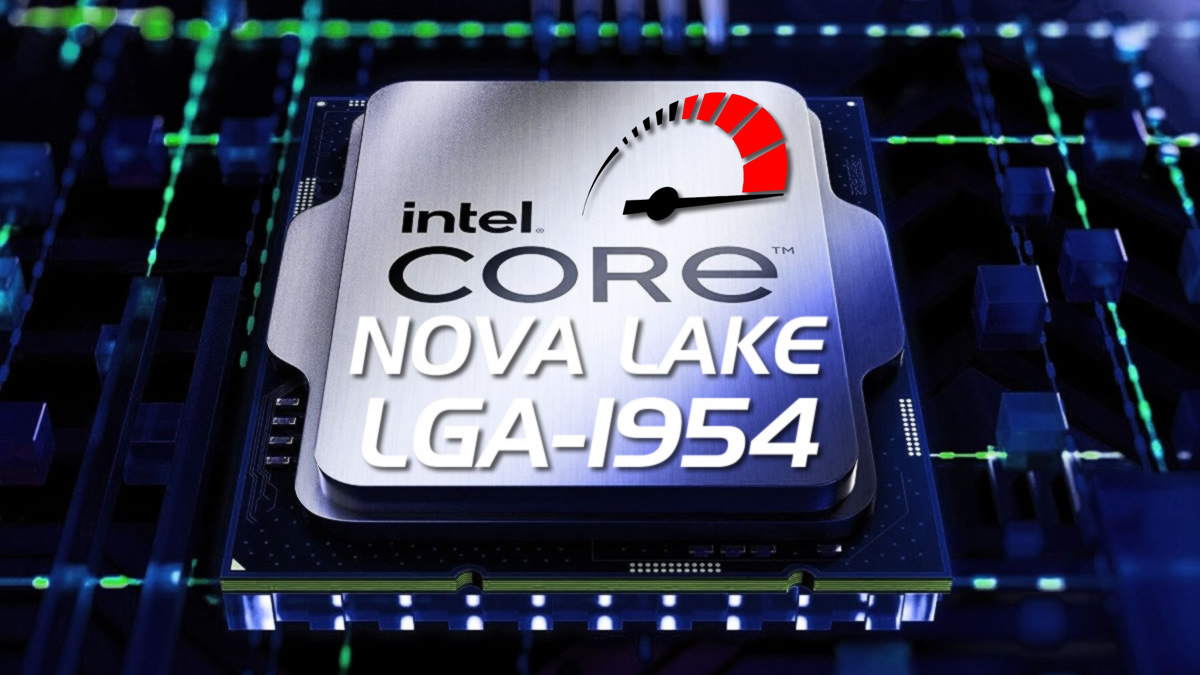
Boosted IPC and higher core counts – Intel Nova Lake boasts beastly specs
Intel is getting ready to overhaul its CPU lineup with its next-generation Nova Lake processors. If Intel’s leaked Nova Lake CPU specifications are correct, the company plans to deliver a significant increase in CPU core count with Nova Lake. Furthermore, Intel will deliver a 15% increase in IPC with its new Coyote Cove P-cores. Note that this IPC increase does not include the benefits of Intel APX, which aims to significantly increase the performance of APX-compiled code. Note that Intel’s Nova Lake CPUs will feature new P-core and E-core CPU architectures.
On the high-end, Intel will deliver CPU designs with two compute tiles. Each compute tile will feature eight P-cores and sixteen E-cores. This means that Intel’s flagship Nova Lake CPUs will feature sixteen P-cores and thirty-two E-cores. That’s 48 total cores from its compute tiles. Add four additional LP-E-Cores, and Nova Lake CPUs will feature up to 52 total CPU cores.
Note that Intel’s Nova Lake platform will span the traditional “mainstream” CPU segment and expand into the HEDT market. More mainstream Nova Lake CPUs will feature a single compute tile with up to eight P-cores and Sixteen E-cores, with higher-end CPUs having two compute tiles. These high-end CPUs can be considered as a successor to Intel’s old X299 platform, albeit on the same LGA-1954 socket as Intel’s mainstream CPUs.
Note that clock speeds are currently unknown for Nova Lake. This makes sense, given how far we are from launch. Intel are yet to release Panther Lake, so it’s far too early to have final clock speeds for its successor.

(Leaked information from Red Gaming Tech)
Strange segmentation for Nova Lake
Intel’s reportedly making specialised compute chiplets with large “bLLC” caches. These chips are targeted at gamers and rival AMD’s “X3D” CPUs. These CPUs are said to be limited to single-compute-tile configurations for cost reasons. That means that Intel’s two compute tile CPUs will utilise smaller compute tiles that lack bLLC cache.
Since Intel’s Nova Lake CPU platform is expected to be dual-channel, the company’s high-end CPU models are expected to be memory-limited in some workloads. This means that these CPUs will benefit from faster memory, and that Intel’s higher-end workstation CPU platforms will be much better suited to memory-intensive workloads. Regardless, these CPUs will be an excellent product for those who want higher core counts without the higher costs of workstation-grade Threadripper and Xeon platforms.
Pricing-wise, Intel’s new high-end Nova Lake CPUs should fill the same niche as Intel’s older HEDT CPU platforms. Think Skylake-X and Cascade Lake on X299. For the mainstream market, Intel has its single compute tile chips, which will replace its traditional mainstream CPUs.
Note that Intel’s Nova Lake CPUs are two generations ahead of today’s Arrow Lake CPUs. This means that users will benefit from several architectural leaps. Hopefully, this will result in significant performance gains.
You can join the discussion on Intel’s leaked Nova Lake CPU specifications on the OC3D Forums.