


ASUS embraces Tandem OLED tech with its latest ROG OLED monitors

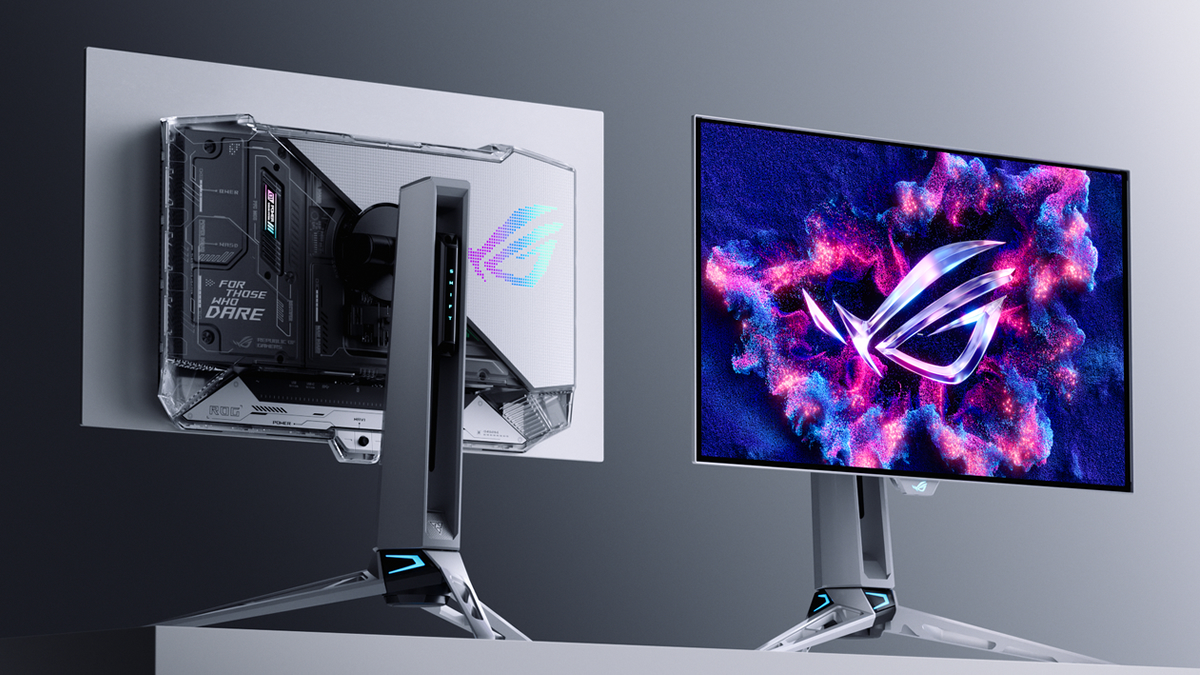
ASUS pushes the limits of OLED tech with its new TANDEM OLED gaming screens
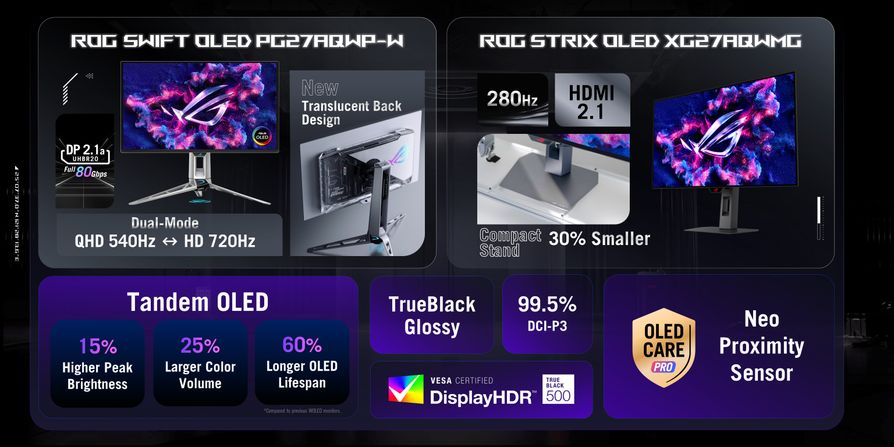
At Gamescom 2025, ASUS ROG unveiled its first TANDEM OLED gaming monitors, pushing the boundaries of OLED technology. With LG’s Tandem OLED tech, ASUS’ newest ROG OLED screens have 15% higher peak brightness, a 25% wider colour volume, and a 60% longer lifespan than last-generation W-OLED screens. Not only that, ASUS has boosted these panels with their TrueBlack Glossy coating, delivering great visual results.
ASUS ROG Swift OLED PG27AQWP-W
On the high-end, ASUS has its new ROG Swift OLED PG27AQWP-W, a crazy-fast 1440p (QHD) monitor with a 540Hz native refresh rate. For those who want an even faster gaming experience, this screen can operate at 720Hz in HD mode.
Connectivity options for this screen include HDMI 2.1 (with full 80 Gbps support) and DisplayPort 2.1a (with UHBR20). This screen is DisplayHDR 500 True Black certified, supports 99.5% of the DCI-P3 colour space, true 10-bit colour, and has a Delta E<2 colour rating.
Strong OLED performance in all lighting environments with TrueBlack Glossy WOLED
Thanks to ASUS’ TrueBlack Glossy film, these screens feature a “zero-haze” optical layer that reduces reflections by 38% compared to prior-generation WOLED glossy monitors. This enables deeper looking blacks, and reduces the impact of reflections. Additionally, the ASUS Clear Pixel Edge algorithm removes red-green fringing on text and fine lines, so spreadsheets, lines of code, and creative timelines appear pin-sharp.
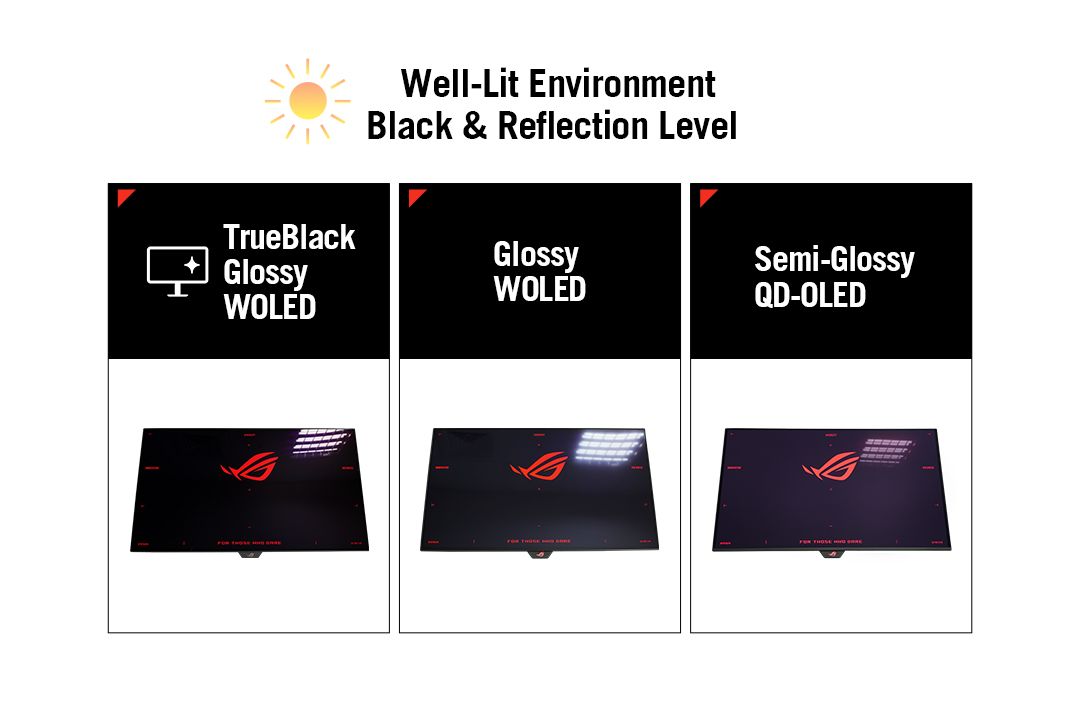
(TrueBlack Glossy WOLED vs Glossy and Semi-Glossy – Image from ASUS)
ASUS ROG Strix (Tandem) OLED XG27AQWMG
The ASUS ROG Strix OLED XG27AQWMG is a Tandem OLED screen that supports refresh rates up to 280Hz at 1440p. This screen is a lot like its higher-end counterpart, with the only major differences being its enclosure, stand, and maximum refresh rate. Both are VESA DisplayHDR 500 True Black screens true 10-bit colour support. With its lowered maximum refresh rate, this OLED monitor should feature lower pricing. Given its lower refresh rate, this screen only uses DisplayPort 1.4, rathern than DisplayPort 2.1.
Both of these new ROG OLED monitors should be available through retailers soon. Sadly, ASUS did not reveal the pricing of these two monitors at Gamescom.
You can join the discussion on ASUS’ fastest OLED gaming monitor on the OC3D Forums.