


Intel XeSS 3 is now available to all game developers on GitHub

Intel releases its XeSS 3 SDK to developers through GitHub
Following the release of XeSS 3.0 support through its newest ARC GPU drivers, Intel has officially released its XeSS 3.0 SDK to developers. This means that all game developers can now directly integrate XeSS into their games. That said, many games with XeSS 2 can already support XeSS 3 and its multi-frame generation feature using XeSS Override.
With XeSS 3, Intel has implemented Multi-Frame Generation (up to 4x) alongside “improved Frame generation models”. Improvements include increased UI smoothness across generated frames. Upgrading from XeSS 2 to XeSS 3 requires minimal effort, with a simple DLL swap and new game UI settings that let users choose the number of generated frames they want(2x, 3x, or 4x).
XeSS 3 is supported on all modern Intel ARC graphics cards. This includes Intel’s ARC A-series and B-series discrete GPUs and Intel’s Core Ultra, Core Ultra 2, and Core Ultra 3 series processors. This means that CPUs as old as Meteor Lake support XeSS 3 and multi-frame generation.
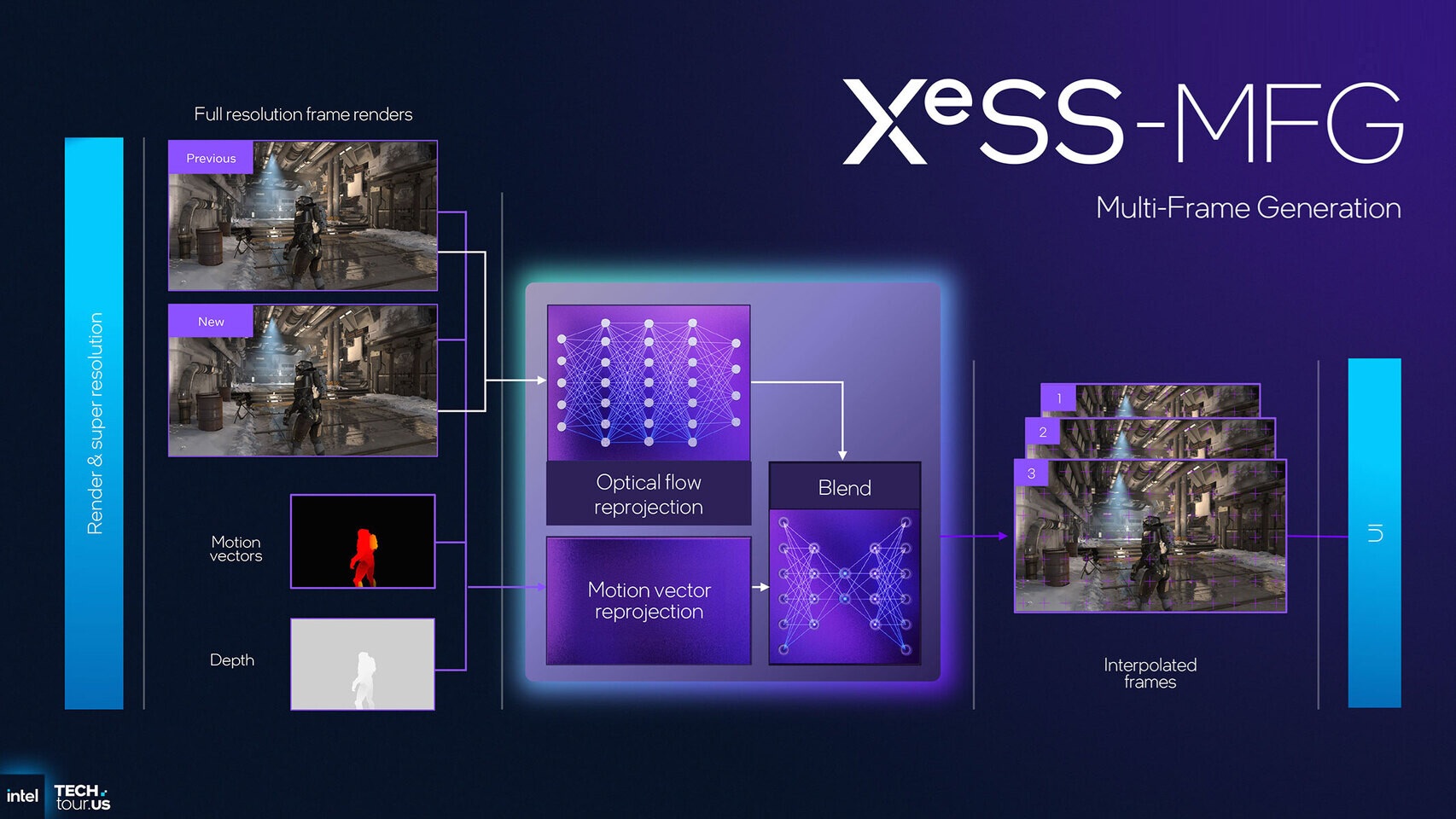
Right now, XeSS 3 has received less adoption than AMD FSR and Nvidia DLSS. Resident Evil Requiem (see our PC tech review here) recently launched without XeSS support. While Intel remains a smaller player within the gaming GPU market, its AI technology is advanced. With Multi-Frame Generation support, Intel XeSS is more advanced than AMD FSR. Furthermore, with support for multiple GPU generations, Intel has bested even Nvidia, which has only enabled Multi Frame Generation on its newest (RTX 50 series) graphics cards.
PC game developers can access Intel’s XeSS 3 SDK on GitHub here.
You can join the discussion on Intel releasing its XeSS 3 SDK on GitHub on the OC3D Forums.