


CXMT boasts 50% more dies-per-wafer using new G5 DRAM tech


CXMT boasts huge DRAM density increase using new 11.95nm G5 DRAM tech
Less than a month after its LPDDR6 announcement, ChangXin Memory Technologies (CXMT) confirmed it has reached a new DRAM milestone. With its new 5th-generation “G5” DRAM platform, CXMT has started mass production of two new LPDDR5X products with greatly improved DRAM densities.
With its new G5 memory platform, CXMT can produce DRAM with an active-area (AA) half-pitch of 11.95nm. This brings CXMT’s capabilities much closer to those of Samsung, Micron, and SK Hynix. With its G5 platform, CXMT claims that they are able to produce 50% more dies per wafer than with its last-generation DRAM platform.
While a 50% increase in dies per wafer is impressive, CXMT has not discussed details like silicon yields. Sadly, this means CXMT may not be able to produce 50% more functional DRAM per wafer with its new technology. Regardless, this improvement should help CXMT output more DRAM and alleviate the global DRAM shortage.
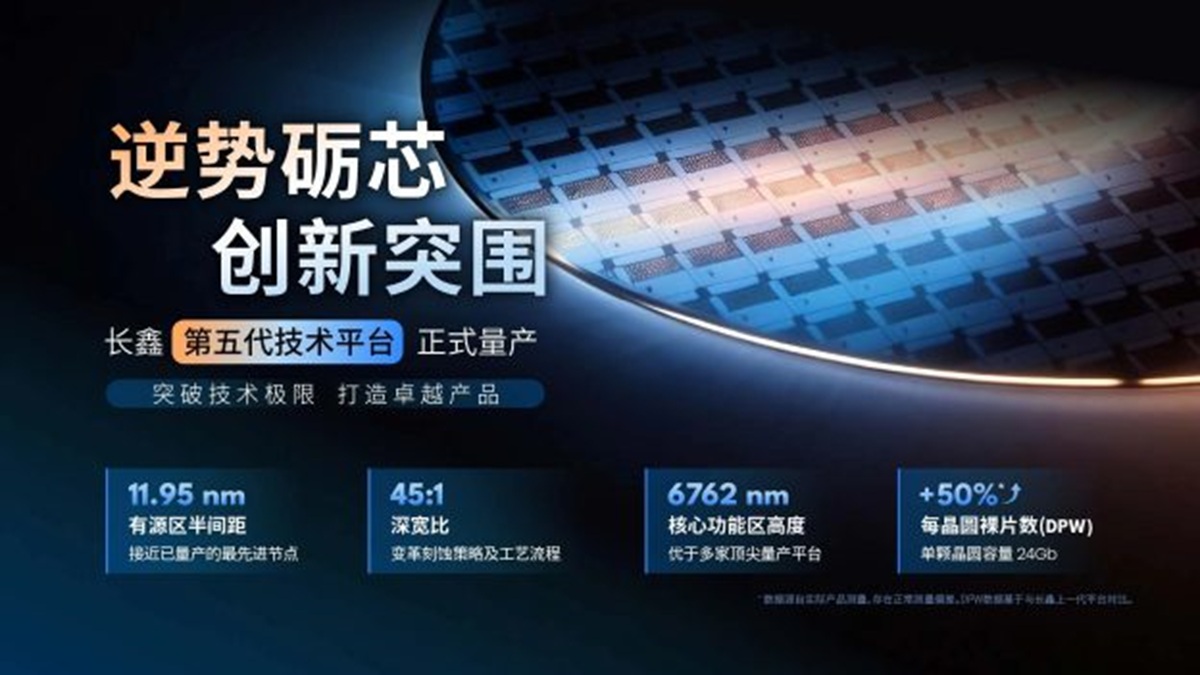
(CXMT promises 50% more dies per wafer with its new G5 DRAM technology)
CXMT’s first confirmed G5-series product is 24Gb LPDDR5X memory chips. These chips are reportedly already in mass production. Chinese reports claim that these chips are already being used for new Chinese smartphones.
Regardless of what way you look at it, CXMT’s DRAM manufacturing technology is improving. While CXMT has not disclosed yields, producing 50% more dies per wafer is a good thing. Increasing DRAM density and wafer productivity will reduce CXMT’s costs and increase its profitability. Furthermore, increased manufacturing capacity will boost overall DRAM availability and help alleviate shortages. Overall, this is a good thing. CXMT aims to become one of the world’s largest DRAM manufacturers, and this is a major step towards that goal.
Join the discussion on CXMT’s increased DRAM production efficiency on the OC3D Forums.